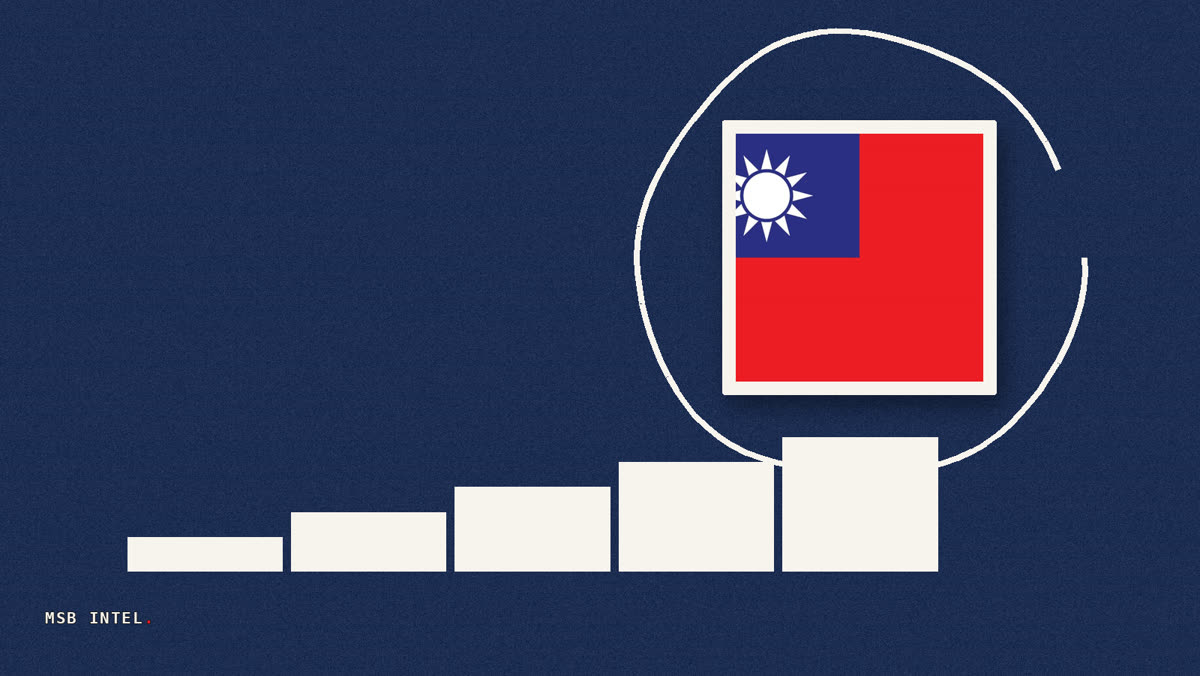
Taiwan has proposed more than $13 billion in funding, primarily directed to state-run energy companies, to secure liquefied natural gas supplies and protect electricity users when a price freeze expires at the end of September, according to the announcement made Wednesday.
The funding addresses immediate supply pressures tied to Middle East conflict disruptions and a policy decision that has shielded consumers from global price swings. Taiwan's state-owned China Petroleum Corporation and Taiwan Power Company will absorb the costs of higher LNG prices once the freeze lifts, preventing rate shock to residential and business customers. The freeze was set to end September 30.
Taiwan imports nearly all its natural gas, making it vulnerable to regional supply disruptions and price volatility. Middle East tensions have tightened global LNG markets since early 2026, pushing spot prices higher and forcing major importers to secure supplies at higher rates. Taiwan's energy sector has relied on spot market purchases to diversify sources beyond long-term contracts, a strategy that has proven costly during periods of geopolitical stress.
The $13 billion package shows the scale of subsidy required to cushion the price transition. State energy firms currently purchase LNG under long-term supply agreements, but spot market purchases, necessary to fill gaps and hedge against supply shocks, have climbed in cost. Without the funding, electricity rates would rise sharply once the government price cap expires.
Taiwan's approach differs from other major Asian importers. Japan and South Korea have negotiated term contracts with suppliers to lock in volumes at fixed prices, reducing exposure to spot market volatility. Taiwan's reliance on a mix of term and spot purchases leaves it more exposed when global LNG prices rise, as they have this year.
The funding package must still clear Taiwan's legislature. Energy policy in the island has drawn scrutiny over its approach to nuclear power, liquefied natural gas imports, and coal generation as sources of grid stability. The subsidy decision will likely face debate over whether long-term contract diversification or renewable capacity expansion would better insulate Taiwan from price shocks.
If Taiwan's state energy firms do not receive the full $13 billion allocation before October 1, the price freeze will lapse and residential electricity rates will rise immediately to match current LNG costs.