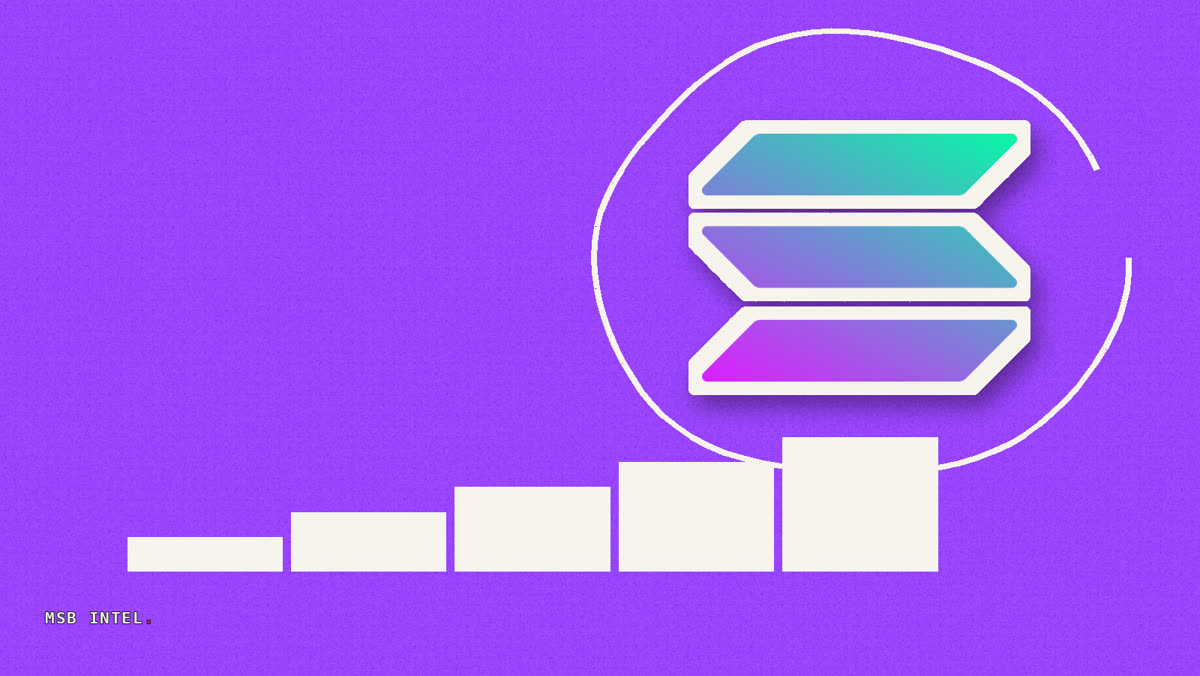
Solana applications generated $143 million in revenue during August, accounting for 38% of all onchain app earnings across every blockchain and exceeding the combined total of the next three largest chains, according to a post on X by Sonic SVM.
The top-performing Solana apps are orderbooks, launchpads, and trading user interfaces, each constrained by the network's block time. Hyperliquid, Ethereum, and BNB Chain generated $55.6 million, $47.1 million, and $34.7 million respectively in August, totaling $137.4 million. Solana's $143 million outpaced that combined figure by roughly $6 million in a single month.
Solana's share of onchain app revenue has grown as the network handles higher transaction volumes with lower latency than competing chains. Application developers on Solana have built around the network's 400-millisecond block time as a design constraint rather than a limitation. Many top earners operate as high-frequency trading venues where speed compounds returns; orderbooks benefit from rapid settlement and tight spreads, while launchpads benefit from reduced mempool congestion that plagues other blockchains.
NorthStar, a runtime launched to address block time constraints, offers Solana applications a dedicated execution layer that settles transactions directly back to the Solana L1. The product targets applications that hit throughput ceilings under standard conditions, allowing builders to avoid architectural compromises or migration to other chains.
August's revenue figures tracked fees earned by applications themselves, not network fees or validator rewards. The metric differs from total transaction volume; high-frequency trading apps generate outsized fees per transaction due to order-book mechanics and rapid order placement. Solana's lead widened as users migrated trading activity from Ethereum and other networks to take advantage of lower costs and faster confirmation.
Solana Compass and Crypto Briefing both reported the August figures in early September. The data aligns with earlier patterns of Solana maintaining the largest share of application revenue since mid-2025, though the 38% figure represents a high-water mark for the network's dominance in a single month.
The concentration of Solana's top earners in orderbooks and trading UIs means that any material improvement in block times across competing chains could redirect a portion of that revenue. If a rival chain reduces latency to Solana's current level or below, applications with high sensitivity to settlement speed may diversify their liquidity across multiple networks.