
Robinhood Chain posted $4.45M in daily protocol fees on September 2, an all-time high, as median transaction costs climbed sharply week over week amid growing network congestion.
The fee increase stems from two separate pressures on users. Transaction counts have remained relatively flat, meaning the bulk of the revenue gain came from rising per-transaction costs. According to DefiLlama tracker data, the median cost per transaction reached approximately $0.15, a 17-fold increase over the prior week. Separately, gas consumption on the chain itself jumped 2x to 3x week over week, compounding the pressure on transaction fees.
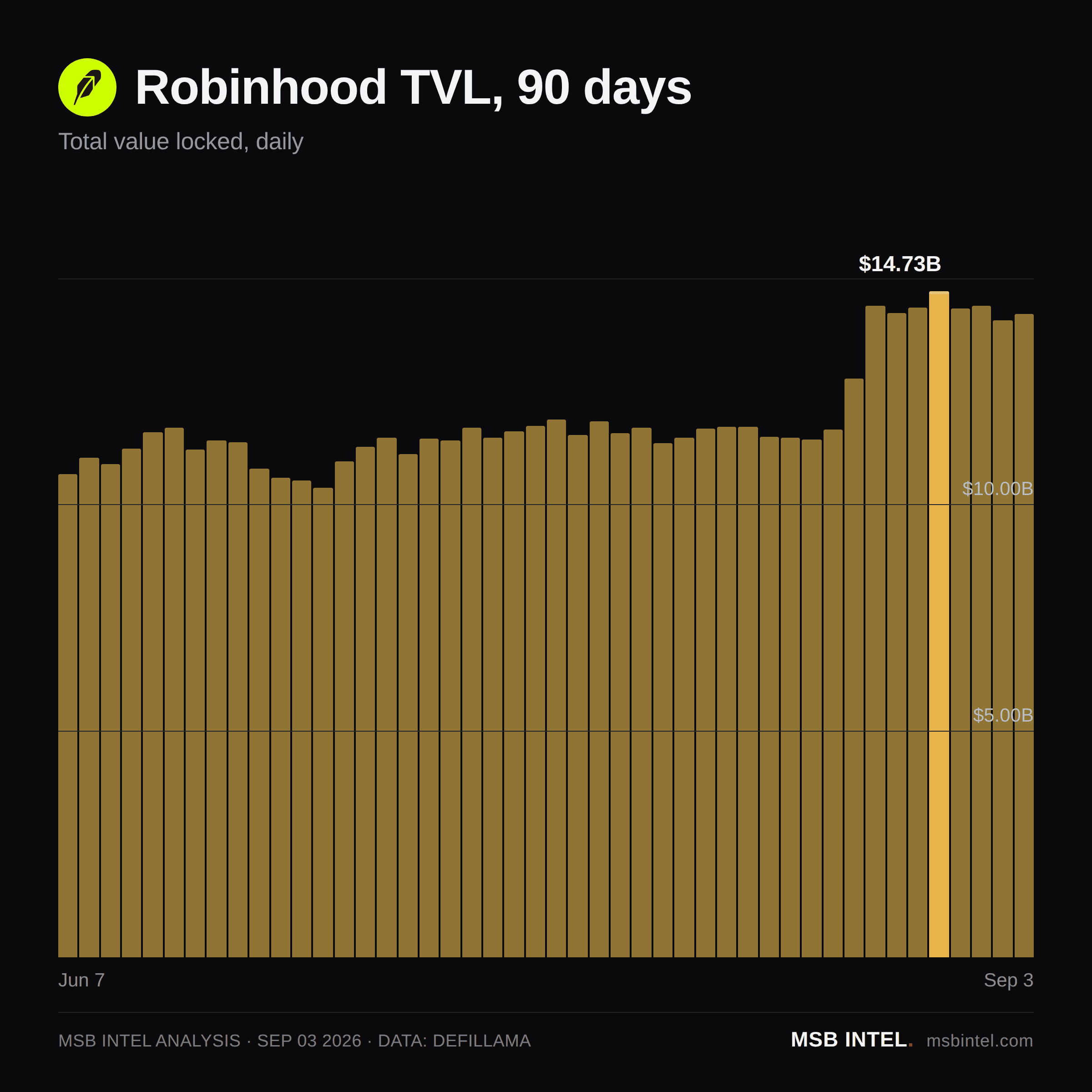

Robinhood Chain uses a congestion-based fee mechanism similar to Arbitrum's L2 surplus fee model. As transactions queue up in the backlog, the protocol automatically adjusts fees higher. Users continue to submit transactions at these higher prices, and the queue grows longer, perpetuating the cycle. The chain has been processing heavy volume in meme coins and equity-linked tokens, according to on-chain activity reports.
The September 2 result represents a sixfold jump from Robinhood Chain's daily fees in late August, when the chain was processing under $750,000 in daily protocol revenue. The chain launched in March 2024 as a layer-two Ethereum solution backed by the retail brokerage Robinhood Markets.
Fee revenue of $4.45M over a single day translates to an annualized run rate of roughly $1.62 billion if sustained, though daily volatility in Ethereum layer-two networks is typical. For comparison, Arbitrum generated approximately $3.8M in daily fees at its peak in 2024. Robinhood Chain's rapid ascent came as demand grew for low-cost trading venues tied to meme-coin ecosystems.
The number that decides whether this holds is sustained daily transaction volume. If Robinhood Chain's backlog clears and users reduce transaction submission, median fees will collapse with it.