SharpLink has staked $200 million of Ethereum through Lido's wrapped staked Ether token, with Anchorage Digital holding custody of the allocation. The deployment marks an institutional entry into Lido's liquid staking protocol at scale.
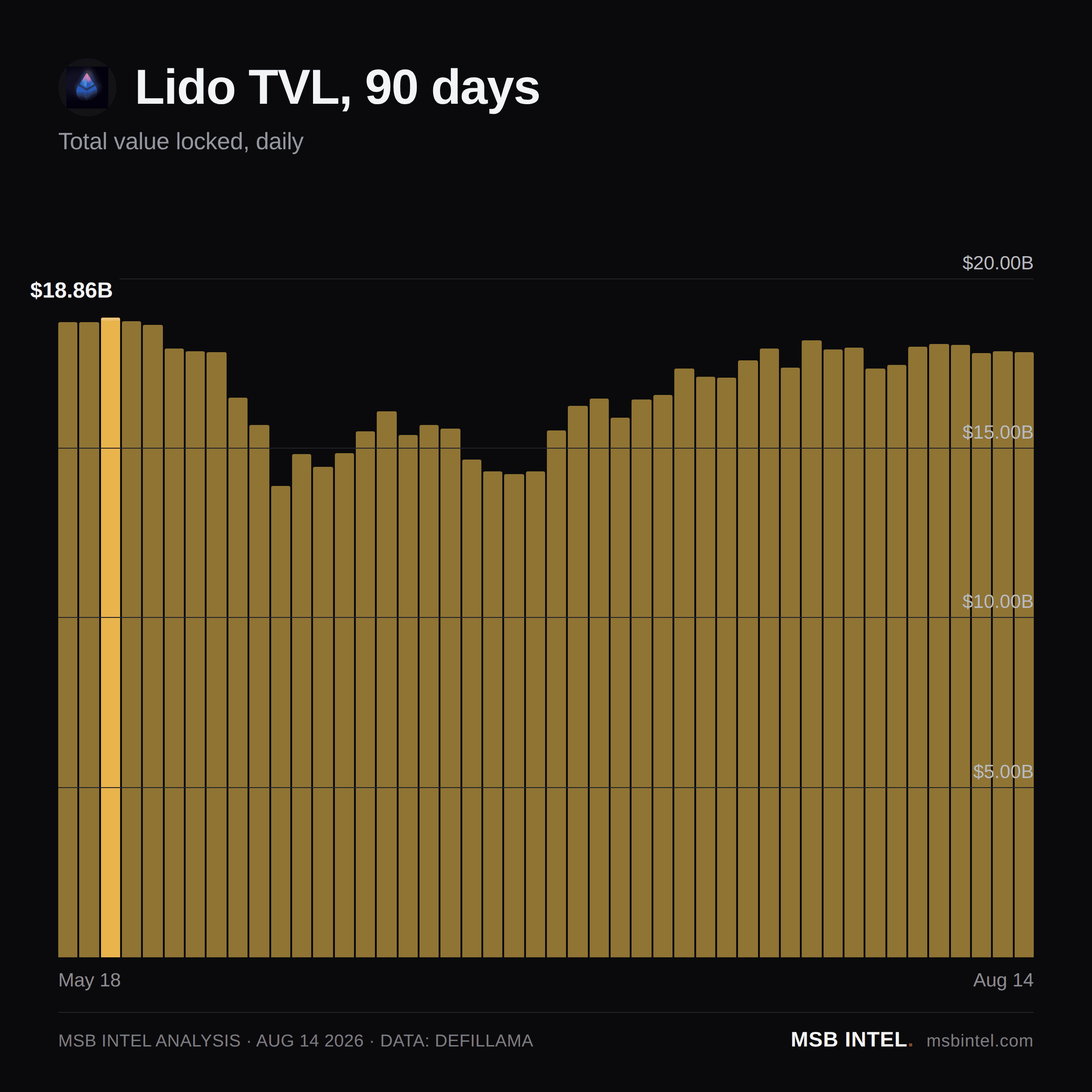
Lido's staked Ether derivatives sit across more than 100 integrated protocols, according to the announcement. The protocol manages $16.5 billion in total value locked. Liquid staking tokens like wstETH allow holders to earn Ethereum staking rewards while retaining liquidity to deploy capital elsewhere, a structure that institutional allocators have adopted to capture yield without operational overhead.
SharpLink operates as an infrastructure platform for blockchain-based financial services. The firm routed the stake through Lido rather than running validators directly. Institutional investors increasingly prefer third-party staking solutions that combine professional custody with composability across decentralized finance. Anchorage Digital assumes responsibility for private key management and operational security.
Ethereum staking has consolidated around a handful of major liquid staking protocols since the network's 2022 transition to proof-of-stake consensus. Lido commands the largest share of staked Ether, though regulatory scrutiny over its market concentration has intensified among policymakers concerned about validator centralization. The protocol currently secures approximately 28 percent of all staked Ether on the network.
The $200 million allocation represents approximately 1.2 percent of Lido's current total value locked. Institutional capital flows into Ethereum staking have accelerated since spot Ether exchange-traded funds launched in major jurisdictions, lowering barriers for traditional allocators to take direct or indirect exposure to protocol yields.
Anchorage Digital's custody role addresses one of the primary operational requirements for institutional staking: institutional investors require segregated asset holding and insurance coverage that retail-focused platforms cannot reliably provide. The firm operates under state money transmitter licenses and maintains institutional-grade cybersecurity practices.
If additional allocators of comparable scale deploy capital through Lido in the coming quarter, the protocol's concentration risk may draw formal regulatory comments from securities commissions or central bank research teams monitoring systemic staking concentration.