
Robinhood disclosed a $25 million Bitcoin holding on its balance sheet, marking the first time the fintech firm has publicly held cryptocurrency as a corporate asset. SVP Johann Kerbrat announced the position at Digital Asset Summit Asia on October 7.
The move places Robinhood among a smaller cohort of U.S. corporations that hold Bitcoin directly. Unlike some peers that have accumulated holdings over years, Robinhood's entry into proprietary crypto is recent. The 2025 10-K filing shows no significant prior corporate Bitcoin positions.
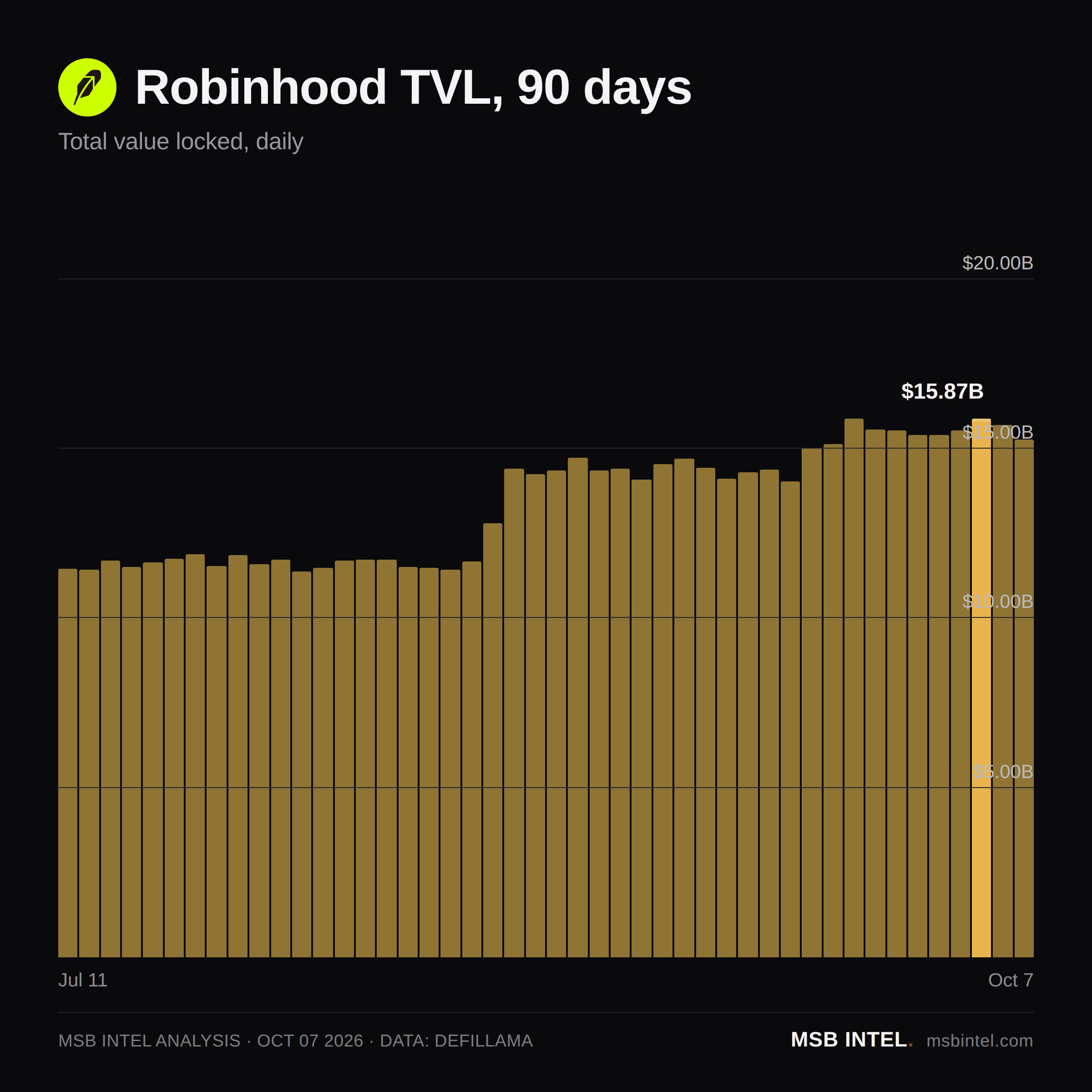
Robinhood operates a $100 billion fintech platform built on retail equities and options trading. Since 2018, the company has offered cryptocurrency trading to retail customers through its app but kept Bitcoin off its own balance sheet. The $25 million position represents the company's first disclosed step into corporate treasury strategy with digital assets.

In recent months, publicly listed companies have either started accumulating Bitcoin or increased existing holdings. Robinhood's move differs in one respect: the company already operates infrastructure and market expertise in crypto custody and trading, unlike traditional corporations new to the asset class.
Kerbrat announced the position at the Asia summit. The figure is modest relative to Robinhood's cash position and market capitalization, but establishes an official corporate stance on cryptocurrency as a balance-sheet asset rather than solely a trading product.
Robinhood now holds $25 million in Bitcoin against reported total assets of approximately $50 billion as of mid-2026, placing the crypto position at roughly 0.05 percent of the balance sheet. The announcement stands apart from the company's retail crypto business, which generates trading fees but does not require the firm to hold customer assets directly.
Investors and regulators are monitoring corporate Bitcoin adoption. If Robinhood continues accumulating or maintains this position through market cycles, the decision will shape perceptions of durability in the fintech sector's commitment to crypto as a treasury hedge rather than temporary positioning.