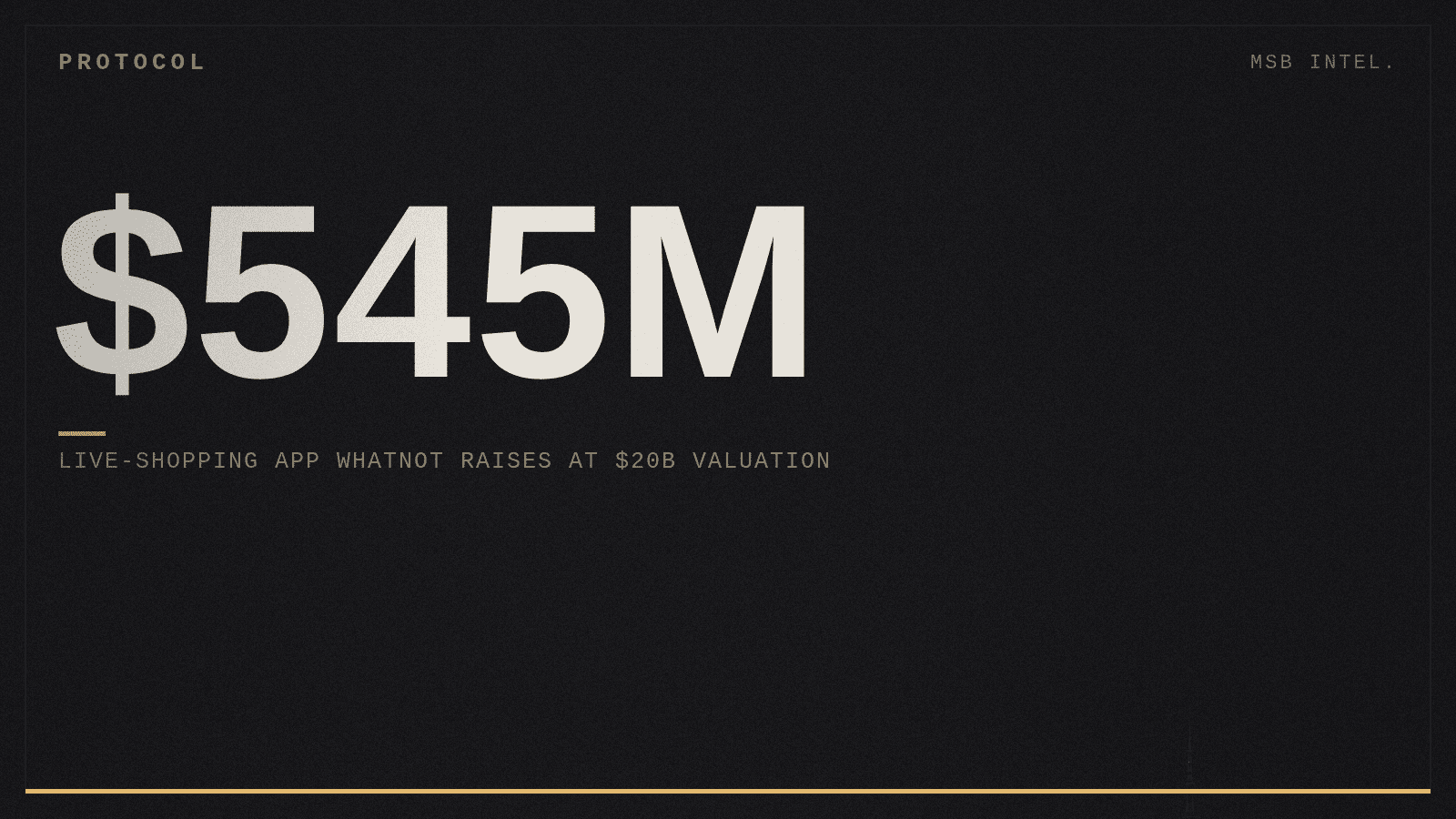
Whatnot, a live-shopping platform, closed a Series G funding round of $545 million at a $20 billion valuation, nearly doubling its worth in less than a year.
The round marks a 73.9 percent increase from the company's October 2025 Series F valuation of $11.5 billion. Whatnot operates a marketplace where creators broadcast live shopping events to audiences, with viewers purchasing products in real time. The model competes with traditional e-commerce by embedding social interaction and creator personalities into the transaction.
The company says the funding will accelerate its artificial intelligence capabilities and expand internationally. Live-commerce platforms have attracted significant capital as venture investors bet on the category's growth in Western markets, where the format remains smaller than in Asia. Whatnot's rise demonstrates investor appetite for creator-driven commerce tied to livestream audiences.
Whatnot was founded in 2019 and has grown to host thousands of creators selling collectibles, fashion, electronics and other goods. The company processes transactions across multiple categories but remains best known for trading cards and memorabilia sales. Prior rounds include a $200 million Series E in 2021 and a $355 million Series F in October 2025.

E-commerce platforms are adding social and creator features to drive growth. Amazon acquired Twitch for $970 million in 2014 and has since layered shopping tools into its livestream service. TikTok Shop has integrated commerce directly into its creator platform, while YouTube is expanding shopping widgets on creator channels.
Whatnot's valuation now sits between that of most mid-stage fintech unicorns and established marketplaces. The $20 billion figure exceeds current public valuations of companies like Shopify, which trades at roughly $35 billion market cap, though Shopify generates annual revenue exceeding $6 billion. Whatnot's annual revenue has not been disclosed publicly.
The number to watch is whether Whatnot achieves profitability or reaches revenue targets that justify its valuation within 18 months, as most late-stage rounds of this scale now face pressure to demonstrate unit economics.