Bybit Dual Asset has integrated four new tokenized equities, bringing its total xStocks lineup to ten, according to the announcement. The four new additions are METAx, TSLAx, HOODx, and CRCLx, representing shares in Meta, Tesla, Robinhood Markets and Crescent Enterprises respectively.
Bybit Dual Asset is the exchange's product for trading fractional shares of publicly listed companies on a blockchain infrastructure. The mechanism allows users to trade equities with the speed and settlement finality of crypto markets while maintaining exposure to traditional stock valuations. The integration expands Bybit's bid to position tokenized equities as a cross-asset class accessible within the same trading interface alongside spot crypto.
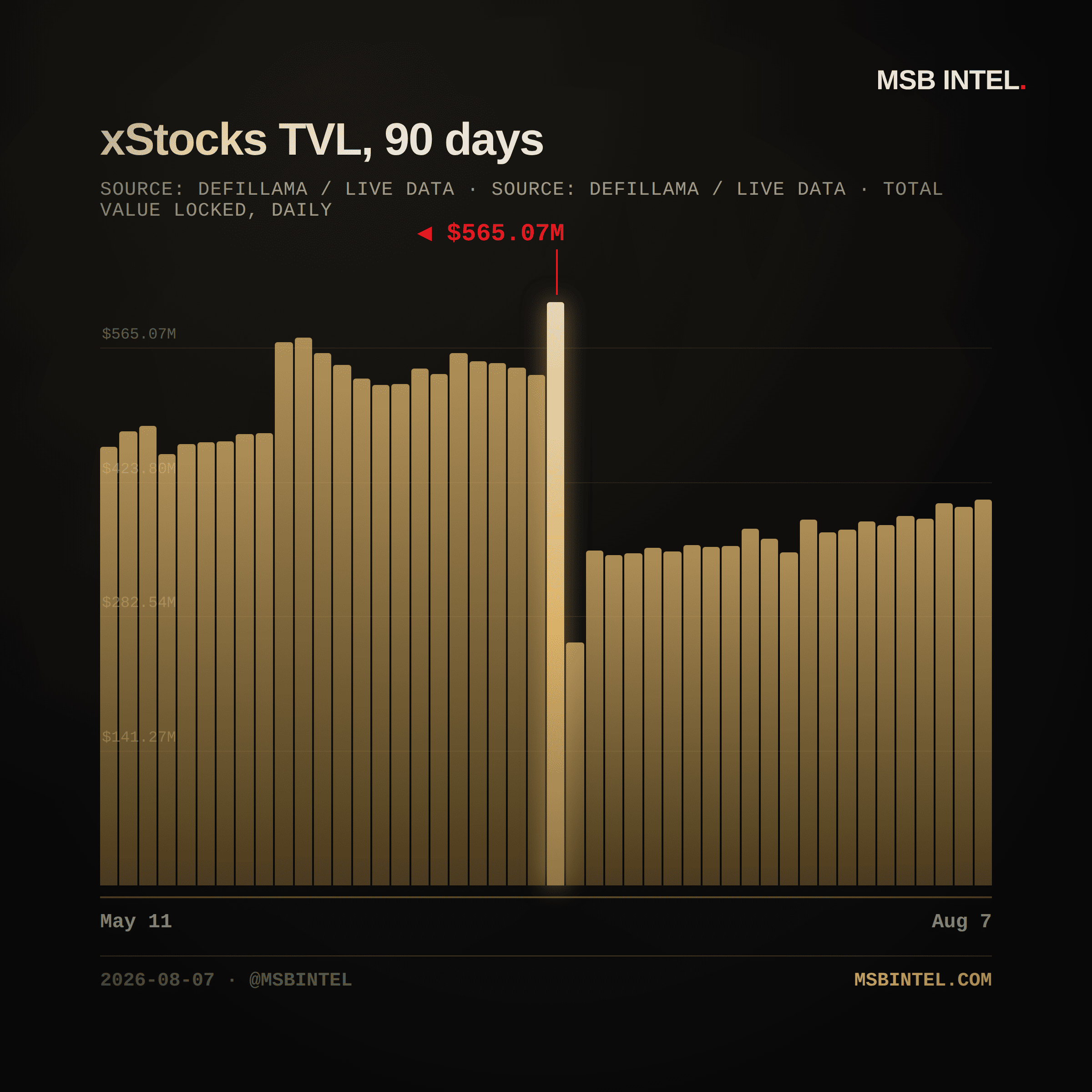

Bybit's inclusion of these four stocks represents demand for the asset class beyond the largest-cap holdings. The Tesla and Meta exposure has been standard in many tokenized equity offerings, while the addition of Robinhood Markets and Crescent Enterprises indicates appetite for broader market coverage.
Dual Asset launched in 2024 with an initial slate of tokenized stocks. The exchange has iteratively expanded the offering as liquidity and custody infrastructure matured. Ten xStocks now represents a 40 percent increase from the six-position lineup that would have existed before this expansion, though Bybit has not disclosed the prior total publicly.
Tokenized equities operate in a regulatory gray zone globally. U.S. regulators have not yet issued clear guidance on whether fractional tokenized share offerings constitute securities or warrant special licensing. Singapore and other Asian jurisdictions where Bybit operates have taken varied approaches, with some requiring derivatives classification and others permitting them under existing exchange licenses for certain user classes.
Bybit's Dual Asset product competes with other crypto exchanges building tokenized asset offerings and with traditional brokerages experimenting with blockchain settlement. The exchange is offering fractional ownership with no stock lending or margin mechanics, positioning the product as straightforward equity exposure rather than a derivatives play. Whether institutional allocators view tokenized equity tokens as substitutes for traditional brokerage accounts or as an alternative asset class entirely will determine how substantially this market segment grows.