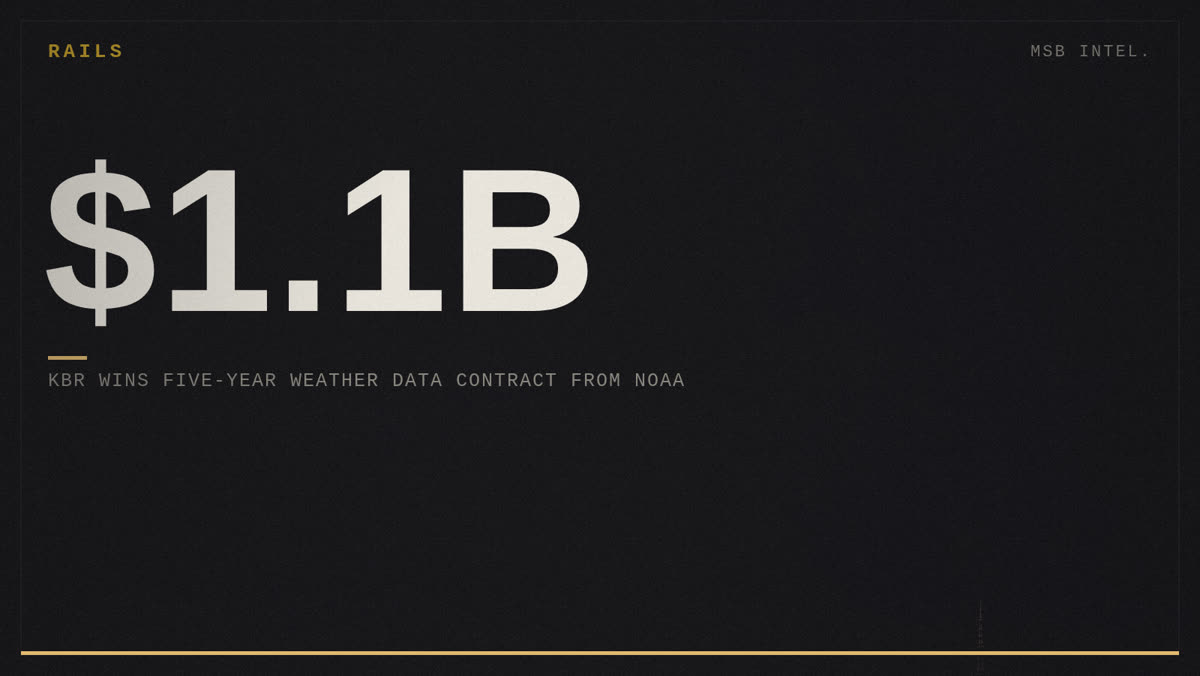
KBR's Mission Technology Solutions unit has secured a $1.1 billion contract from the National Oceanic and Atmospheric Administration to operate commercial observational networks for weather prediction and severe storm preparedness over five years beginning September 2026.
The award is a follow-on recompete of KBR's existing National Mesonet Program work. NOAA operates a network of ground-based weather sensors and data systems that feed into forecast models used by the National Weather Service. KBR will manage the collection, quality assurance and transmission of observational data from commercial networks that supplement NOAA's own monitoring infrastructure.
According to the announcement, the contract runs through August 2031 and covers the operation of mesonet stations, networks of automated weather instruments deployed across the continental United States. These stations measure temperature, humidity, wind speed, precipitation and soil moisture at intervals ranging from one to 15 minutes. The data feeds into NOAA's numerical weather prediction models and is shared with the National Weather Service for public forecasts and severe weather warnings.
KBR has held the National Mesonet Program contract since at least the prior recompete cycle. The company operates similar observation networks for other federal agencies and has a history of work in environmental monitoring and mission-critical infrastructure. The contract value of $1.1 billion over five years averages $220 million annually.

Weather observation contracts have become a focal point for federal spending on climate resilience and disaster preparedness. NOAA's broader observational infrastructure investments include satellite systems, radar networks and ocean buoys. The mesonet program fills a gap in ground-level data collection that satellites cannot provide, particularly for localized severe weather events like flash flooding and tornadoes.
KBR's win represents 220 million dollars in annual obligation from NOAA for weather data operations alone. The recompete structure, where incumbents defend their contracts against new bidders, is standard federal procurement practice for long-standing programs, and KBR's selection indicates NOAA retained confidence in the company's operational performance on the prior contract cycle.
The contract award date of September 1, 2026 marks the formal start of the option period. Whether KBR deploys additional mesonet stations or upgrades sensors beyond the scope of the prior contract will be detailed in task orders issued over the five-year performance period.