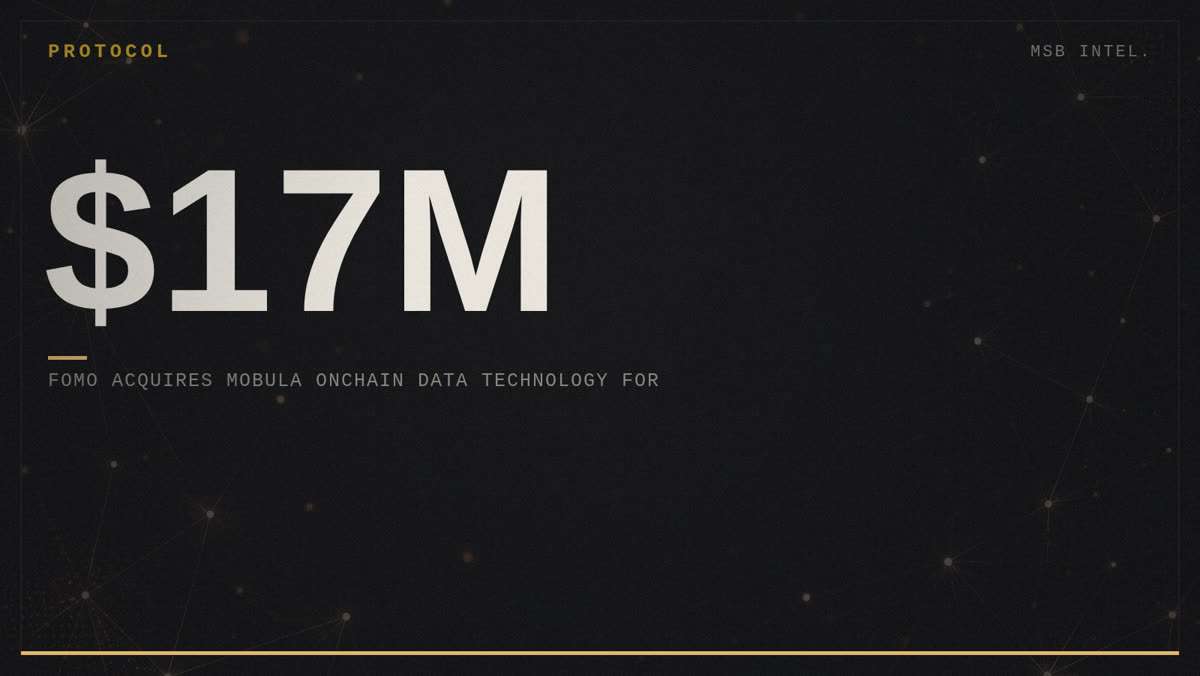
Crypto social trading app Fomo has acquired Mobula's onchain data technology and team for $17 million, according to an announcement posted August 31. The deal brings Mobula's data infrastructure in-house as Fomo approaches 1.9 million users.
Fomo said August trading volume is pacing above $2.8 billion. The acquisition consolidates a third-party data dependency into direct ownership, a pattern common in fintech infrastructure plays where platforms seek to reduce reliance on external providers and control cost structures.
Mobula operates an onchain analytics platform that tracks blockchain data across multiple networks. The company had built out tools for tracking wallet holdings, token flows, and market metrics that social trading platforms use to surface trade opportunities and portfolio visibility. By acquiring the team and codebase, Fomo gains direct control over these systems rather than licensing them from an independent vendor.
Fomo's user base has grown significantly this year. The platform competes with other social trading and copy-trading products in crypto, where users can follow and replicate trades from more experienced traders. August's $2.8 billion volume represents a 47 percent increase over what would be required to sustain an annualized $30 billion run rate.

Onchain data platforms have become foundational infrastructure for crypto applications. Major exchanges and trading terminals rely on similar systems to populate market data, risk alerts, and portfolio analytics. The price Fomo paid reflects confidence that Mobula's technology and team justified bringing the capability internal rather than building from zero or continuing to pay licensing fees.
Fomo's move follows a broader trend of fintech and crypto platforms acquiring or building proprietary infrastructure to reduce operational costs and improve product speed. The deal also gives Fomo control over the data roadmap and lets the company tailor analytics specifically to its trading product rather than using a generic third-party service.
The next metric to track is whether Fomo's user growth and trading volume continue their current trajectory post-acquisition, as integration of new technology teams can temporarily disrupt product velocity.