
Falcon Finance has opened a regulated issuance pipeline for tokenized real-world assets in El Salvador, with a tokenized GPU forward as its first deal. The structure combines regulated issuance under El Salvador's Digital Assets Issuance Law, permissionless secondary trading on Uniswap, and onchain collateralization against the lender's stablecoin.
Compute financing has grown into one of the fastest-expanding categories in asset-backed credit, but liquidity for early exits remains constrained, most compute loans are arranged through private syndicates with no secondary market. The Falcon pipeline addresses that bottleneck by issuing compute forwards as tradable tokens from the outset.
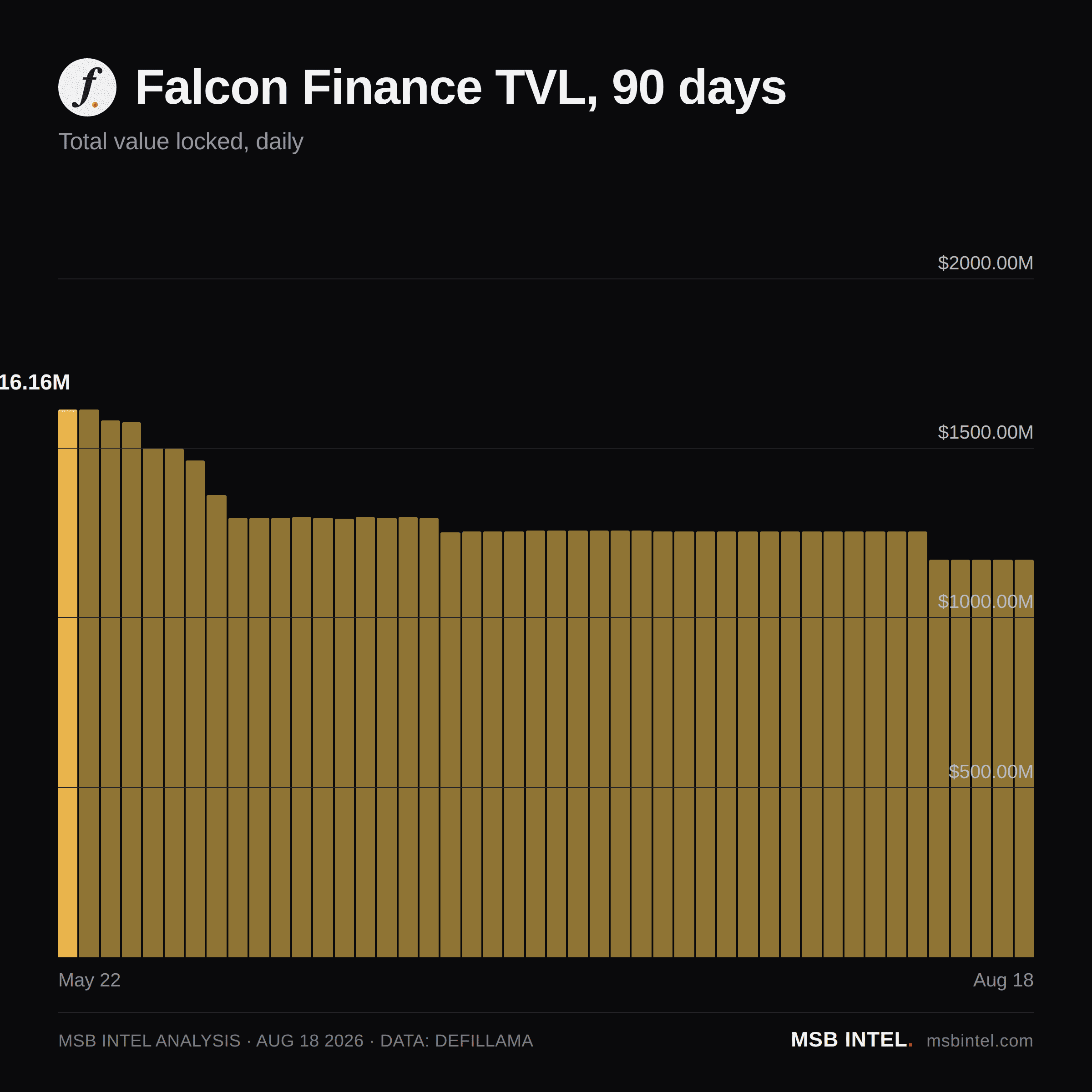
The first issuance, currently in structuring, finances GPU hardware delivery through October. NEAR Protocol provides anchor demand for the compute output and acts as technology partner. Equipment is already contracted and pricing is fixed, so the token issuance funds physical delivery rather than speculation. NEAR's commitment removes demand risk from the financing structure.

The asset will be issued through NOTA S.A.S. de C.V., a licensed Digital Assets Service Provider under El Salvador's Digital Assets Issuance Law operating under license PSAD-0088. The same regulatory framework governs Tether Gold issuance in the country. The announcement indicates the GPU forward is designed to trade on permissionless venues including Uniswap from inception, creating a public market for an asset class that has historically been locked into bilateral credit agreements.
Once trading volume and depth reach a threshold the lender will determine, the tokenized GPU forward becomes eligible to serve as collateral for minting USDf, Falcon Finance's stablecoin. This creates a three-stage liquidity pathway: regulated issuance, secondary trading, and collateralization. A compute lender who wants capital before hardware delivery can sell tokens on Uniswap; holders who want yield can lock them as collateral.
El Salvador has licensed 89 digital asset service providers as of mid-2026, up from 22 in 2024, building regulated infrastructure for tokenized RWAs alongside its existing bitcoin and stablecoin regime. Falcon's pipeline is the first to connect that regulatory layer to open-market venues and a major stablecoin protocol.
Compute financing's shift from bilateral syndication to tokenized, tradeable instruments depends on demonstrable secondary demand. If Falcon's first GPU forward achieves the trading volume required to unlock collateral eligibility, the framework could replicate across other hardware-backed assets; if trading remains thin, the structure proves illiquid in practice despite being legally tradeable.
The metric that decides whether this model scales is the trading depth on Uniswap after issuance. If the tokenized GPU forward does not achieve sufficient volume to justify activation as USDf collateral within 90 days of launch, Falcon will need to rebuild the case for why tokenized compute financing outperforms traditional syndication.