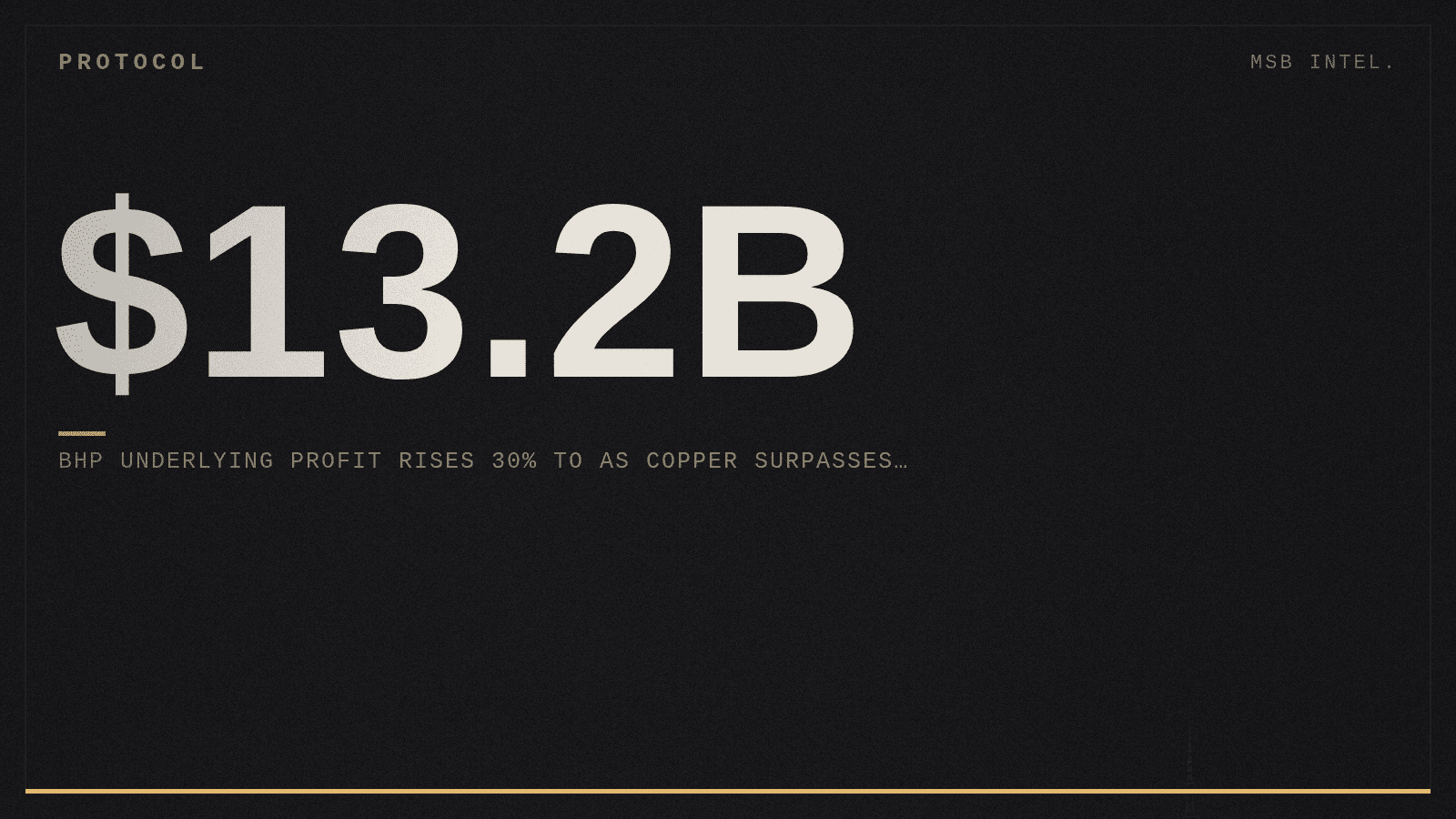
BHP Group reported underlying attributable profit of $13.2 billion for the full year ended June 30, beating consensus estimates, with copper revenue exceeding iron ore earnings for the first time in the mining giant's history.
The 30 percent year-over-year increase in underlying profit marks a structural shift in the company's earnings composition. Iron ore has historically been BHP's largest revenue driver, but copper displaced it in the reporting period as prices for the red metal climbed and demand from energy transition infrastructure accelerated globally.
BHP produces copper, iron ore, coal, and liquefied natural gas across operations in Australia, Chile, Peru, and southern Africa. The company ranks among the world's top three producers in copper and iron ore by volume. Copper is essential to power grids, renewable energy systems, and electric vehicle manufacturing, while iron ore feeds steelmaking. The commodity price environment shifted sharply in the 2026 fiscal year, with copper benchmarks strengthening as supply constraints tightened and construction activity rebounded in major economies.
The full-year results showed record iron ore output, meaning the displacement of iron ore from first place occurred despite production gains. Copper production benefited from both volume and price appreciation. BHP's Chilean copper assets, particularly the Escondida mine, are among the largest in the world. The company has invested heavily in expanding copper capacity to capture long-term demand growth tied to electrification.

Copper prices averaged higher in 2026 than in prior years as inventories fell and geopolitical tensions disrupted supply chains. BHP capitalized on this environment while simultaneously managing iron ore output at record levels, a feat that highlights operational efficiency gains across its portfolio. The earnings beat comes from both commodity price increases and operational performance.
Copper carries different geopolitical and supply-chain risks than iron ore, and its price drivers include technology adoption cycles rather than steel demand alone. A 30 percent jump in underlying profit to $13.2 billion, coupled with copper now leading iron ore in revenue contribution, represents a measurable reordering of the company's cash generation profile. Copper prices remain at multiyear highs.
The metric to watch is whether copper maintains its position as BHP's largest earnings source in the 2027 fiscal year, which would confirm this shift as structural rather than cyclical.