Cronos reversed 10,961 blocks on September 8 to recover $111.2 million in cryptocurrency stolen through a price manipulation attack on the Tectonic lending protocol nine days earlier. The chain rolled back to a state before the August 30 exploit, restoring user funds across the network.
The rollback represents the first execution of this mechanism at scale on a layer-1 blockchain. Harmony announced a rollback plan following its Horizon bridge hack in 2023 but did not execute it. Cronos chose to rewind the entire chain rather than patch individual accounts, a decision that affects how a major blockchain can respond to large-scale theft when the attacker has not yet moved the stolen assets off-chain.
The Tectonic attack exploited a price oracle vulnerability. An attacker manipulated the price of TONIC, Tectonic's collateral token, within the protocol's lending markets. By inflating TONIC's reported value, the attacker borrowed far more cryptocurrency than the collateral was worth, then sold the borrowed assets on external markets. The total loss exceeded $111 million; $102.2 million was recovered through the rollback, while $9 million in bridged assets and user withdrawals that occurred after the attack remained unrecovered, according to Cronos's post-mortem.
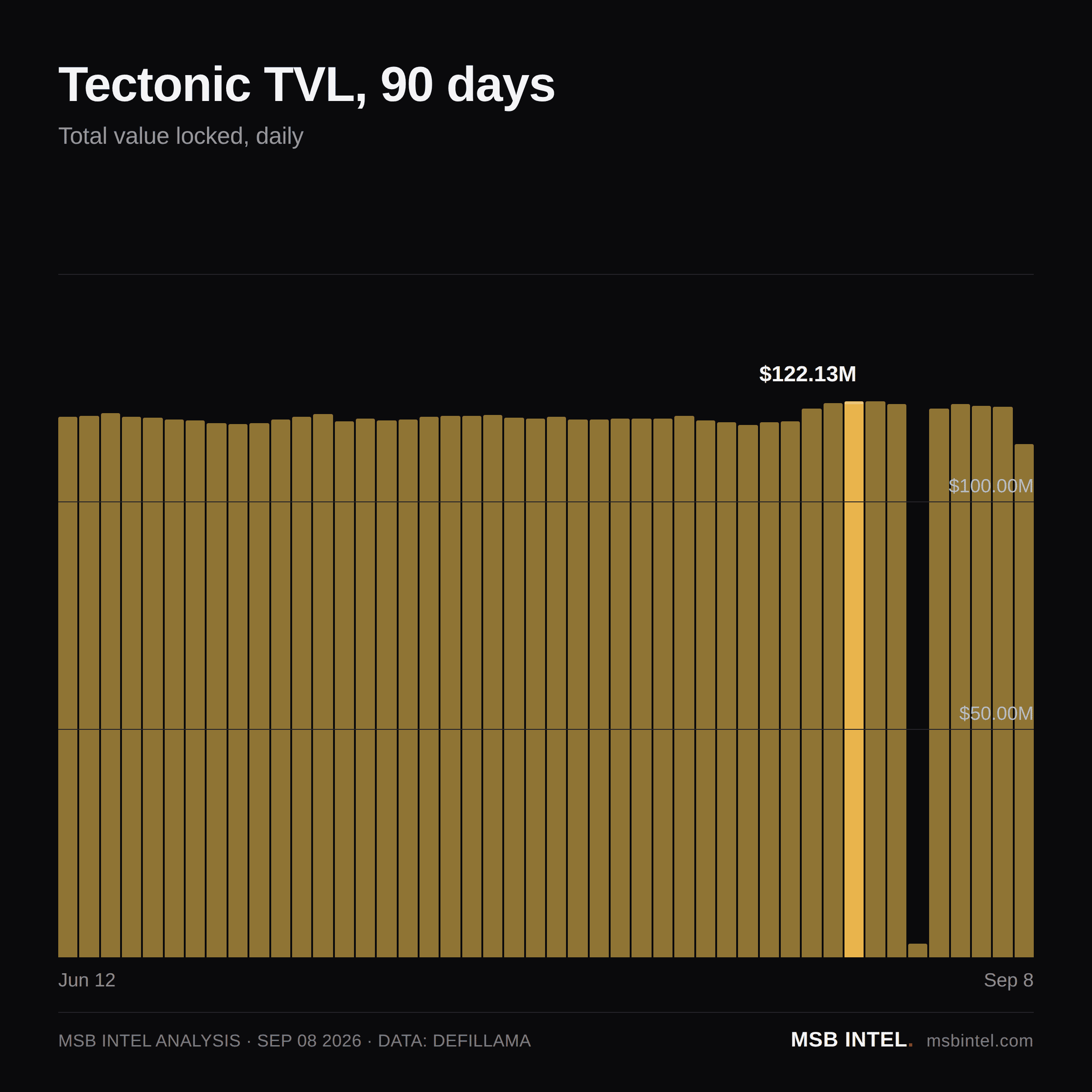
Cronos is a layer-1 blockchain launched by Crypto.com in 2021. It hosts decentralized finance applications including Tectonic, one of its largest lending protocols. Before the exploit, Tectonic held approximately $300 million in total value locked across its markets. The attack reduced that figure significantly and raised questions about oracle design across Cronos-based applications.
The rollback was not automatic. Cronos validators voted to execute it, choosing to coordinate the reversal across the network rather than leave the blockchain in its post-exploit state. This represents a governance decision to undo the ledger's history, a step that cryptocurrency systems typically resist because immutability is central to blockchain design. Cosmos-based chains like Cronos can execute rollbacks more feasibly than proof-of-work systems because validators coordinate through governance, but the action still required consensus on a departure from normal operation.
Ethereum and Bitcoin have historically refused to reverse transactions for theft, citing immutability as foundational. Smaller or application-specific chains have greater flexibility. Cronos's validators weighed the scale of the loss, the speed of their response, and the fact that the attacker had not yet moved assets to other chains or converted them to fiat currency.
The execution took place less than two weeks after the attack. Once bridged assets leave a blockchain, reversing the underlying chain cannot recover them, which explains why $9 million remained out of reach even after the rollback. Cronos's validators moved within the narrow window before stolen funds could migrate off-chain.