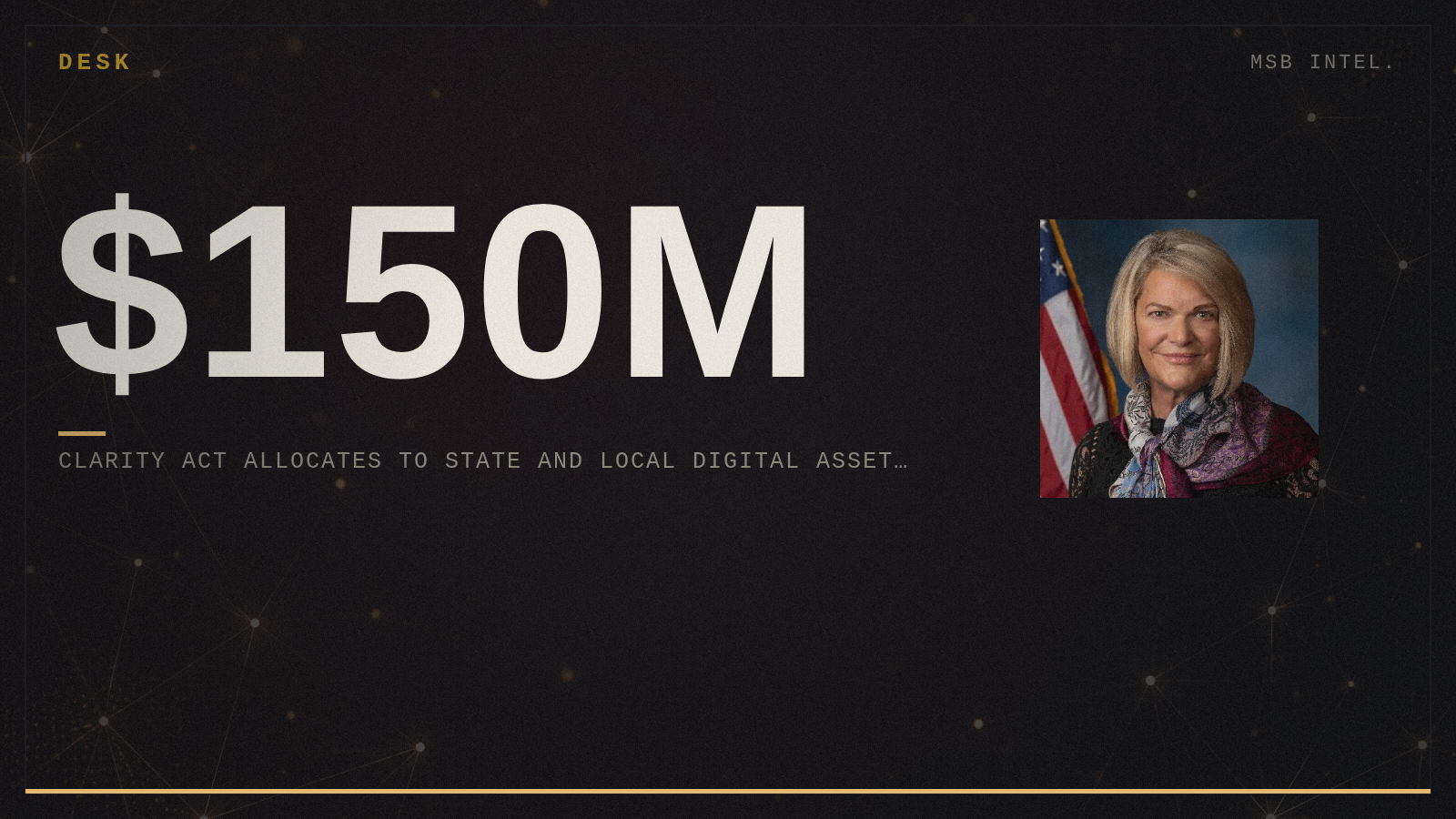
Senator Cynthia Lummis's updated Clarity Act bill includes $150 million in grants to state and local law enforcement agencies to prosecute digital asset fraud, according to the senator's release of revised bill text.
The allocation is part of a broader enforcement framework in the proposed legislation. Lummis said in a post on X that the funding backs enforcement with real resources, distinguishing the bill from rules that lack dedicated appropriations. The grants are designed to equip law enforcement at the state and local level to investigate and prosecute fraud cases involving digital assets.
The Clarity Act is a digital asset regulatory proposal that Lummis has been developing since 2022. The bill aims to establish clear regulatory authority by designating the Commodity Futures Trading Commission as overseer of digital asset commodities and the Securities and Exchange Commission as overseer of digital asset securities. Previous versions proposed different enforcement mechanisms; this version ties accountability to funding.

Lummis, a Wyoming Republican and chair of the Senate Banking Committee's digital assets subcommittee, has positioned the bill as an alternative to the patchwork of existing rules. Wyoming has passed its own digital asset laws since 2018, giving Lummis's office experience with state-level oversight. The Clarity Act extends that model nationally through federal legislation.
The $150 million grant program is the state and local enforcement component disclosed in the updated bill text. The measure still faces uncertain passage in the Senate, where debate over regulatory authority and enforcement power continues among banking and crypto-focused lawmakers. No companion House version has emerged, and the bill has not been scheduled for committee markup.
Lummis offered tailored versions of the bill's funding framework for different audiences, including law enforcement, industry participants and Wyoming constituents. State attorneys general have requested additional resources for digital asset fraud cases, which have grown as retail participation in crypto markets has expanded.