
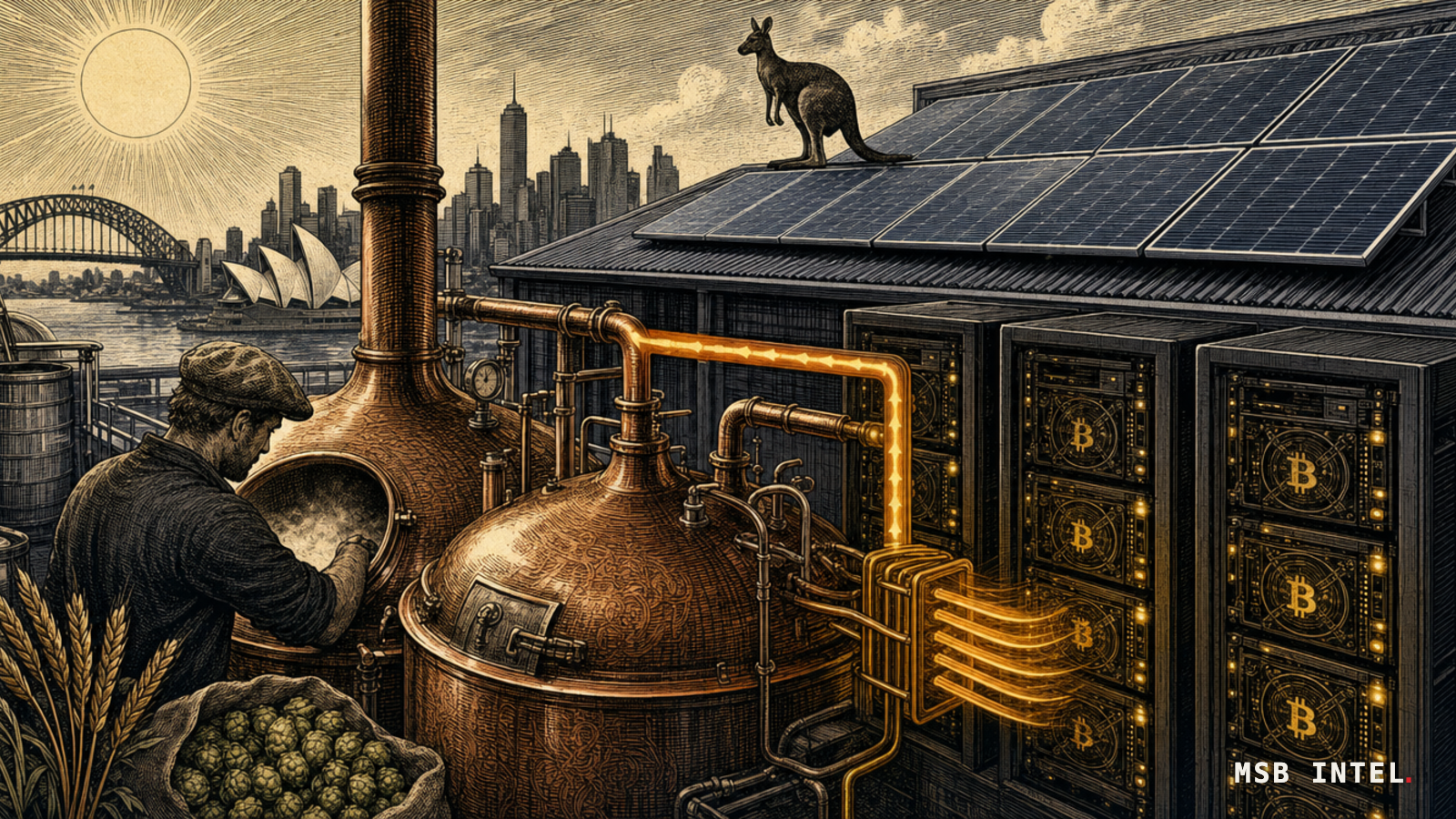
Hawkesbury Brewing Co, on Australia's NSW Central Coast, has submerged 16 Bitcoin miners in non-conductive liquid and built a heat exchanger to recycle the thermal output into hot water for its brewing process. The operation runs entirely on excess rooftop solar generation.
The setup emerged from a practical constraint: Australian grid feed-in fees made exporting surplus solar power uneconomical, and the brewery's insurers refused to approve battery storage next to its alcohol production facility. By converting mining heat into a production input, the brewery eliminated the export problem while deploying its stranded solar capacity.
According to the brewery's account, the integrated mine generates approximately $2,000 monthly in Bitcoin revenue, a figure that nearly offsets the facility's power costs. The brewery produces roughly 100,000 liters of beer monthly and says the same thermal-reuse model could extend to swimming pools, apartment buildings, and manufacturing plants.
The approach inverts the typical cost structure of Bitcoin mining. Rather than treating heat dissipation as an operational burden to manage through cooling systems, the brewery captures it as a commodity input to its core production. Heat-capture setups for mining have emerged across industrial and agricultural operations in recent years, particularly where thermal demand is already present.
Few industrial facilities have integrated mining heat this directly into their primary operations. The brewery's use case depends on year-round thermal demand and the ability to operate the mine only when solar generation exceeds other electrical needs. Australian regulatory structures around energy export and battery installation shaped the economic logic behind the choice.
The economics of the arrangement depend on sustained Bitcoin prices and electricity economics. If the mine generates roughly $2,000 monthly against a power bill it nearly covers, the facility is absorbing the capital cost of the mining hardware and heat exchange equipment against a contribution margin close to zero, with returns contingent on Bitcoin price movement.
Manufacturers and operators managing high heat loads have begun pricing mining operations as utilities rather than separate ventures. The brewery's setup demonstrates one pathway where the two systems lock together economically where both mining hardware economics and thermal demand align.