

Binance's tokenized stock product added 344,000 holders over seven days, more than double the growth rate of its nearest competitors in the emerging tokenized equities market, according to holder data tracked on-chain.
Robinhood's tokenized stock offering added 159,900 holders in the same period, while Ondo Finance, which issues tokenized Treasury and stock products, added 105,800. The three issuers control the majority of net new participants in tokenized stocks, a category that has grown substantially as major exchanges and fintech platforms layer blockchain distribution into their equity offerings.
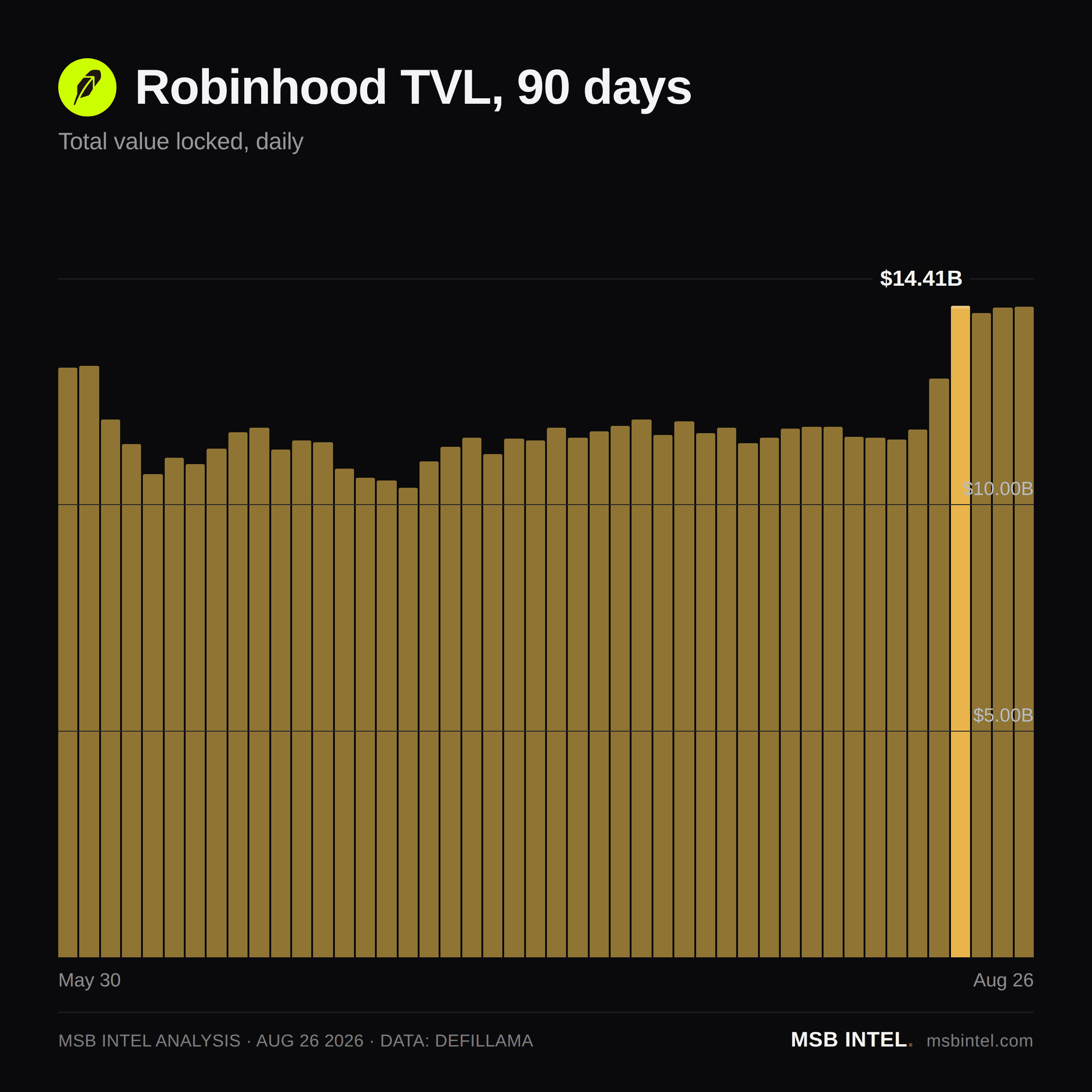
Tokenized stocks trade as blockchain-native securities backed by custodied shares or cash equivalents held by the issuer. Binance bStocks wraps equities from major indices into ERC-20 tokens that settle on the Binance Smart Chain, allowing users to trade fractional shares and hold them in self-custodied wallets. Robinhood's tokenized stock product operates on a similar model, with shares custodied through a subsidiary and tokens issued for liquidity and custody flexibility. Ondo Finance, a tokenized finance protocol, expanded beyond Treasury tokens to offer equity-linked instruments.

Binance added 344,000 holders in the tracked week through an exchange ecosystem with 200 million registered users, many with existing Smart Chain exposure. Robinhood's 159,900 addition trailed Binance's by more than half, despite Robinhood's direct relationship with U.S. retail equity traders. Ondo added 105,800 holders, indicating tokenized stocks remain a niche feature of its broader institutional Treasury business.
Tokenized equities remain a regulatory gray zone in most jurisdictions. The U.S. Securities and Exchange Commission has not issued definitive guidance on token-wrapped equity trading, though it has examined whether such products constitute unregistered securities offerings. Binance, which does not hold SEC registration in the United States, has deployed bStocks primarily through its international platform, avoiding direct U.S. regulatory exposure. Robinhood operates a registered broker-dealer, subjecting its tokenized product to stricter compliance requirements.
The three platforms together added 609,700 holders in the tracked week, establishing tokenized stocks as a measurable if still fractional component of equity trading infrastructure. Binance's 344,000 weekly addition is 344,000 divided by seven days, or 49,143 holders per day. Robinhood's 159,900 weekly addition is 46 percent of Binance's figure, indicating scale rather than feature preference drives the gap.
The adoption patterns will depend on whether regulators clarify the status of token-wrapped equities as securities or utilities, and whether custody standards for non-custodial holding of tokenized shares gain institutional acceptance. If the SEC issues enforcement guidance treating tokenized stocks as unregistered securities, platforms without broker-dealer licensing may face pressure to wind down U.S.-facing services.