
Bernstein identified 31% upside potential for Robinhood Markets stock after the company's Robinhood Chain generated $33 million in fees over 15 days, exceeding Solana and BNB Chain on the same timeframe, according to a note published September 8.
The analysis values HOOD at $122.11 from its Friday close, implying a price target around $160. Robinhood Chain's $33 million in 15-day fees compared to Solana's $11 million and BNB Chain's $9 million over the same period, according to the firm's calculations.
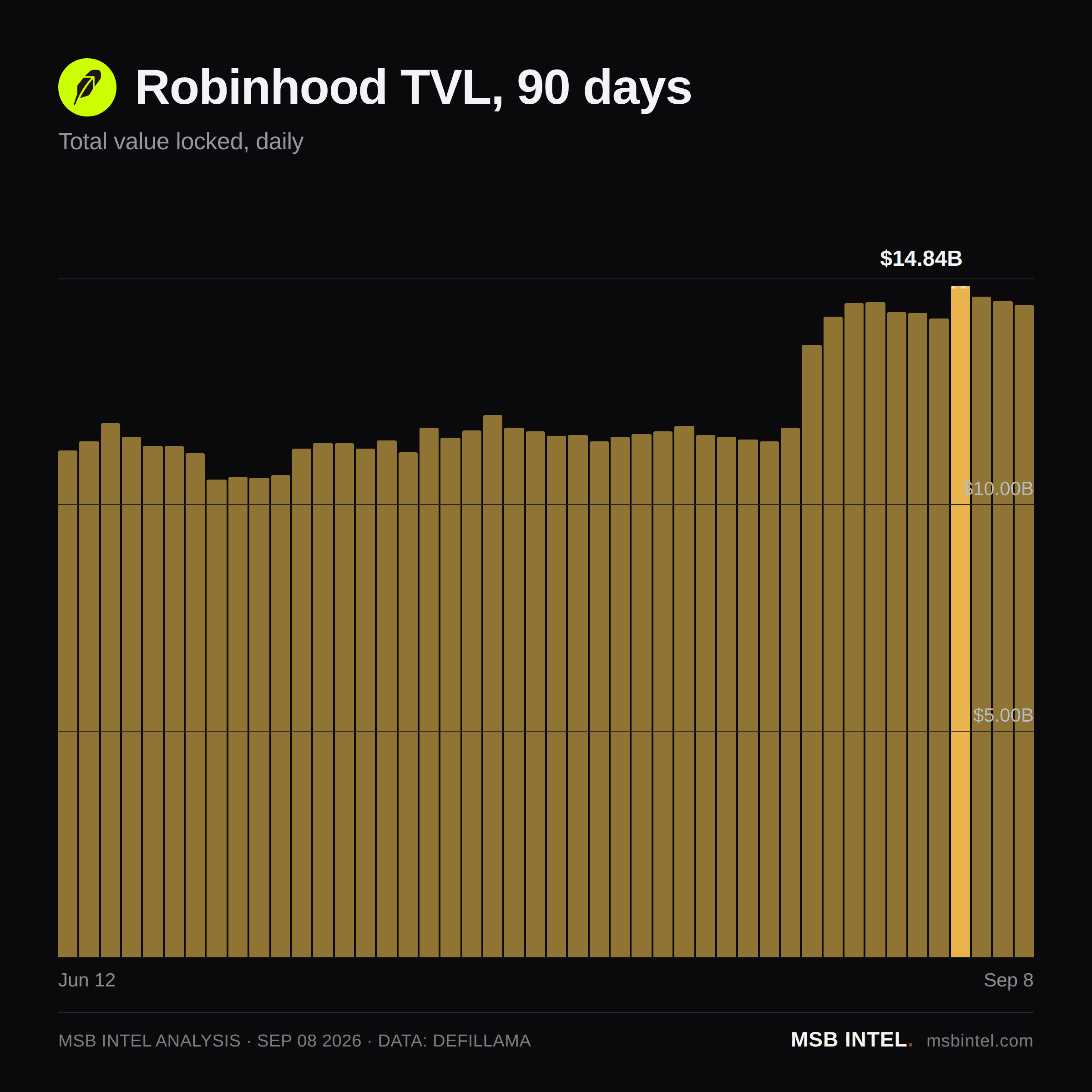

Robinhood Chain launched in May 2024 as a blockchain network built on Solana's codebase but operated independently by the retail brokerage. The network processes transactions and charges fees that accrue to Robinhood's business. Bernstein's comparison measures protocol-level fee generation.
Fee velocity across major chains fluctuates based on trading volume and network congestion. Solana has averaged higher daily fees historically, though the 15-day snapshot in Bernstein's note showed a period when Robinhood Chain activity spiked. The brokerage has been driving user adoption through zero-commission trading and integration with its retail customer base.
Bernstein's price target assumes Robinhood Chain's early fee performance continues and translates into measurable profit contribution or higher equity valuations tied to blockchain infrastructure holdings. Bernstein did not elaborate on the mechanism for the upside in its note. Robinhood's core brokerage revenue remains tied to trading volume and margin lending, making the blockchain fee stream a relatively small but accelerating component of total revenue.
A 31% move on a $122 base would represent a 2.1 billion dollar increase in market capitalization for Robinhood. The firm's recent stock price has been responsive to earnings surprises and trading volume spikes, both of which Bernstein may be implying the chain generates indirectly through platform stickiness. The report lands amid a broader push by retail brokerages to develop proprietary blockchain and trading infrastructure to diversify revenue and reduce dependence on payment-for-order-flow arrangements.