
Stablecoin supply on Robinhood Chain surpassed $439 million as of July 22, according to on-chain data tracked by DefiLlama. The figure represents rapid adoption since the chain's launch in early July.
USDG, a yield-bearing stablecoin issued on the chain, accounts for roughly 64% of total stablecoin supply. USDG generates yield by directing a portion of transaction fees to holders.
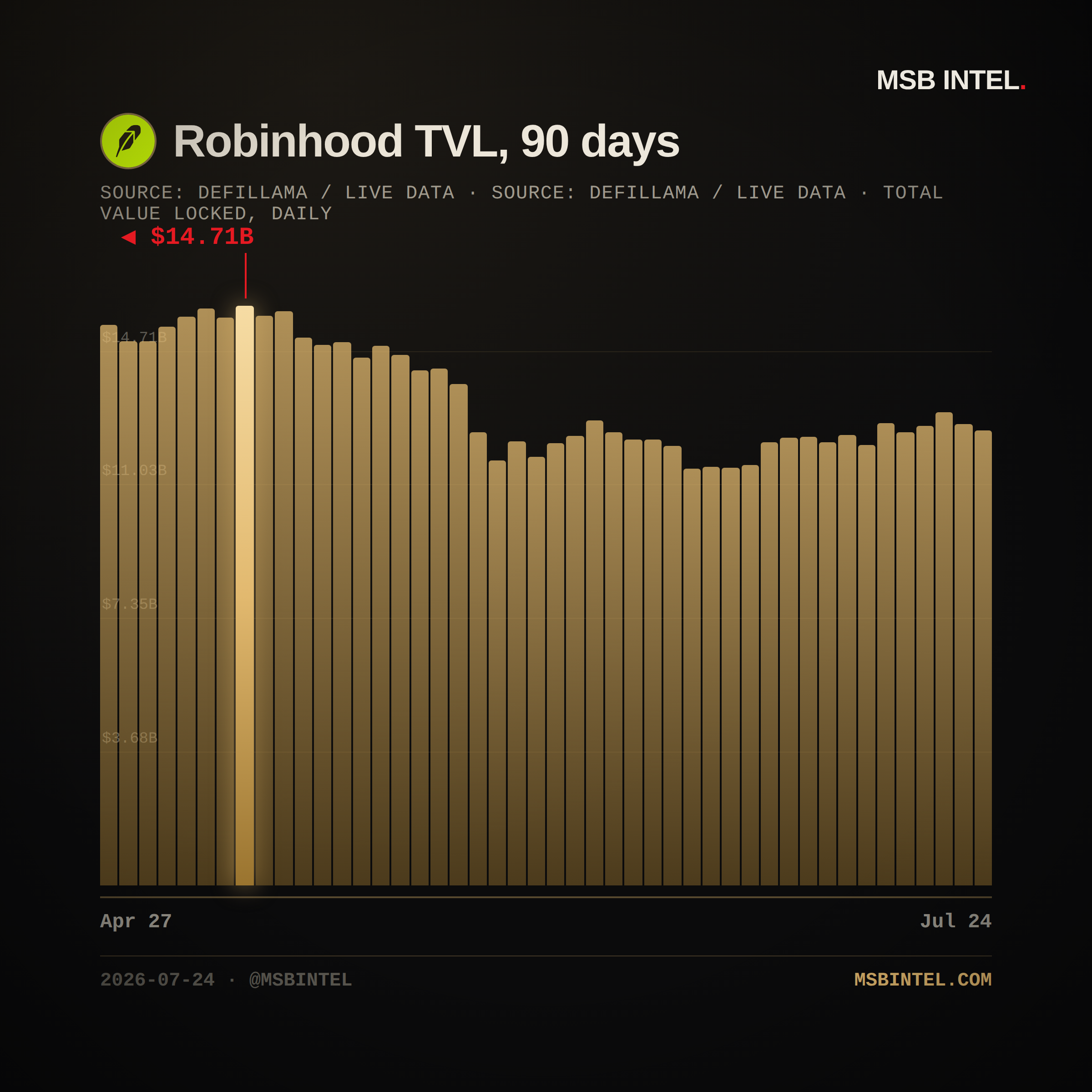
Robinhood Chain launched in the first week of July as a Layer 2 network built on Polygon. The chain is operated by Robinhood Markets, the retail brokerage, and targets crypto users seeking low-cost transactions and integrated trading functionality. Total value locked on Robinhood Chain exceeded $305 million in late July, and daily active users climbed over 50% month-over-month in the period following launch.
The pace of stablecoin issuance on new chains has become a common measure of user onboarding. Established networks like Ethereum and Polygon hold stablecoin supplies in the tens of billions, but newer chains typically require months to years to build comparable pools of liquidity. Robinhood Chain reached $439 million in seven weeks, a timeline compressed by both the parent company's retail distribution and the yield mechanism embedded in USDG itself.
Yield-bearing stablecoins have grown in adoption across multiple chains since 2024. Protocols including Curve and Aave introduced variants that pay users for holding, reducing the opportunity cost of capital sitting in stablecoin form. USDG's structure follows this pattern, though the yield source, chain transaction fees, differs from yield farming or liquidity mining designs used elsewhere.
The metric to watch is whether Robinhood Chain's stablecoin supply stabilizes at current levels or continues the growth pace of its first month. If monthly active users remain above the 50% growth threshold into August, the chain's stablecoin base will likely expand further.