Ankr has launched an institutional-grade remote procedure call infrastructure layer for the XRP Ledger, offering enterprise developers dedicated endpoints and verifiable node responses for building applications on the network.
The infrastructure tier distinguishes itself from Ankr's August 3 public free RPC launch through service-level commitments: the institutional offering includes a 99.99% uptime SLA and SOC 2 Type II compliance certification, according to the announcement. Enterprise clients receive dedicated endpoints rather than shared bandwidth, a standard requirement in institutional blockchain infrastructure where performance isolation prevents one application's demand from degrading another's response times.
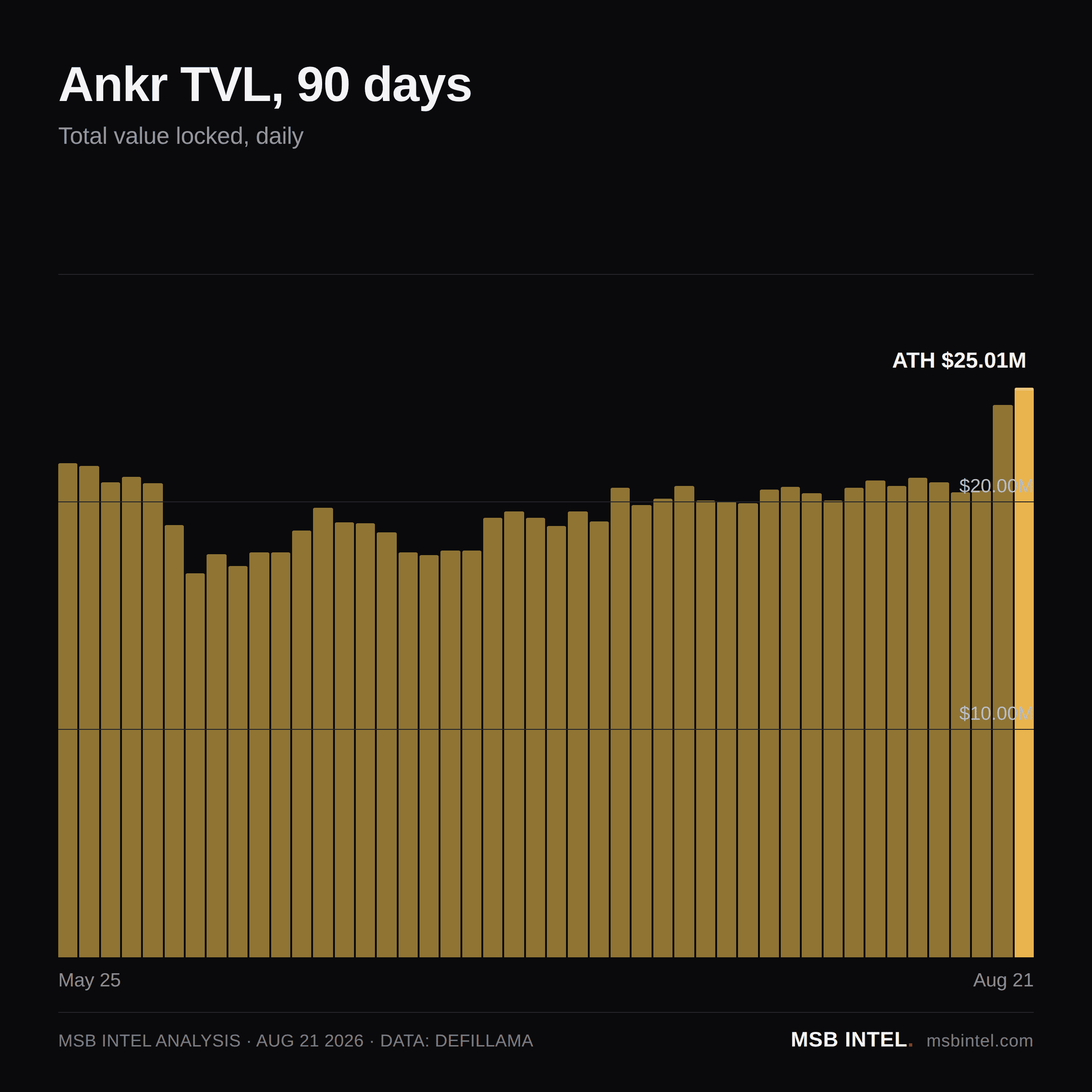
RPC infrastructure has become a gating layer for blockchain adoption. Public networks like Ethereum and Solana rely on third-party providers, Infura, QuickNode, Alchemy, because running a full node requires substantial capital and engineering overhead. XRP Ledger developers previously lacked a comparable institutional offering with formal service guarantees and compliance documentation. Enterprises building on the network now have access to predictable availability through dedicated endpoints, a requirement most institutional allocators and fintech partners impose on infrastructure vendors.
Ankr operates across multiple blockchains, having built RPC layers for Ethereum, Solana, Polygon and others. The XRP Ledger expansion places the company within the Ripple ecosystem at a moment when the network is competing for developer mindshare against established smart contract platforms. Ankr's institutional tier bundles verifiable responses, cryptographic proof that node data matches the chain state, a feature that appeals to compliance-heavy use cases where audit trails are non-negotiable.
The 99.99% SLA covers 52.6 minutes of unplanned downtime annually, a threshold that governs contract penalties in institutional services. SOC 2 Type II certification requires independent audits of security controls and operational processes over six months or more, a credentialing step that most enterprise blockchain vendors complete before scaling institutional sales.
No adoption figures or enterprise commitments have been announced. The infrastructure extends Ankr's model of tiered service, free public endpoints for developers, paid institutional tiers for production workloads, across a new ledger, but lacks disclosed uptake metrics that would show market traction among the firms the tier targets.