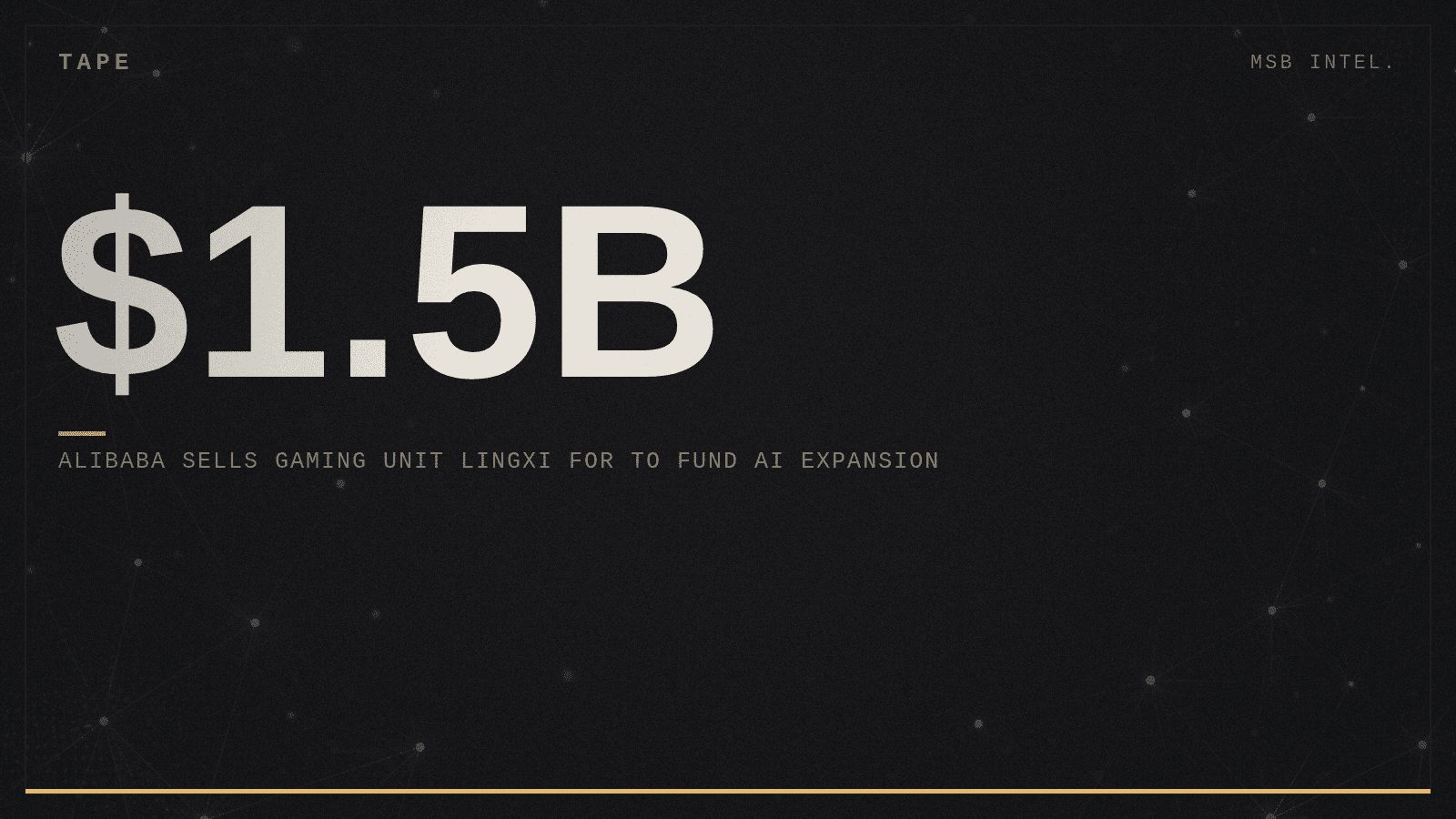
Alibaba is selling its gaming unit Lingxi Games for at least $1.5 billion, according to an internal memo from Lingxi CEO Zhou Bingshu, as the Chinese tech giant reallocates capital toward artificial intelligence development. The sale triggered a 2.4 percent pre-market gain in Alibaba shares on August 17.
Reuters sources indicate Alibaba may receive more than $2 billion total from the transaction. The divestiture marks a strategic shift away from gaming as Alibaba competes in the crowded AI infrastructure market against rivals including Tencent and Baidu, which have similarly redirected resources toward large language models and data center buildout.
Lingxi Games, founded in 2021, developed mobile and web-based titles for Alibaba's ecosystem. The unit has struggled to compete in a saturated gaming market and never generated the returns expected when Alibaba first invested in the space. Divesting non-core gaming assets has become routine among Chinese tech conglomerates facing pressure to demonstrate capital efficiency to domestic regulators and investors worried about sector concentration.
Alibaba's AI ambitions have accelerated since the release of rival models from Baidu and ByteDance in late 2023. The company has invested billions in custom chips and data centers to reduce reliance on Nvidia semiconductors and build proprietary models for enterprise customers. Gaming faces headwinds from China's strict licensing regime and competition from titles by ByteDance and NetEase.
The $1.5 billion base price values Lingxi Games at a discount to comparable gaming acquisitions in the region over the past two years, where mobile game studios have typically sold at three to five times annual revenue. Lingxi's profitability made the divestiture rational capital reallocation, according to analysts.
Alibaba has sold or wound down other non-core units in recent years, including parts of its consumer logistics business and stake sales in payment processors. Each transaction funneled proceeds into cloud infrastructure and AI research. The Lingxi sale continues that pattern: a cash-generating business traded for exposure to faster-growing technology bets where the company has not yet achieved dominant market share.
The sale closes a chapter on Alibaba's gaming ambitions that began in 2017 when the conglomerate first acquired studios to compete with Tencent in mobile. Seven years on, the business has not scaled, and capital constraints in China's tech sector have made divesting slower-growth units the path of least resistance.