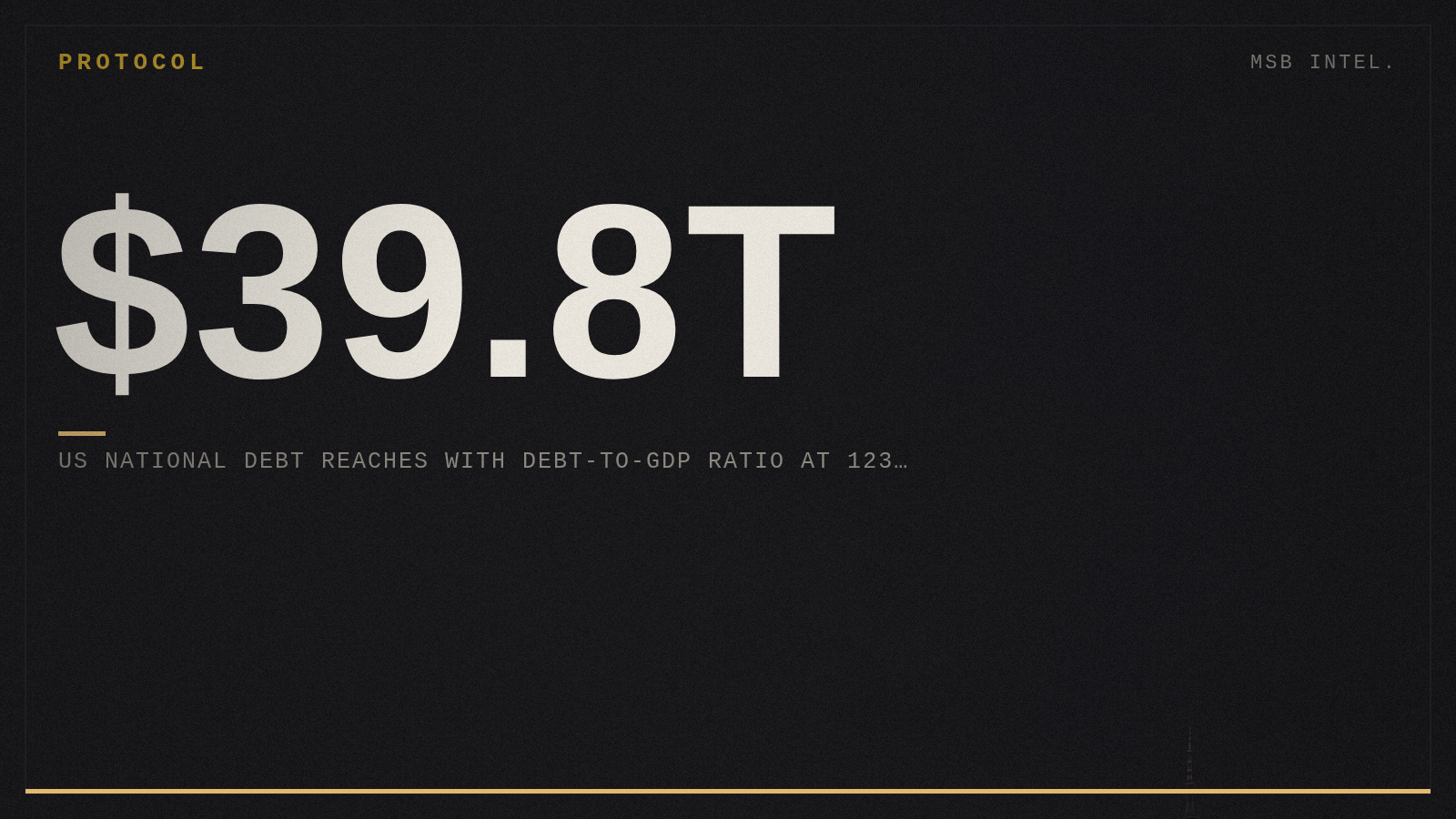
The United States national debt has reached $39.8 trillion, according to Treasury data, with the debt-to-GDP ratio now standing at 123 percent as of the first quarter of 2026.
The 123 percent ratio remains below the COVID-era peak of 130.3 percent recorded in March 2021, but exceeds the previous post-World War II high. A debt-to-GDP ratio above 100 percent means the country owes more than its annual economic output. Fiscal deficits, military spending, entitlement programs, and interest payments on existing debt have all contributed to this accumulation.
The Treasury publishes daily debt statements tracking total outstanding obligations. The $39 trillion mark was first crossed in March 2026, roughly nine months after the debt exceeded $38 trillion in late 2025. The pace of debt accumulation has accelerated as annual deficits have widened.
Interest costs on federal debt have become a material budget item. The government spent approximately $659 billion on net interest in fiscal year 2024 and is projected to pay substantially more in 2025 and 2026 as average borrowing rates remain high. This spending constrains flexibility for other outlays and tax cuts.

The debt load stems from structural imbalances between revenues and spending. Social Security, Medicare, and defense account for roughly two-thirds of federal outlays. Revenue collections have not kept pace with these obligations, forcing continued borrowing at Treasury auctions.
The debt-to-GDP ratio has stabilized near the 123 percent level after declining from the COVID peak, but deficit projections from the Congressional Budget Office point to resumed increases within the decade if current fiscal trajectories persist. The Treasury auctions roughly $5 trillion in securities annually to fund operations and refinance maturing debt.
Whether the ratio climbs back toward 130 percent or stabilizes below it hinges on whether Congress acts to narrow the annual deficit through revenue increases, spending restraint, or both before interest costs consume a larger share of the budget.