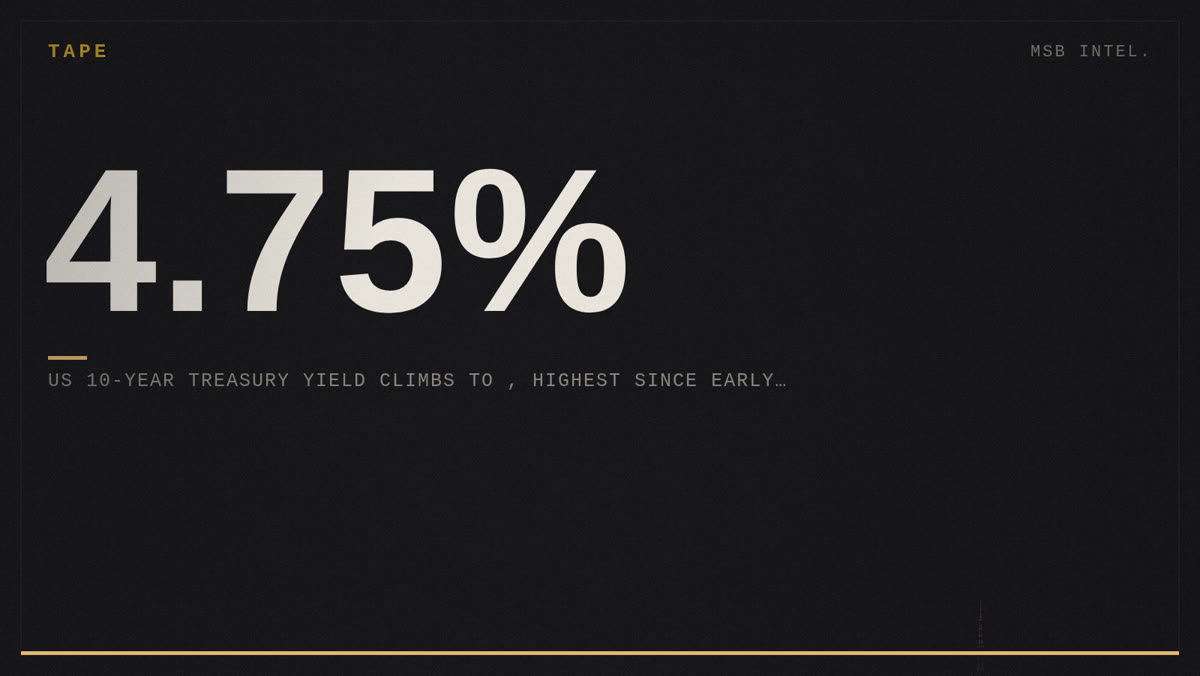
The US 10-year Treasury yield rose to 4.75% on August 31, marking the highest level since January 2025. The move comes as longer-dated government debt faces sustained pressure amid elevated real yields and persistent inflation expectations.
Treasury yields have climbed steadily through 2026 as the Federal Reserve has held rates in restrictive territory and forward guidance has shifted away from near-term cuts. The 10-year yield's approach to 4.75% shows investor demand for higher compensation on longer-duration bonds. Rising yields typically raise refinancing costs for corporations and sovereigns.
The current level stands 4 basis points below the January 2025 peak of 4.79%, when yields spiked on strong labor data and hawkish Fed messaging. The gradual ascent back toward that threshold comes as markets price in persistence of above-target inflation and expectations that policy rates will remain elevated longer than previously anticipated. Recent data on consumer spending and wage growth have reinforced those views.

For crypto markets, rising Treasury yields tend to reduce the relative appeal of assets without cash flows. Bitcoin and ether have historically underperformed during periods of climbing risk-free rates, as capital rotates toward bonds and cash. Yields at this level also affect borrowing costs in digital asset derivatives markets, where institutional traders finance long positions.
Fixed income traders are now watching whether yields can extend beyond 4.75% without triggering a demand response or Fed communication that indicates a longer hold at current rates. A break above 4.79% would test January's high and potentially indicate a structural reset in yield expectations. The path higher from here depends on labor market data, headline inflation prints, and Fed communications scheduled through September.