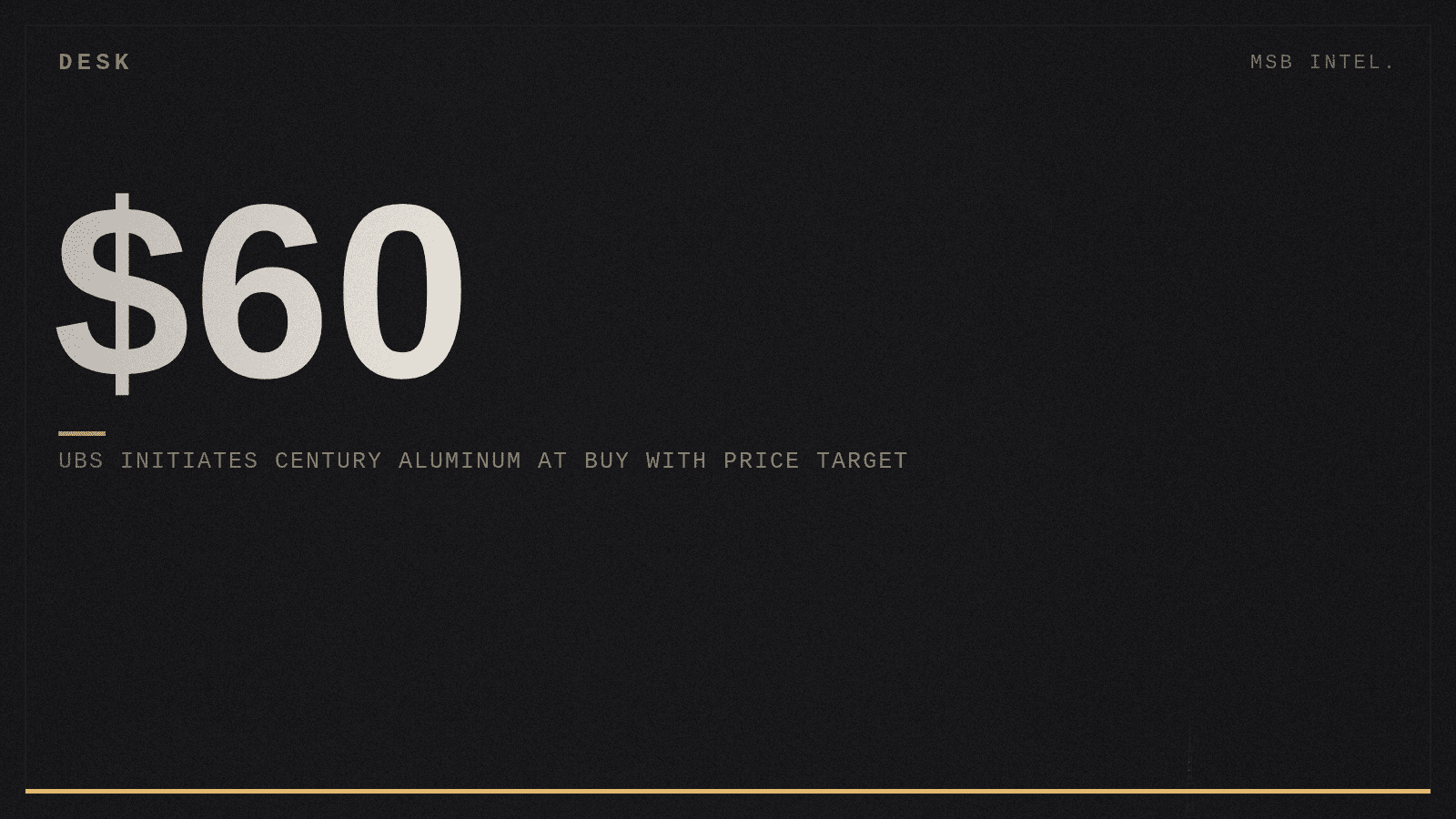
UBS initiated coverage of Century Aluminum with a Buy rating and $60 price target, citing upside from sustainably higher U.S. regional aluminum premiums driven by tariff policy.
The bank's thesis centers on the Midwest Premium, the regional price premium for U.S.-produced aluminum. Tariff structures that protect domestic smelting have historically widened the Midwest Premium relative to global spot prices, creating a structural advantage for U.S. producers like Century Aluminum that sell into regional markets rather than competing on undifferentiated global commodity pricing.
Century Aluminum is the second-largest U.S. primary aluminum producer by capacity, operating three smelters in the Pacific Northwest and Kentucky. The company's earnings and cash flow are directly sensitive to the Midwest Premium spread. When the premium widens, regional smelters capture additional margin on every ton of primary metal sold into North American end-use markets. When it narrows, profitability compresses rapidly.
The regional premium has been volatile. During periods of strong U.S. trade protection, the Midwest Premium has traded at levels 3 to 5 cents per pound above global prices. In open-trade environments, that gap can collapse to near-parity. The current tariff environment, which includes duties on primary aluminum imports, has been cited by analysts as supporting a wider and more durable premium than would exist under lower-barrier trade.

UBS's $60 price target implies material upside from Century Aluminum's recent trading levels. The company's stock has been volatile through 2026 as market participants debate the staying power of current tariff policies and the trajectory of U.S. industrial production, both of which affect smelter output and pricing.
The initiation follows broader analyst attention to the U.S. primary aluminum industry as a tariff-policy-sensitive subsector. Producers dependent on export sales into competitive global markets lack that regional pricing advantage.
UBS's coverage entrance into Century Aluminum rests on whether the Midwest Premium remains above 3 cents per pound by year-end 2026; if it does, the structural case for regional producers strengthens.