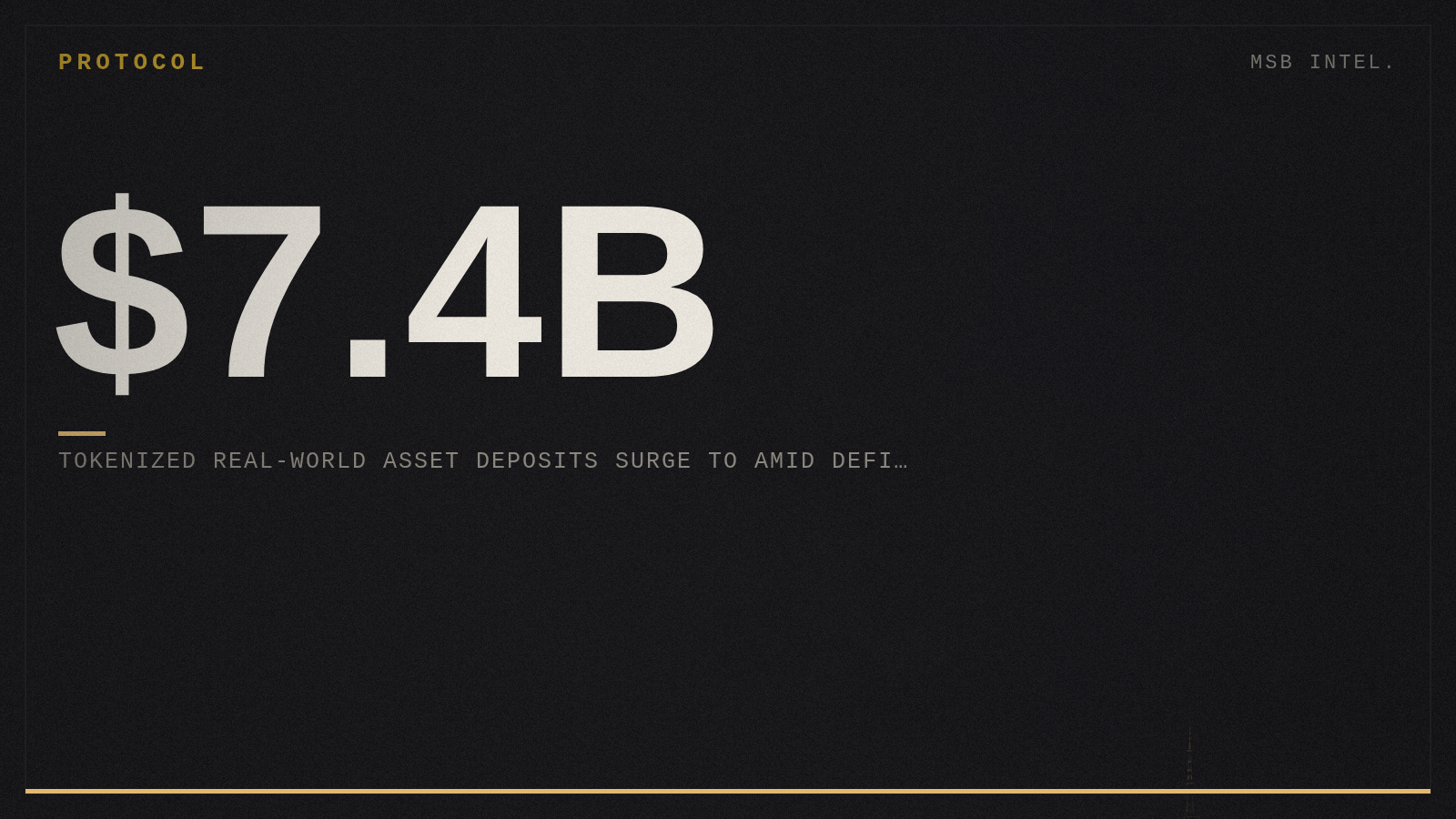
Deposits in tokenized real-world assets tripled to $7.4 billion in the year through mid-2026, according to a CoinShares and Token Terminal report, as the sector expanded lending and trading activity while broader decentralized finance contracted.
The growth represents a departure from the rest of DeFi. Total DeFi value locked fell 15 percent over the same period, while spot trading volume across the sector declined 70 percent. RWA trading volume, by contrast, rose 220 percent. Deposits climbed from $2.3 billion in the second quarter of 2025.
Tokenized real-world assets include on-chain representations of government bonds, gold, equities and money market instruments. The category operates at the intersection of traditional finance and blockchain infrastructure, with major banks and asset managers issuing tokens backed by physical or contractual holdings. Institutional adoption has accelerated as custody standards and regulatory clarity improved across major jurisdictions.

The Token Terminal report examined growth across hybrid finance products, tracking both on-chain activity and off-chain settlement. Treasuries, gold and S&P 500 index tokens accounted for the largest share of new deposits. Several institutions launched RWA trading desks and cleared settlement channels during the period.
The deposit surge came despite a broader slowdown in DeFi engagement. Total value locked across lending protocols declined as yield compression eroded incentives for liquidity provision. Decentralized exchange volumes fell as traders shifted activity to regulated venues and traditional market makers re-entered spot trading after rate cuts began in June 2026.
RWA deposit growth outpaced DeFi contraction by a multiple of 20 times on a basis-point scale. The 3.2x year-over-year deposit increase occurred while decentralized finance shed 15 percent of its locked capital, indicating capital concentration in the subset of protocols offering institutional-grade collateral rather than speculative tokens.
The expansion of RWA infrastructure depends on sustained regulatory acceptance and the continued willingness of custodians to tokenize assets on public blockchains. If deposits do not exceed $12 billion by the end of 2026, the annualized growth rate will have slowed materially from the 2.2x trajectory needed to maintain current expansion pace.