Standard Chartered analyst Geoff Kendrick said his $100 price target for Uniswap's UNI token by 2030 may be too low, citing accelerating token burns driven by Robinhood Chain fee activity.
Kendrick set the $100 target in June. The reassessment follows a doubling of UNI burn rates since late July, when Uniswap activated a fee-switch mechanism routing protocol revenue to token holders. Robinhood Chain, a layer-two network launched by Robinhood Markets, has generated sufficient trading fees to push annualized burn toward $90 million, or roughly 4 percent of UNI's circulating supply annually at current prices.
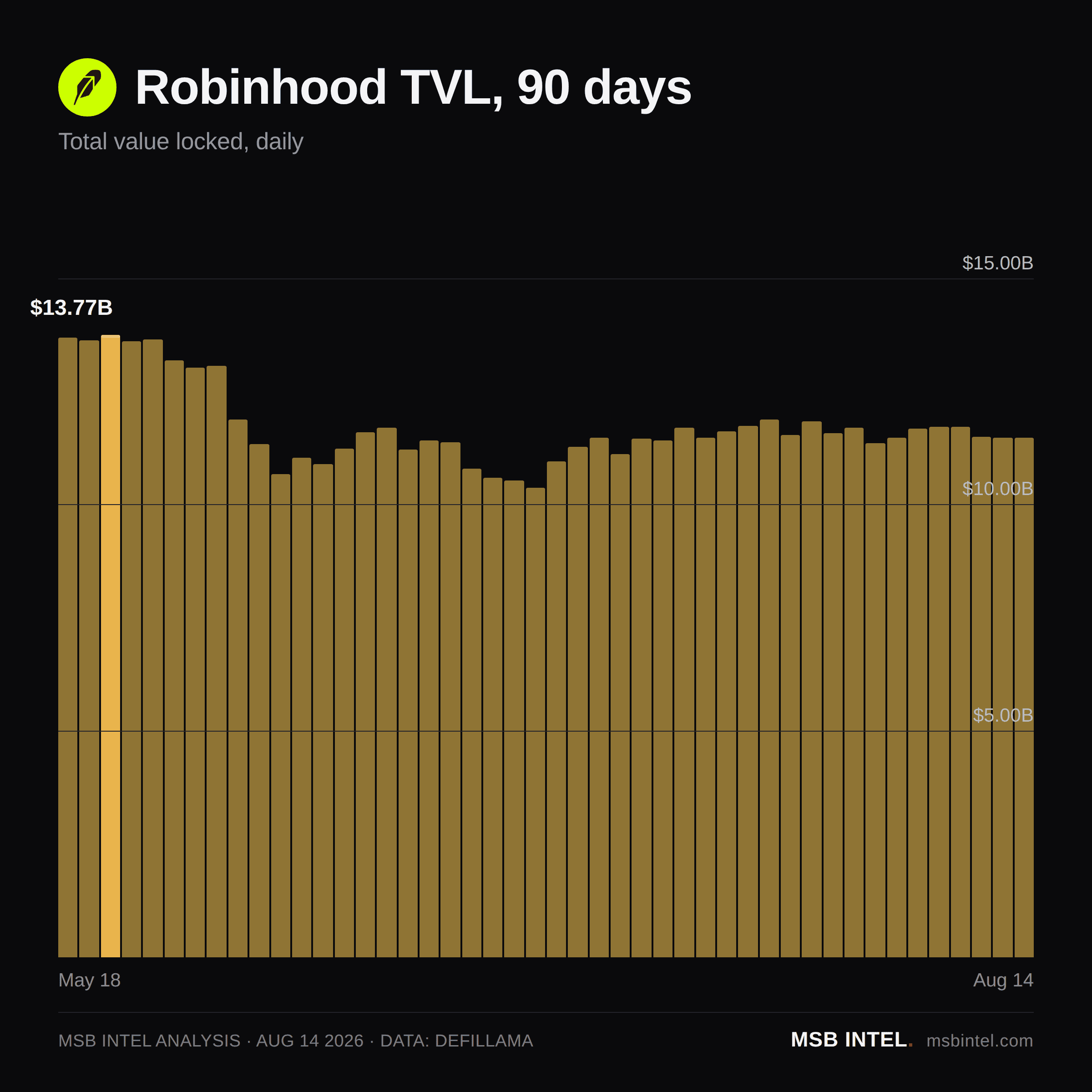
Uniswap's fee-switch, live since July 27, directs 50 percent of protocol swap fees to the UNI treasury. The mechanism had been dormant since Uniswap's 2021 launch. Robinhood Chain's trading volume has accelerated the fee flow: the network processed enough volume to generate burn rates roughly double their pre-switch pace, according to on-chain data. At $3.50 per UNI, the burn translates to approximately 25 million tokens annually.

Kendrick's earlier $100 target assumed a valuation multiple based on Uniswap's historical fee generation and governance premium. A materially faster token burn from sustained protocol revenue would compress the circulating supply, potentially rewarding long-term holders through reduced dilution and increased per-token claim on future fees. Kendrick did not specify a new target price.
Robinhood Chain, launched in late 2024, has emerged as a high-volume venue for spot trading. The network's early traction in DEX volume directly translates to protocol fees that now flow to UNI holders rather than remaining trapped in the treasury. Whether Robinhood Chain's burn rate sustains depends on the network's ability to retain trading activity as competition from other layer-two venues intensifies.
The burn acceleration occurs against a backdrop of intensified competition for DEX volume. Solana-based decentralized exchanges and other layer-two platforms are competing aggressively for the same user base. The sustainability of Robinhood Chain's current fee generation is unproven beyond its first months of operation.
Kendrick's revised view hinges on Robinhood Chain maintaining its current or higher trading volumes. If Robinhood Chain's volume declines to historical averages for comparable layer-two networks, annualized burn would contract proportionally, weakening the case for a price target substantially above $100.