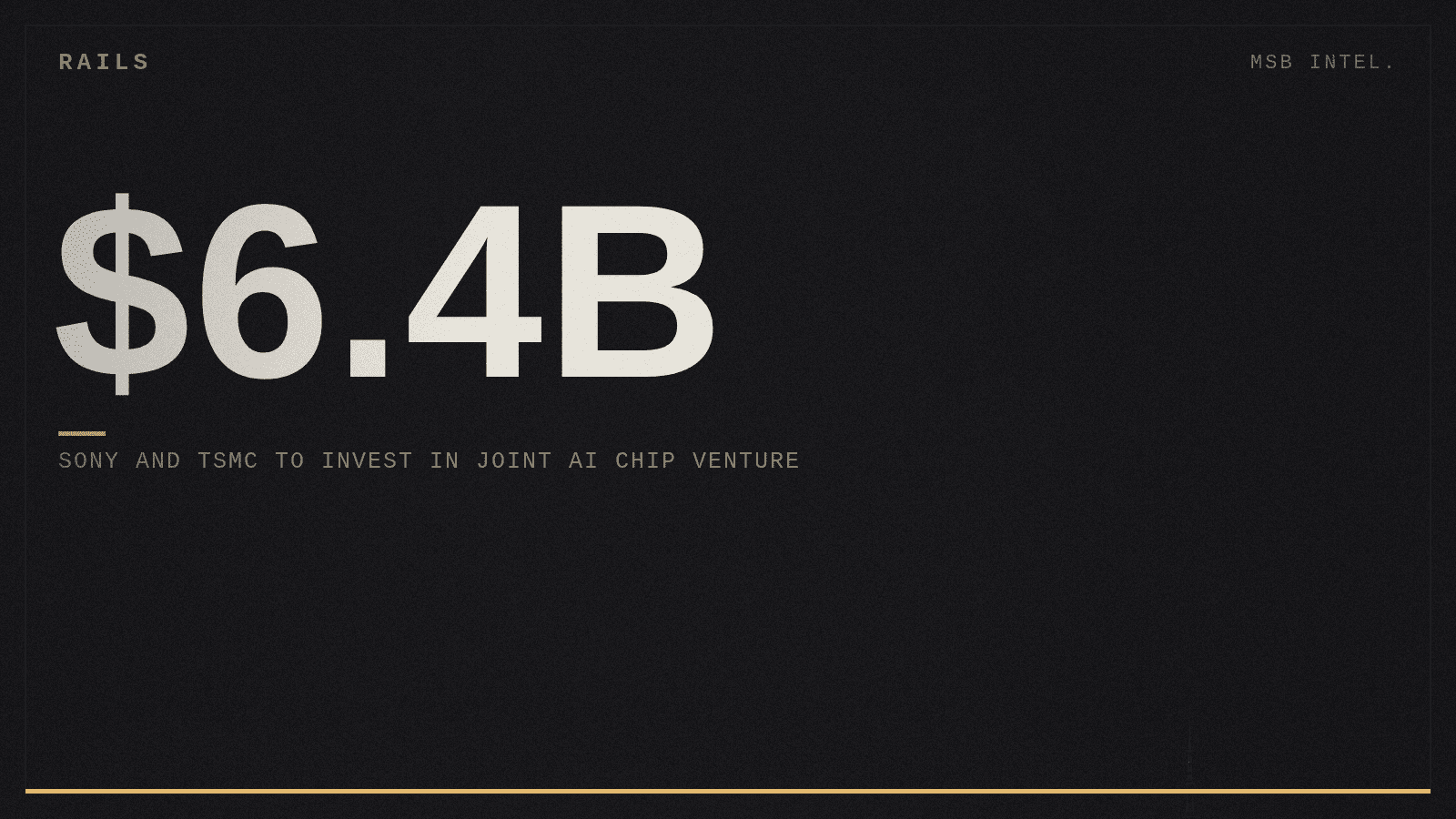
Sony and Taiwan Semiconductor Manufacturing Company plan to jointly invest ¥1 trillion, or $6.4 billion, in a semiconductor venture focused on AI image sensors, according to an announcement from TSMC on August 10.
Sony will fund 60 percent of the venture while TSMC contributes 40 percent. The two companies aim to begin production at a facility in Kumamoto, Japan in 2029. The venture targets the market for image sensors used in artificial intelligence applications, a segment both companies see as central to the next phase of AI hardware deployment.
Image sensors are foundational components in machine vision systems, cameras embedded in autonomous vehicles, and data center hardware for computer vision tasks. The global market for AI-capable image sensors has grown as demand for visual data processing accelerates across cloud infrastructure, robotics, and automotive sectors. Sony already holds the largest share of the smartphone camera sensor market and has been expanding into industrial and automotive imaging.
TSMC, the world's largest contract chipmaker by revenue, has been investing heavily in semiconductor capacity outside Taiwan. The company operates fabs in Singapore, Arizona, and Japan. Japan has offered substantial tax incentives and subsidies for semiconductor manufacturing within its borders as part of a broader effort to reduce dependence on Taiwan for chip production. Sony Semiconductor Solutions, the unit managing this venture, operates manufacturing sites in Nagasaki and other Japanese prefectures.
The partnership brings together two major chip companies on specialized silicon for artificial intelligence. The 2029 target for production means the facility would come online after existing fabs in Arizona and Kumamoto that TSMC and Japanese partners have already begun construction on. Geopolitical risk around Taiwan and government support programs have driven geographic diversification across the semiconductor industry.
Sony and TSMC did not announce a timeline for full capacity ramp or projected output volumes. The partnership requires regulatory approval in both Japan and Taiwan, though neither company flagged approval risk in their statements. If production begins as planned in 2029, the venture would compete with Samsung's image sensor division and SK Hynix in supplying chips designed specifically for AI workloads.