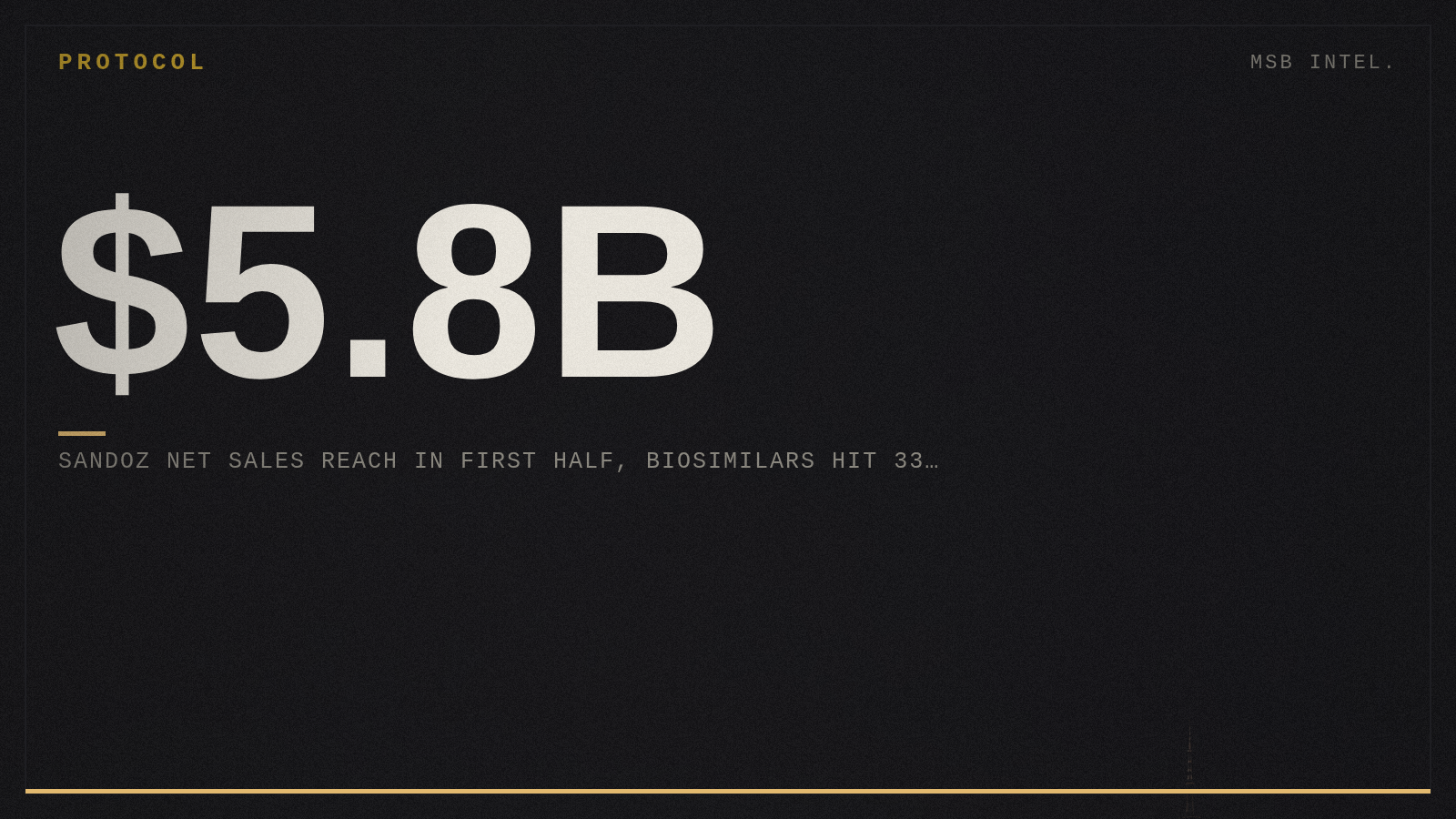
Sandoz Group AG reported first-half net sales of $5.8 billion, up 10 percent year-over-year in USD terms, according to the company's half-year results. Biosimilars accounted for $1.9 billion of the total, or 33 percent of sales, up from 29 percent in the prior-year period.
Biosimilars grew 25 percent in the half to reach $1.875 billion. The segment's expansion outpaced overall company growth by a multiple of 2.5 times. Sandoz is one of the world's largest producers of biosimilars, competing against Amgen, Pfizer's Hospira unit, and Viatris in a market that has grown steadily as healthcare systems seek cost relief.
Biosimilars typically cost 20 to 30 percent less than originals and face lower regulatory barriers than entirely new drugs. The segment's acceleration follows Sandoz's earlier investments in manufacturing and regulatory approvals for treatments in oncology, immunology, and cardiovascular disease.

The company's constant-currency growth rate was 5 percent, a narrower pace than the USD figure, due to currency headwinds from a stronger dollar against the Swiss franc and other emerging-market currencies where Sandoz operates. The split between reported and constant-currency metrics is material for investors tracking Sandoz's organic growth separate from currency effects that obscure underlying demand.
Sandoz separated from parent Novartis in 2024 and has since focused on generics and biosimilars as its core business. The first-half results arrive as competition in both segments remains intense and pricing pressure persists in regulated markets like Europe and North America. Sandoz's biosimilar share has climbed from 29 to 33 percent in a single year, a 4-percentage-point gain that accounts for nearly all incremental margin expansion the company could achieve through portfolio mix alone.
Biosimilars are now the primary driver of Sandoz's top-line growth. If biosimilars maintain a 25 percent growth rate while the overall company grows at 10 percent annually, the segment will exceed 40 percent of sales within two years. The number to watch is whether Sandoz can sustain 20-plus percent biosimilar growth in 2027 as the installed base matures and competitive pricing pressures intensify.