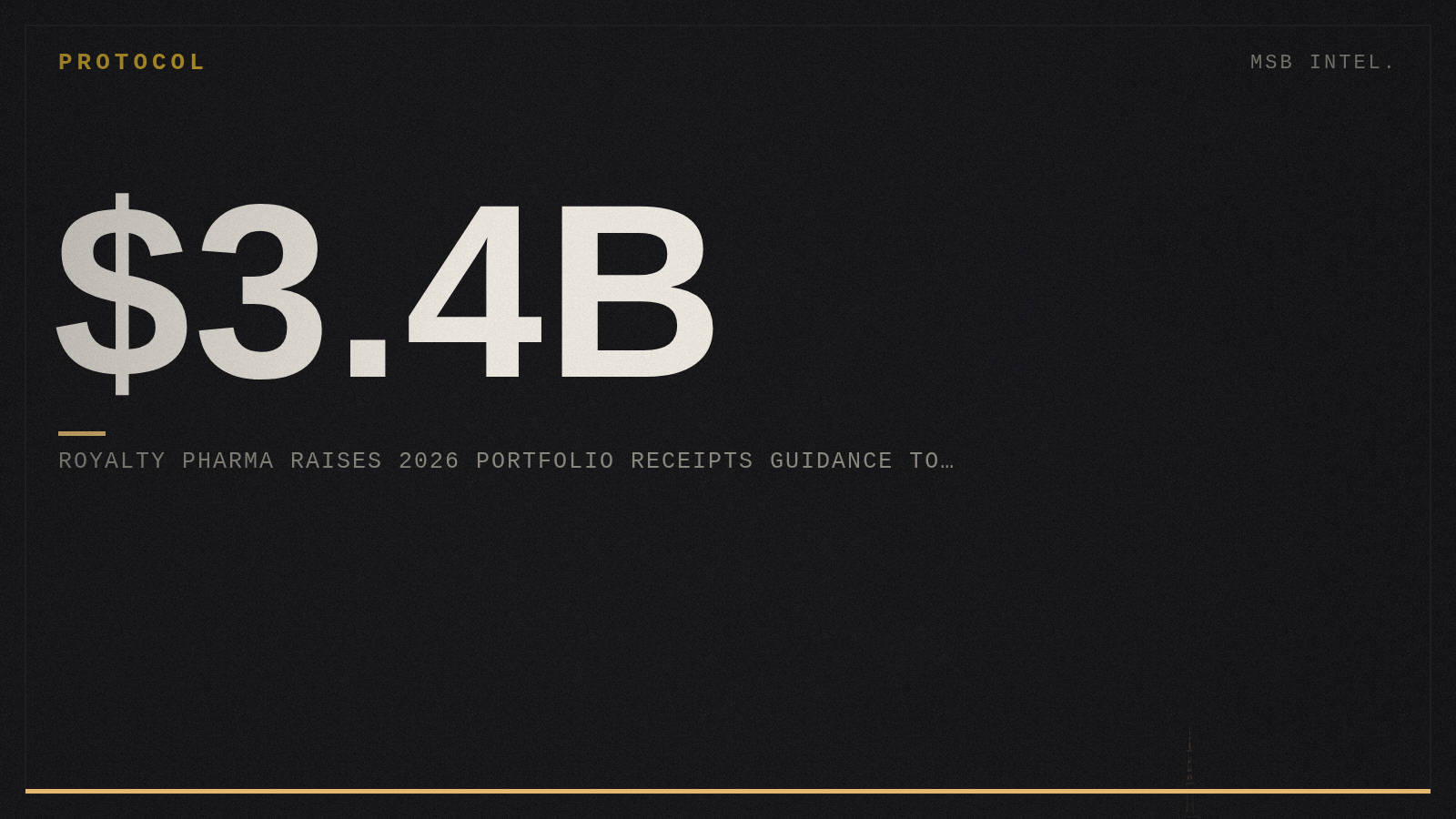
Royalty Pharma raised its 2026 portfolio receipts guidance to $3.4 billion to $3.5 billion, the company said in a second-quarter earnings announcement. The prior guidance range was $3.325 billion to $3.450 billion.
The increase marks the second consecutive quarter Royalty Pharma has raised its full-year outlook. Expected royalty receipts growth sits at 7 percent to 10 percent, according to the company.
Royalty Pharma acquires royalty interests and other revenue streams from biopharmaceutical companies, pharmaceuticals and medical devices. The company typically holds stakes in marketed drugs and collects a percentage of their sales, a model that generates predictable cash flow independent of drug development or regulatory risk. Portfolio receipts measure the total cash the company collects from its underlying royalty assets.

The company manages a portfolio of over 300 royalties across marketed drugs in cardiology, oncology, hematology and other therapeutic areas. Holdings include royalties tied to marketed therapies including Dupixent, Libtayo and Imbruvica. Each successive guidance raise reflects underlying portfolio performance and cash collections running ahead of prior assumptions.
Royalty income streams track pharmaceutical market demand and pricing. Royalty Pharma's portfolio drugs are performing above internal estimates, or collection rates have improved.
Royalty Pharma trades on the NASDAQ under the ticker RPRX. The company has issued guidance raises in six of the past eight quarters, according to historical filings. A $3.4 billion to $3.5 billion 2026 receipts range represents growth of 6 percent to 11 percent from the company's reported 2025 receipts of $3.194 billion.
The company has raised guidance in six of eight recent quarters. Royalty Pharma will report third-quarter results in October, the date by which investors and analysts will determine whether portfolio receipts remain on track to meet the newly raised $3.4 billion to $3.5 billion target.