
Robinhood Chain processed $1.6 billion in decentralized exchange volume on September 1, according to data aggregators tracking activity on the newly launched blockchain network.
The volume represents early traction for a chain launched by the retail brokerage Robinhood Markets to facilitate on-chain trading of tokenized securities and cryptocurrencies. Memecoins and hybrid trading pairs accounted for the majority of the $1.6 billion, while tokenized stock trading generated $127 million of the total, the data shows.
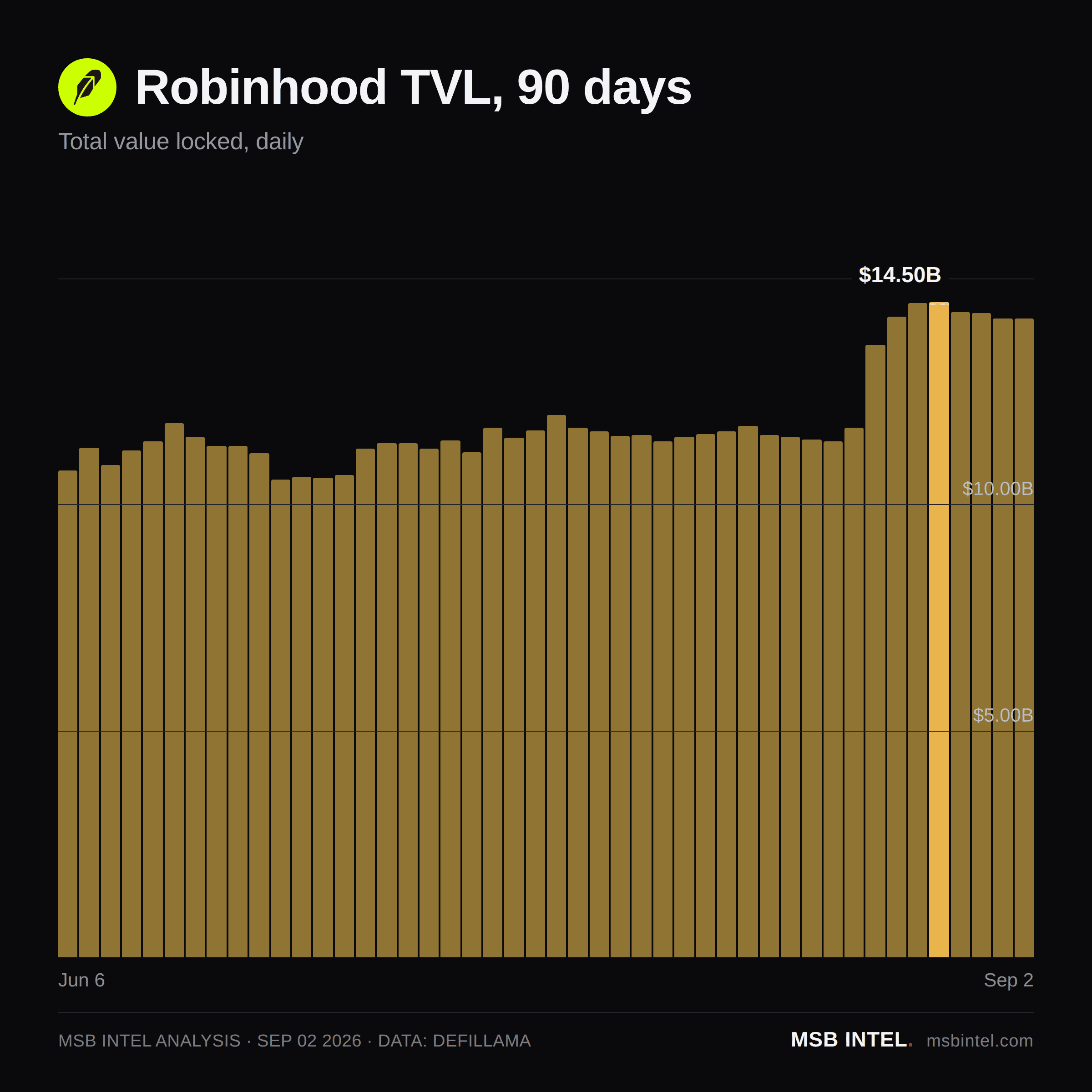
Robinhood Chain, built on Solana infrastructure, entered public testing in August 2024 as part of the company's strategy to offer clients direct custody and peer-to-peer settlement capabilities outside traditional brokerage infrastructure. The network's early volume surpassed the daily averages of several established layer-two solutions and competed with volume seen on major decentralized exchanges like Uniswap and dYdX during their early phases.
The $1.6 billion 24-hour volume spike occurred against a backdrop of growing institutional interest in tokenized assets. U.S. spot bitcoin and ether exchange-traded funds have accumulated billions in assets under management since their 2023 and 2024 debuts, and conversations among wealth managers about on-chain settlement for equities and fixed-income instruments have intensified. Robinhood's entry into chain infrastructure positions it to capture transaction volume from its existing base of 23 million retail users if adoption of tokenized securities accelerates.
Memecoins have traditionally driven outsized volume on new blockchain networks due to their low barrier to launch and speculative appeal. Memecoins and hybrid pairs dominated Robinhood Chain's first major volume day, a pattern consistent with other newly launched chains, where retail-friendly assets generate early activity before institutional or structured product volume materializes.
Tokenized stock volume of $127 million on a single day would rank among the higher daily figures for regulated tokenized equity trading, though reliable cross-chain data aggregation for this segment remains fragmented. The Robinhood chain data points to active experimentation with regulated asset tokenization, a market many institutional investors and asset managers have identified as a priority for the next three to five years.
Robinhood Chain achieved $1.6 billion in daily volume within weeks of launch, a pace that took most major layer-two blockchains months or years to reach at equivalent scale. The volume composition, heavily weighted toward speculative assets rather than institutional settlement, shows the infrastructure is currently serving price-discovery functions common to new networks rather than enterprise custody workflows.