
Robinhood Chain's total deposits climbed to $600 million by late July, three weeks after launch, but daily trading volume and active user counts have fallen sharply as the initial memecoin rally faded.
Deposits rose from $100 million on July 8 to $600 million by July 27, according to on-chain data. The surge masks a harder trend underneath. Launch-week memecoin trading peaked at $500 million in daily volume before normalizing to tens of millions daily. Active user counts climbed early, then moderated as the speculative activity that drew initial traffic dissipated.
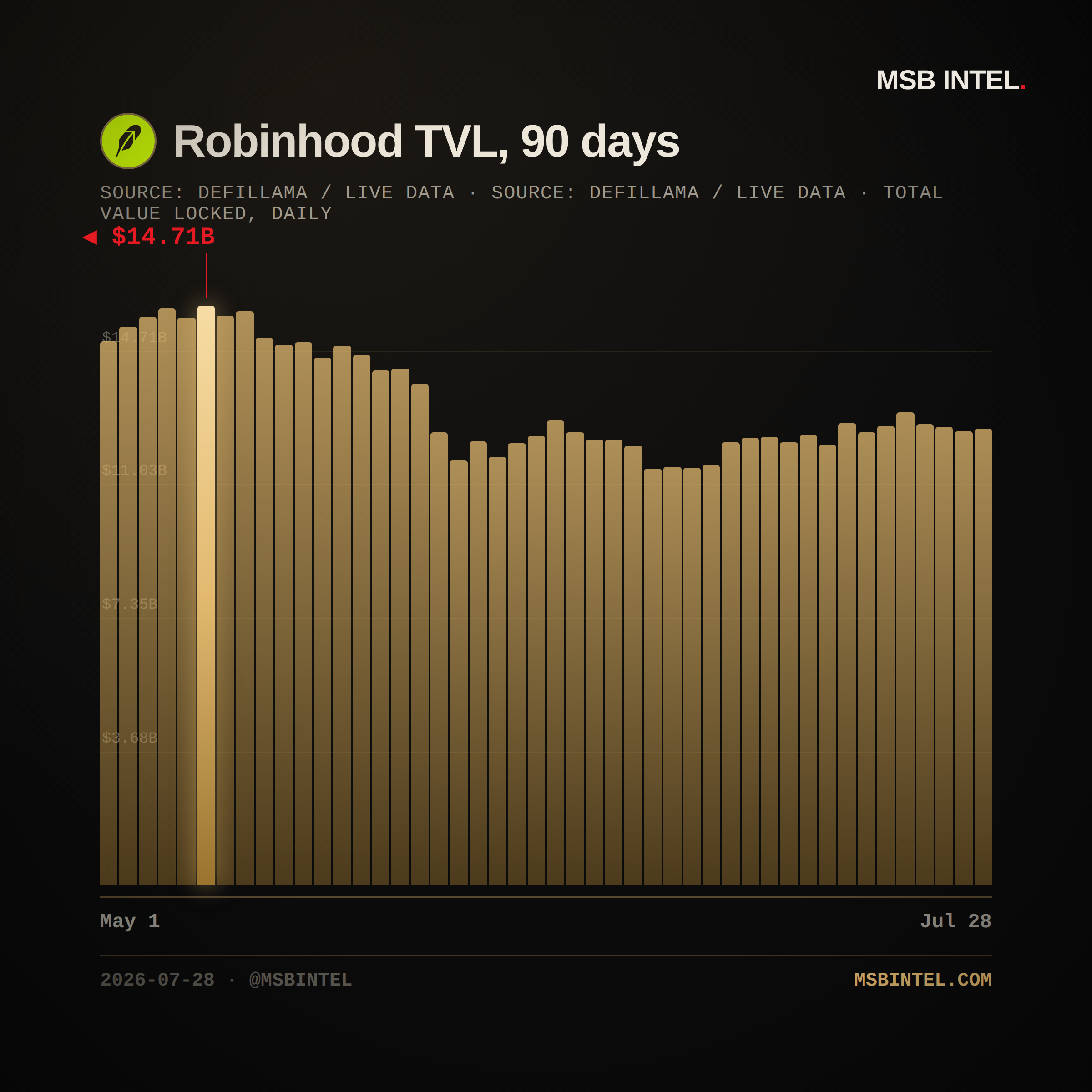
Robinhood Chain launched in early July as a Layer 2 blockchain built on Ethereum, marketed to retail traders as a venue for tokenized assets and equities trading alongside crypto. The chain's early narrative centered on Robinhood's ability to tap its 23 million retail account holders and drive them toward on-chain trading. The launch window coincided with a memecoin boom across multiple chains, and Robinhood Chain became a beneficiary. The outsized volume and user acquisition in week one came during that broader memecoin cycle.

By late July, the chain had topped Base in daily active users at its peak, according to on-chain analytics. That metric proved volatile. The deposit growth, while substantial in absolute terms, reveals that capital remained on-chain even as transaction activity contracted. Stablecoins and smaller altcoins accounted for a significant share of inflows. Capital was either being held in reserve or circulating across a smaller set of active addresses.
Robinhood's tokenized equities offering had begun rolling out by late July, with early trading in tokenized stocks handling larger position sizes than early memecoin activity. That segment remained a fraction of total chain volume. The spread between $600 million in deposits and tens of millions in daily volume implies capital was either being held in reserve or circulating across a smaller set of active addresses.
The decline in users and volume after launch is not unusual for chains that experience memecoin-driven onboarding. Base, Solana, and Arbitrum all saw similar patterns: early viral activity concentrated in a single asset class, followed by moderation once that cycle peaked. Whether Robinhood Chain retains deposited capital and builds usage around its equities product will depend on adoption by its retail user base and the performance of tokenized stocks as a trading venue.
Robinhood's ability to convert its existing customer base into active traders on the chain remains the test. The $500 million gap between early memecoin volume and current activity levels is the metric to watch, whether the chain can rebuild daily volume through its stated mission of equities trading or whether deposits simply sit dormant pending the next cycle.