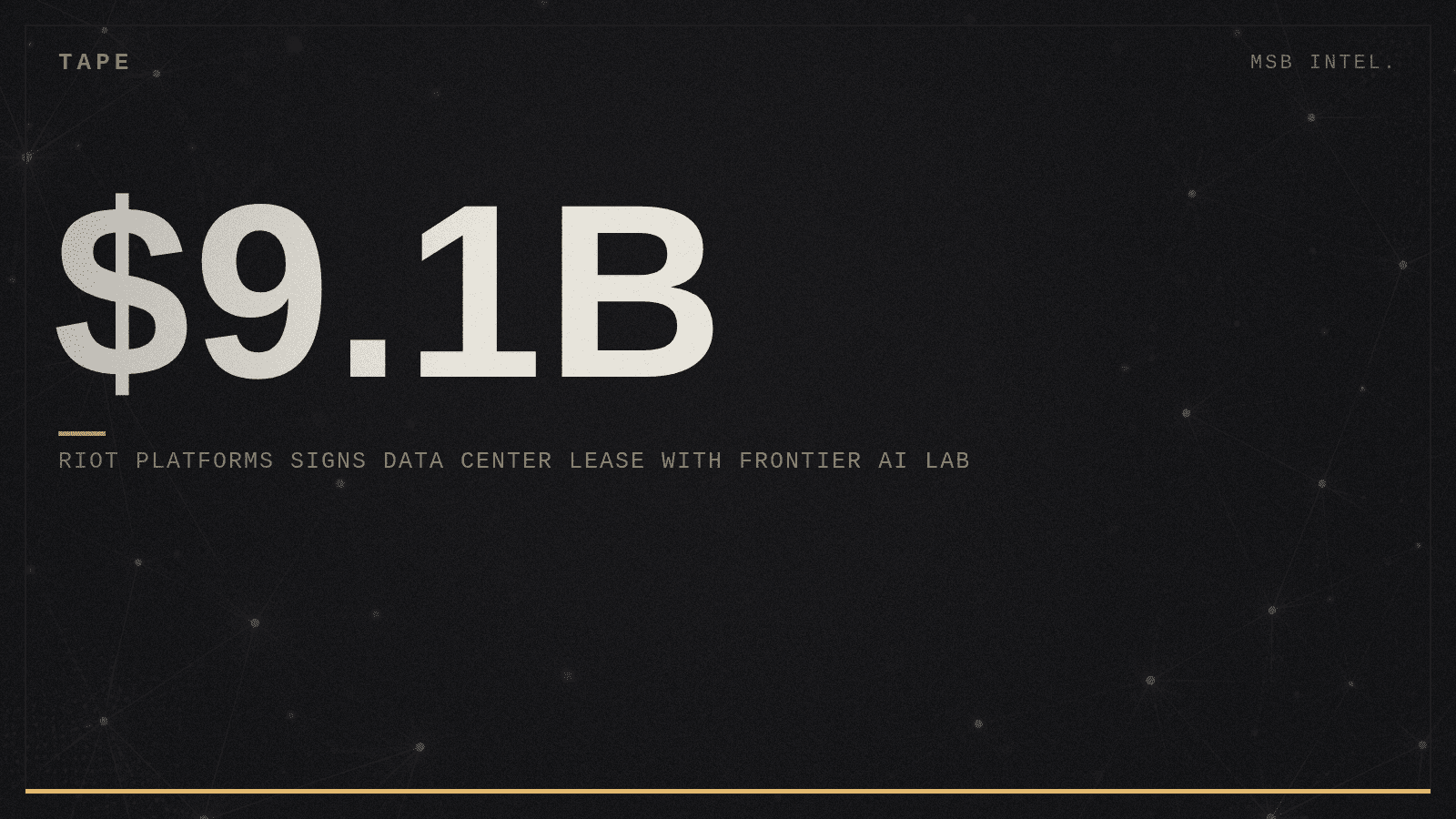
Riot Platforms signed a 20-year, $9.1 billion data center lease with a frontier artificial intelligence laboratory, the bitcoin miner disclosed as part of its second-quarter earnings package. The deal runs through June 2048 and represents Riot's largest infrastructure commitment to date.
Riot posted a $237.2 million net loss in the quarter despite revenue climbing 14 percent year-over-year to $174.2 million, according to the company's earnings announcement. The counterparty's identity remains undisclosed. Riot shares jumped 10.82 percent in after-hours trading following the disclosure.
The lease amounts to roughly 13 percent of Riot's implied enterprise value at current market prices. Riot is willing to lock in capacity for AI workloads as an alternative revenue stream to bitcoin mining. The AI data center sector has consolidated around a handful of capital-heavy operators. Riot's entry into a named partnership with a frontier lab follows a trend toward vertical integration between mining infrastructure and large-scale model training, where thermal and electrical demands have begun to exceed conventional cloud capacity.
Riot operates approximately 8.4 exahash of bitcoin mining hashrate as of mid-2026, making it the third-largest publicly traded mining operation by hash deployed. The company has faced margin compression as bitcoin difficulty adjusted upward and electricity costs remained high. The AI data center deal provides contracted revenue independent of bitcoin price, shifting part of Riot's revenue base away from block subsidy sensitivity.
Frontier AI laboratories have undertaken capital-intensive searches for power and cooling infrastructure to support training runs. Major operators including OpenAI, Anthropic, and others have explored long-term power purchase agreements and purpose-built facilities. A 20-year lease ties Riot to a single counterparty for an infrastructure asset that could otherwise be leased to multiple bitcoin mining operations or repurposed if AI demand recedes.
The deal's financial materiality exceeds typical quarterly capital deployment by Riot. A $9.1 billion liability over two decades implies annual lease obligations averaging $455 million, or 2.6 times Riot's Q2 revenue run rate. The miner's existing debt and convertible obligations will now compete for cash flow against this new commitment.
Whether Riot can service the lease through a combination of AI data center revenue and mining output depends on the pricing terms, which remain confidential. If the counterparty defaults or terminates early, Riot faces stranded capacity risk. The document to watch is the 10-Q filing for Q3 2026, which will require Riot to detail the lease accounting treatment, payment schedule, and any performance conditions tied to the deal.