PancakeSwap AMM V3 surpassed Uniswap V4 in 24-hour trading volume, capturing $1.31 billion against Uniswap's $1.28 billion and climbing to the number two position overall, according to on-chain data tracked by DefiLlama.
The shift marks a rank change from the previous day, when PancakeSwap held the third position. Uniswap V4, Ethereum's latest automated market maker release, has dominated the trading volume rankings since its launch, but the gap between the two protocols has narrowed as PancakeSwap continues to consolidate activity across its multi-chain infrastructure.
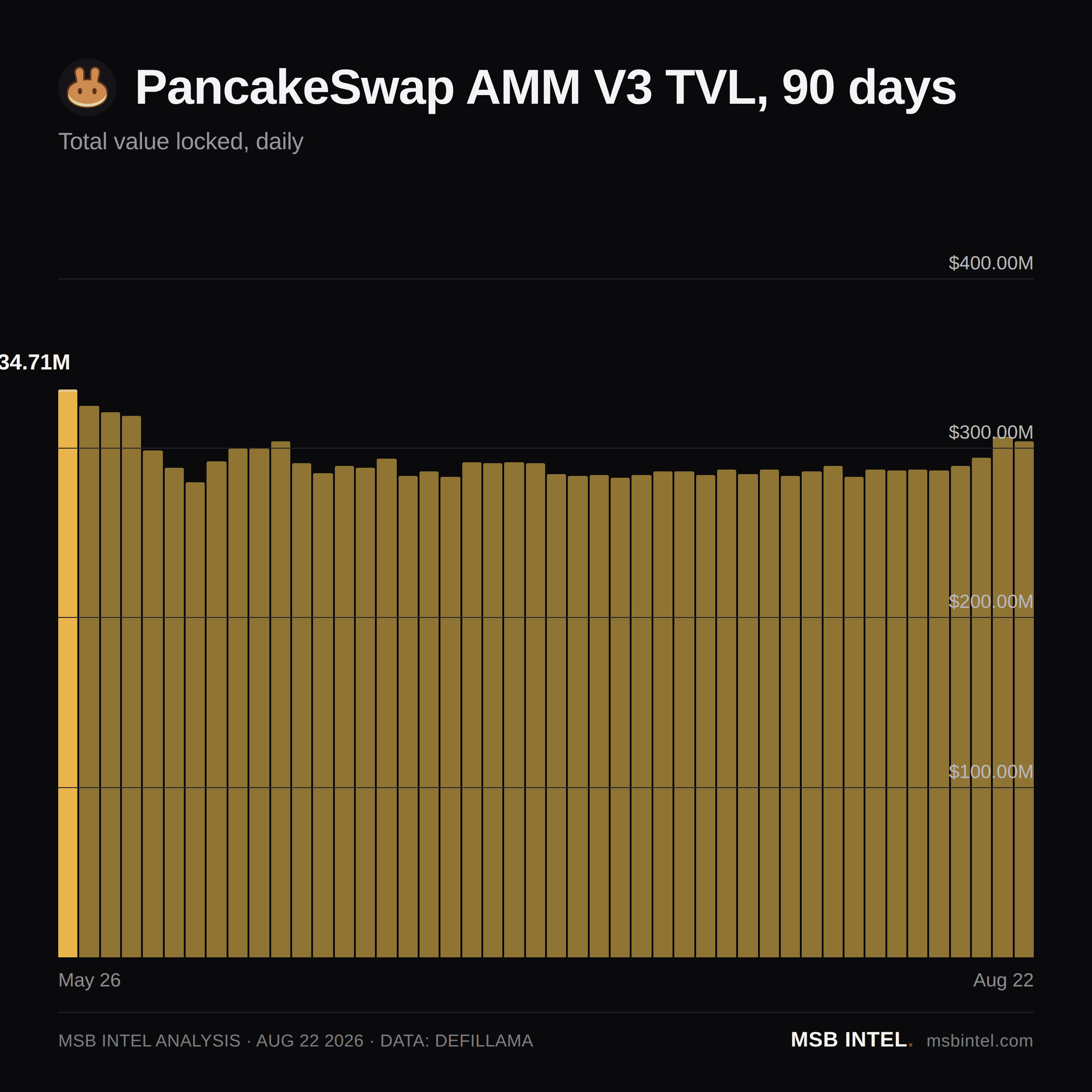

PancakeSwap operates on multiple blockchains including Binance Smart Chain, Ethereum, and Layer 2 networks, distributing liquidity across venues where trading demand has grown faster than on Ethereum alone. The protocol's V3 version introduced concentrated liquidity mechanics that allow traders and market makers to deploy capital more efficiently within specified price ranges. Uniswap V4, deployed on Ethereum in September 2024, introduced hooks that extend the AMM's functionality but has remained concentrated on a single blockchain.
Uniswap V4 started with commanding volume leads over competing AMMs when it went live. As of this snapshot, the $30 million difference between PancakeSwap and Uniswap represents less than 2.4 percent of Uniswap V4's daily volume, showing both protocols remain in a tight competitive band at the top of the ranking. Historical rankings show Uniswap V3, the previous major release, maintained leadership for extended periods before newer protocols captured larger shares of daily flow.
Volume swings of this magnitude across 24-hour windows are common in decentralized finance as trading activity concentrates around news events, token launches, or price volatility. A single large liquidation or arbitrage flow can shift ranking positions for protocols with comparable scale. The measurement captures only one day's snapshot rather than sustained dominance or a structural shift in user preference.