Nexo said it will keep crypto services live across the European Union by routing them through two MiCAR-authorized partners: Tangany, which provides custody, and DLT Finance, which handles brokerage. The arrangement follows the July 1 transition deadline for Markets in Crypto Assets Regulation compliance.
Both partners are German-based and hold Markets in Crypto Assets licenses, the regulatory framework the European Union imposed on July 1 to govern crypto service providers. Nexo's reliance on licensed intermediaries rather than its own authorization is one strategy among platforms that did not secure direct MiCAR approval before the deadline. The regulation requires any entity offering crypto services to EU customers to hold a license or operate through a licensed third party.
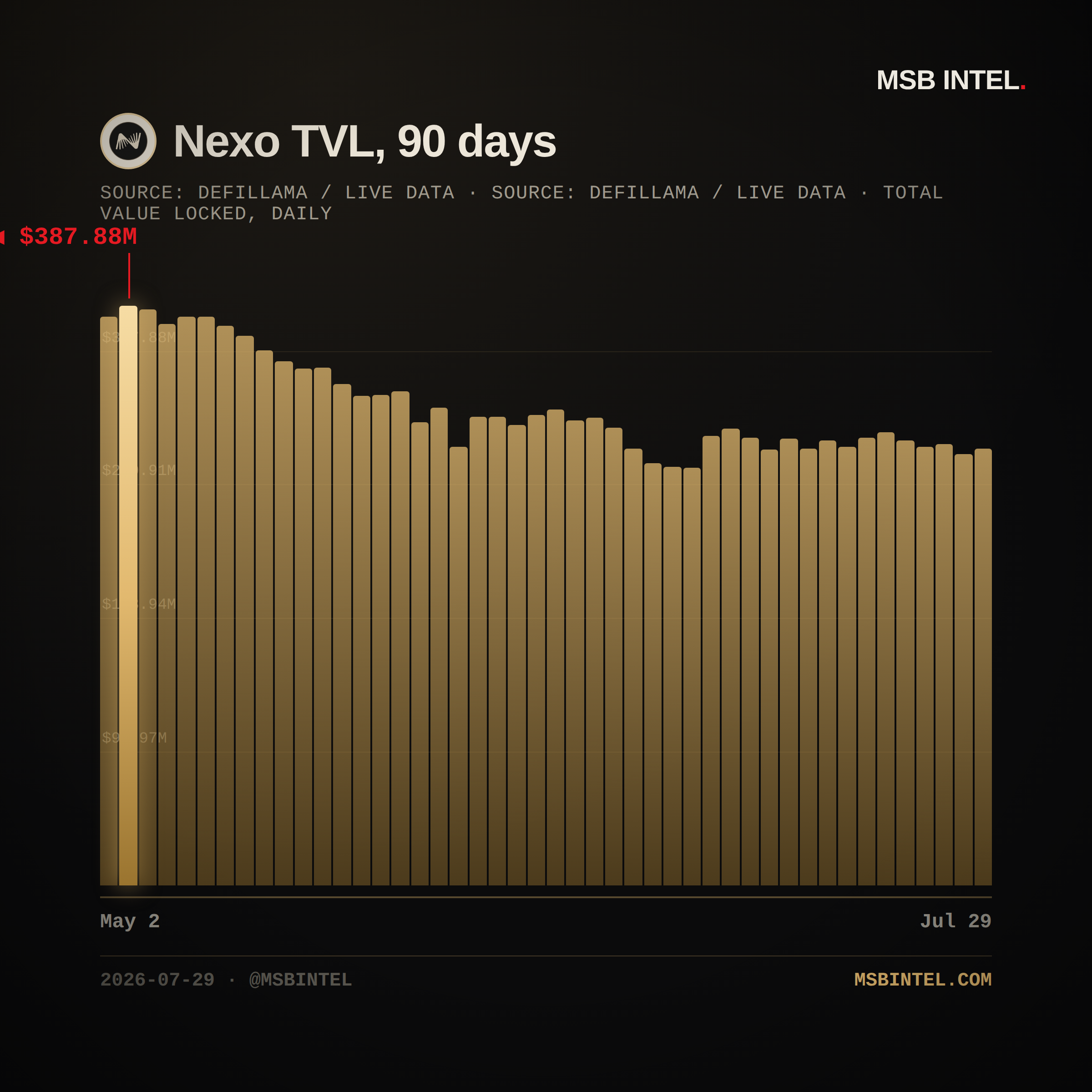
Nexo's announcement on July 28 said the partnership structure maintains service continuity for existing customers while the company pursues its own MiCAR authorization. Tangany, founded in 2018, is a regulated custodian offering institutional-grade asset storage. DLT Finance provides brokerage and trading infrastructure across the EU. The company said both partners were chosen to preserve the same product offerings users had before the transition.

The EU's July 1 deadline forced platforms into three categories: those with their own MiCAR licenses, those operating through licensed intermediaries, and those suspending services. Kraken and Coinbase had earlier moved to restrict certain services or exit markets that required licenses they could not obtain. Other platforms, including some derivative exchanges, chose to wind down EU operations entirely rather than restructure.
Nexo's approach delays the question of whether it will eventually seek its own license. The company has faced regulatory scrutiny in multiple jurisdictions. In September 2023, the U.S. Securities and Exchange Commission filed a complaint alleging Nexo's yield products violated securities laws. The company settled with the Vermont Department of Financial Regulation in 2024 after the state found it had offered unlicensed securities products.
The structure Nexo announced keeps the platform accessible to EU customers without requiring immediate MiCAR approval. Tangany and DLT Finance absorb the licensing burden while Nexo retains customer relationships through whitelabel or agency arrangements. Whether this remains viable long-term depends on whether EU regulators treat such intermediated models as equivalent to direct licensing or whether they eventually require platforms to hold their own MiCAR authorization to serve customers at scale.
The number of platforms operating through licensed partners versus holding independent MiCAR licenses will determine whether the regulation fragments the EU market or centralizes it. If most platforms route through a small number of licensed custodians and brokers, those intermediaries gain outsized power over market structure. If regulatory pressure forces platforms to seek direct licenses, the cost and complexity will screen out smaller competitors.