
Maple Finance is adding three institutional lending strategies to its onchain lending book, according to an announcement posted on X. The protocol will cap the new strategies at 5% of its deposit base at launch, with overcollateralized lending remaining the dominant product.
The three strategies are direct lending secured by institutional credit and rated securities, asset-backed securitization, and the basis trade, a hedged spot-futures position. Maple's deposit base currently stands at $2.918 billion, according to DeFi tracking data, making it the largest institutional lending protocol onchain by total value locked.
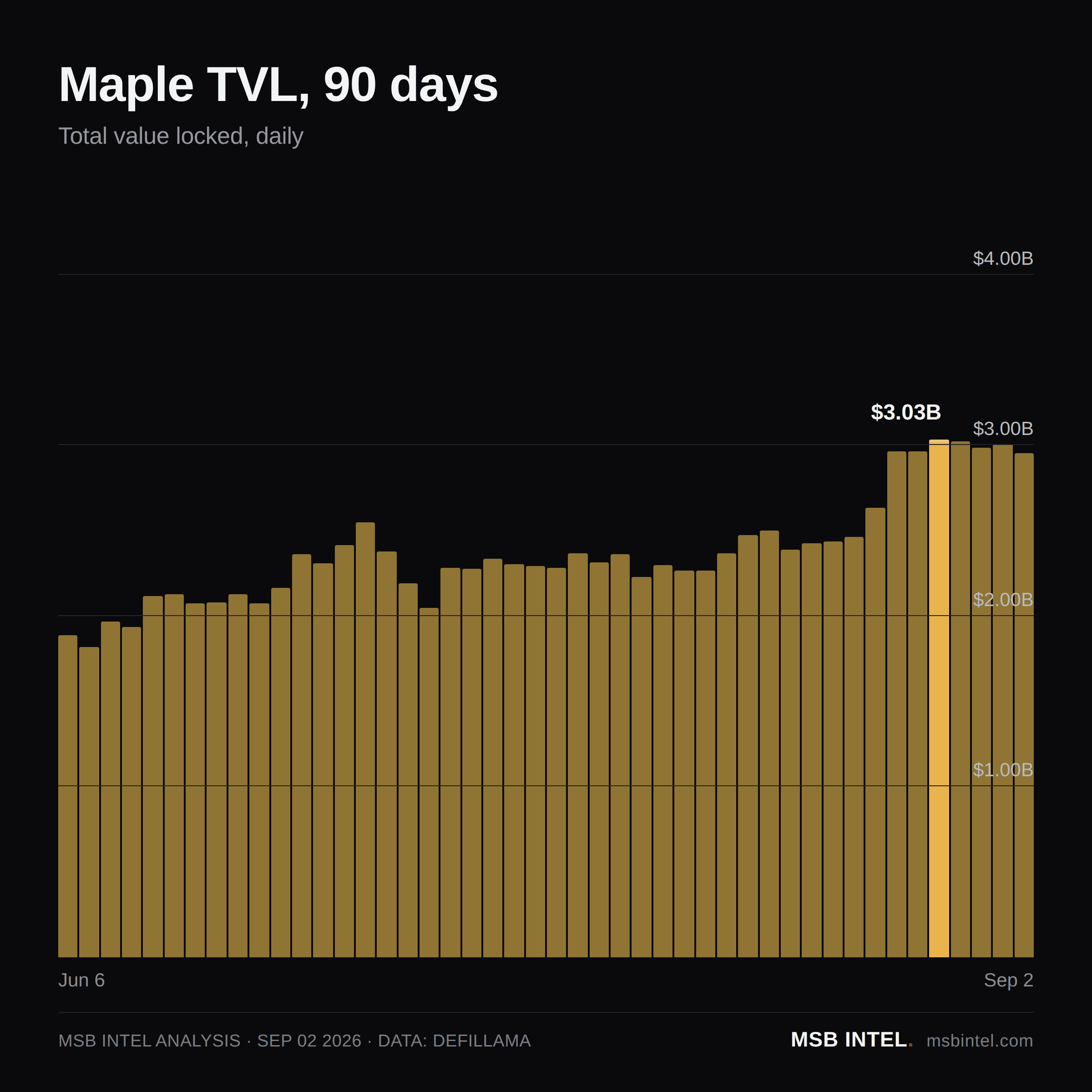

Maple has built its lending book around overcollateralized loans, where borrowers post collateral exceeding the value of the loan to reduce default risk. The protocol works with institutional borrowers including Genesis Global Capital and Credora. The new strategies rely on the borrower's creditworthiness or real-world asset performance rather than posted collateral.
Direct lending backed by institutional credit ratings assesses borrowers based on their credit standing. Asset-backed securitization bundles cash flows from real-world assets, such as invoices or loans, into tradable securities. The basis trade captures the price difference between spot prices and futures contracts, a strategy used by cryptocurrency traders and traditional hedge funds.
The 5% cap limits exposure to each new strategy while Maple tests their performance and refines underwriting standards. Maple's core overcollateralized lending product will continue to represent the majority of the protocol's capital deployment.
The three new strategies require Maple to operate with minimal on-chain collateral backing, increasing reliance on credit analysis and borrower screening. The protocol's ability to scale these products depends on the quality of its underwriting team and the stability of its institutional borrower relationships. If Maple does not reach full deployment of the 5% allocation cap within six months, it would indicate institutional demand constraints for unsecured lending products on-chain.