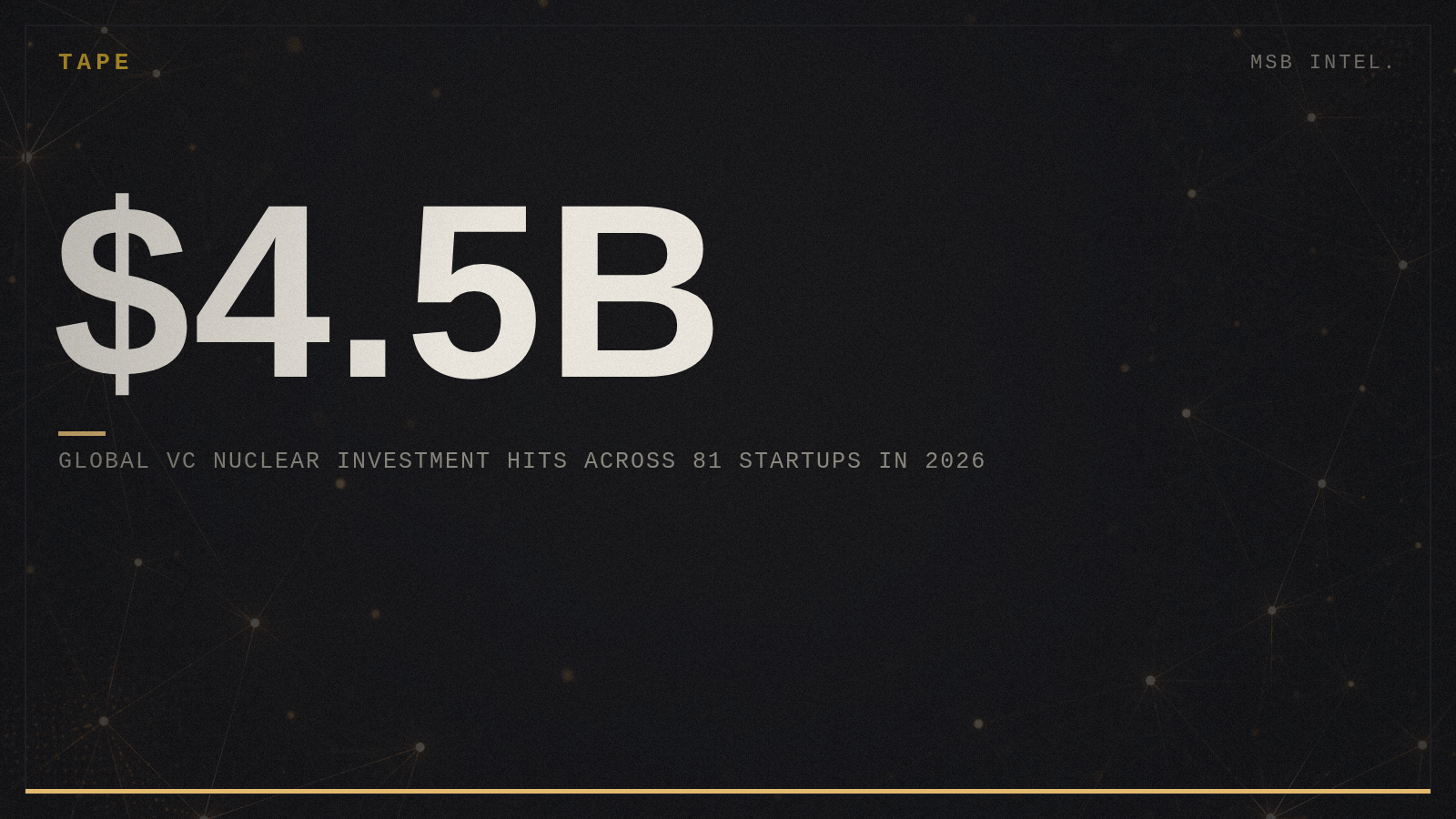
Venture capital poured $4.5 billion into nuclear energy startups across 81 companies through late July 2026, according to PitchBook data cited by Axios, putting the year on pace to exceed 2025's full-year total of $6.2 billion.
The surge follows intensifying demand for reliable, large-scale power to support data centers and artificial intelligence infrastructure. Nuclear fusion and fission companies are competing for capital as tech firms seek alternatives to fossil fuels and renewable energy sources that cannot meet constant baseload requirements.
Last year saw 93 nuclear startups raise $6.2 billion across the full calendar. This year's pace, with $4.5 billion deployed by late July across a smaller company count of 81, shows capital concentrating into fewer targets. If annual funding reaches $6.2 billion or higher by December 31, 2026 will mark the second consecutive year nuclear energy startups set a venture record.

Fusion companies have attracted particular attention. Commonwealth Fusion Systems, TAE Technologies, and Helion Energy have all raised major rounds in recent years, with stated timelines for commercially viable fusion plants within five to ten years. Fission companies including X-energy, TerraPower, and smaller modular reactor firms have also seen fresh funding as utilities and industrial operators evaluate small reactors for off-grid and remote applications.
The capital influx comes as AI compute demand strains electrical grids. Data center operators including hyperscalers have begun exploring nuclear power purchase agreements as a way to secure decades of emissions-free electricity. Microsoft, Google, and Amazon have all announced nuclear energy procurement initiatives.
With $4.5 billion deployed across 81 companies by late July, the 2026 cohort shows a 26 percent reduction in company count from 2025's 93 firms yet maintains capital intensity. Later-stage rounds are concentrating funding among fewer, more mature nuclear ventures.
The metric to watch is whether annual deployment reaches $6.2 billion by year-end, which would require less than $1.7 billion more in the remaining five months after late July, a plausible but not guaranteed pace given venture cycle timing.