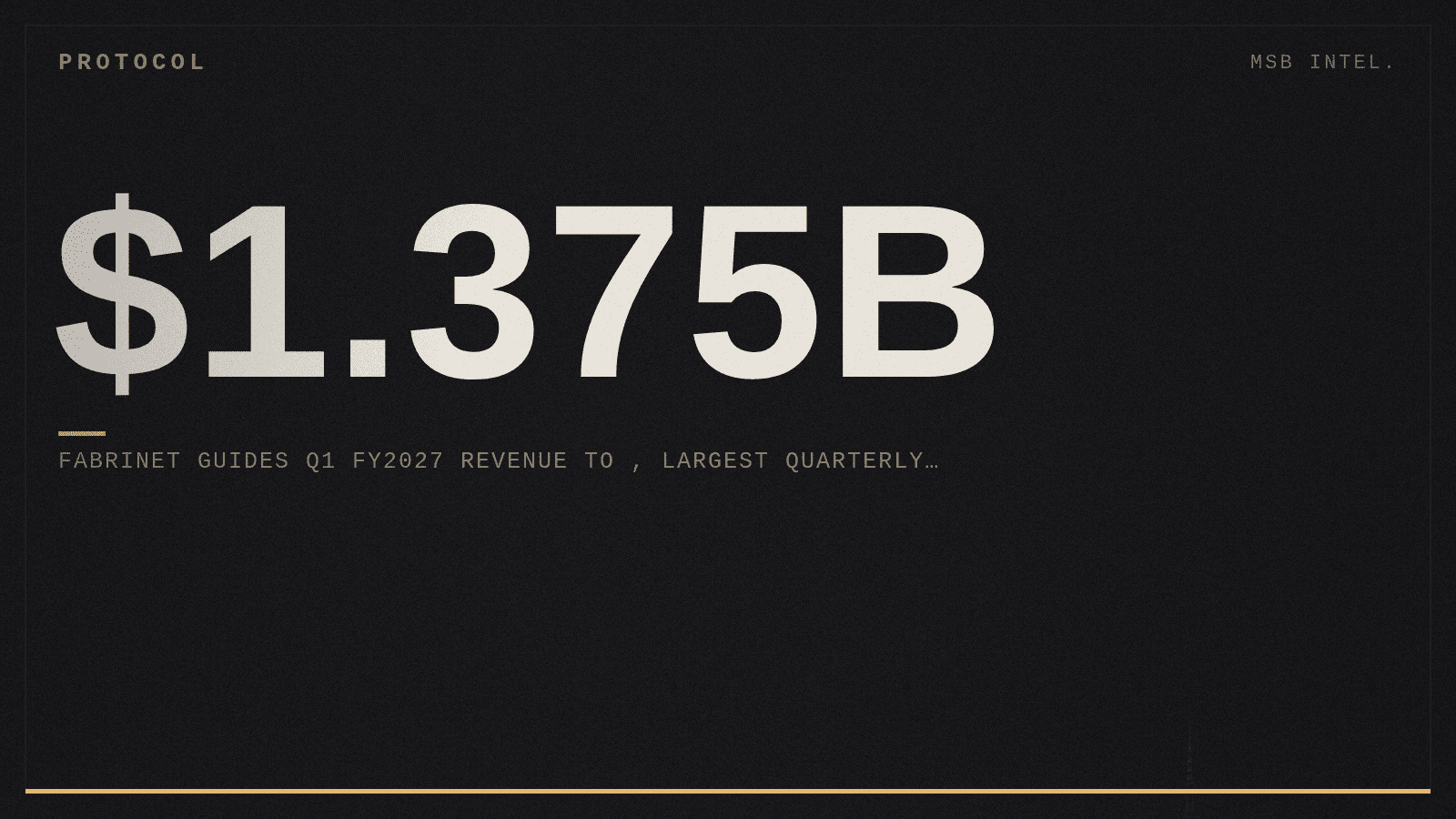
Fabrinet, a supplier of optical and wireless modules to cloud and telecom operators, guided Q1 FY2027 revenue to $1.375B-$1.425B, exceeding its prior quarterly record, according to the filing on August 17.
The guidance window sits 4.5% above the company's Q4 FY2026 actual revenue of $1.316B. Fabrinet also outlined a capacity expansion plan ranging from $12.5B to $14B. The company said the expansion would support anticipated demand from hyperscalers and telecom equipment makers deploying artificial intelligence infrastructure.
Fabrinet manufactures coherent optical modules, high-speed wireless components, and optical subsystems for data center and 5G network buildouts. The company is based in the Philippines and trades on the Nasdaq under ticker FNET. Its customer base includes major equipment vendors and cloud operators.
The $12.5B-$14B capacity plan indicates management expects sustained demand acceleration beyond the current quarter. Fabrinet said the expansion would support production of modules used in coherent transceiver technology, which operators are deploying to handle AI model training and inference traffic at scale. The company did not specify a timeline for the full capacity rollout in the filing.

Q1 FY2027 revenue guidance compares to Q1 FY2026 revenue of $920.5M, representing 49.7% year-over-year growth at the midpoint of the new range. The prior four quarterly records, spanning Q2 through Q4 FY2026, ranged from $1.21B to $1.316B, placing the new guidance at the top of historical performance.
The company faces supply chain execution risk and customer inventory fluctuations typical of the optical components sector. Broader AI infrastructure capex trends will determine whether Fabrinet's capacity expansion translates to demand at planned levels. Management tied its expansion to hyperscaler and equipment vendor demand it received during the quarter.
Fabrinet's guidance range implies Q1 revenue of roughly $1.4B at the midpoint, a 6.4% sequential increase from Q4 FY2026 actual results. The capacity plan of $12.5B-$14B, if fully deployed, would represent roughly nine to ten quarters of revenue at midpoint guidance levels.