
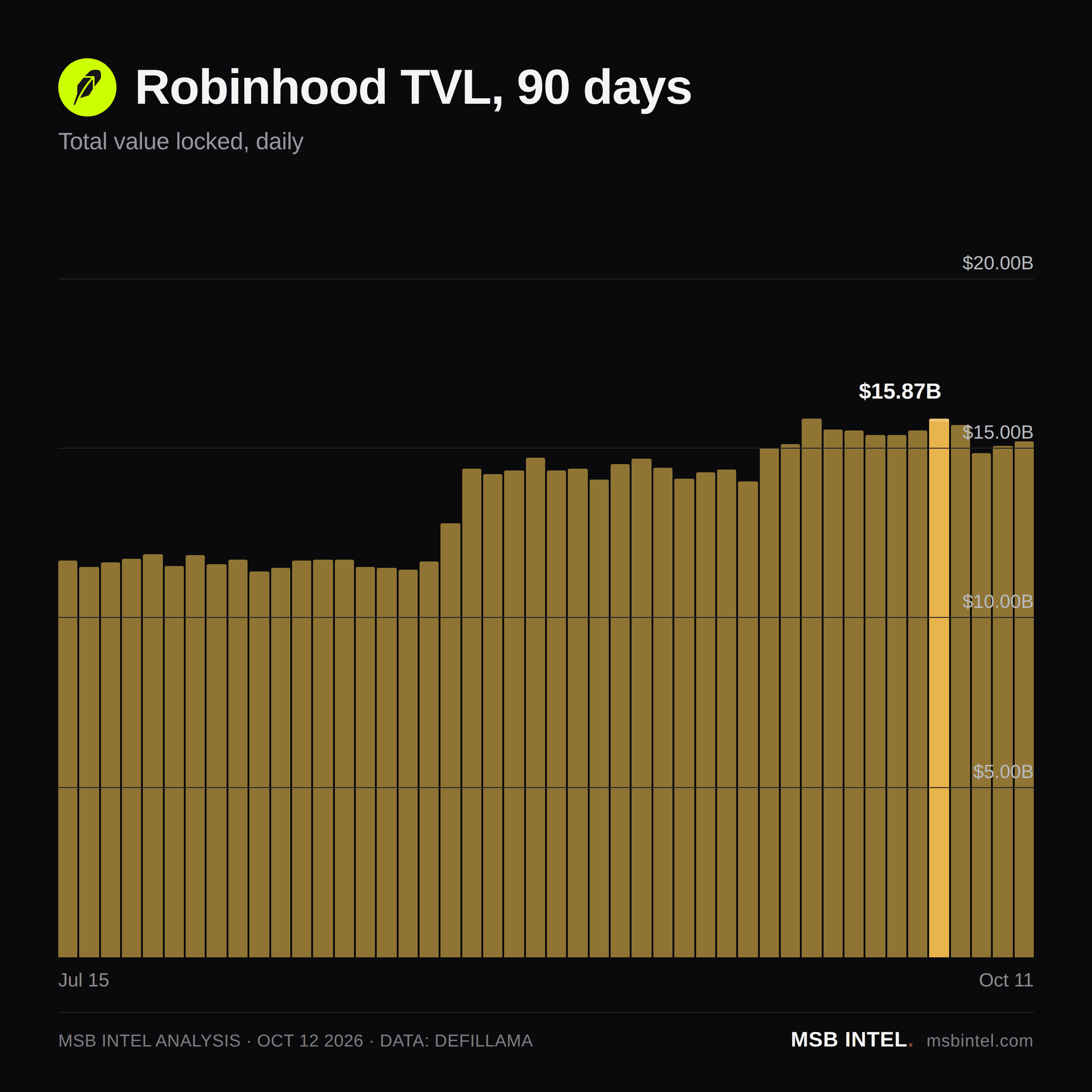
Coinbase Financial Markets and Robinhood Derivatives collectively held $581.4 million in client funds as of August 2026, surpassing the $470 million held across all six US retail forex dealers combined, according to analysis of CFTC FCM monthly filings.
Coinbase Financial Markets held $346.9 million and Robinhood Derivatives held $234.5 million, the figures show. The comparison marks a threshold in which crypto-native brokers have accumulated more retail customer deposits than an entire foreign exchange sector that has operated for decades under the same regulatory framework.
US retail forex has been a regulated market since 2010, when the CFTC gained authority over off-exchange forex dealers after the Dodd-Frank Act. The six active dealers in the pool collectively serve the market under strict margin caps, currently 50:1 for major pairs and 20:1 for minors, and segregation requirements identical to those governing crypto futures brokers. The sector contracted significantly after 2015, when CFTC rules tightened capital and disclosure standards.

Coinbase entered crypto futures with its launch of a dedicated futures exchange in 2023. Robinhood, which had operated a cash crypto trading app since 2018, opened its derivatives arm in 2022. Both firms are registered as futures commission merchants and subject to CFTC custody and capital rules equivalent to traditional futures brokers. Coinbase's total client deposits across all divisions exceeded $15 billion as of recent filings; the $346.9 million in its futures arm is less than 2.3 percent of that base.
The US retail forex pool consists of dealers holding customer funds between $50 million and $150 million each. No single dealer exceeds $200 million in deposits. The sector has lost retail traders steadily to crypto platforms offering higher margin allowances and faster execution. Crypto futures trading on regulated US exchanges like Coinbase and Robinhood has grown as retail traders have moved toward assets with continuous price discovery and 24/7 trading rather than forex's limited hours and wider bid-ask spreads.
Coinbase and Robinhood have built their customer bases primarily through mobile apps and zero-commission trading, features that attracted users accustomed to equity trading on Robinhood's platform rather than traditional forex brokers' desktop-heavy workflows. Both firms hold customer collateral in segregated accounts and are subject to the same bankruptcy protections as traditional futures brokers under CFTC rule 1.20.
Coinbase's futures division accumulated $346.9 million in client money while holding approximately 2.3 percent of the firm's total customer deposits. The two divisions' combined $581.4 million in client funds now exceeds by 23.6 percent the entire US retail forex industry's $470 million pool.
The number that decides whether this trend continues is monthly client deposit flow into both platforms' futures arms. If either Coinbase or Robinhood reports futures deposits declining in the next three months, it would indicate market saturation rather than continued migration of forex traders into crypto.