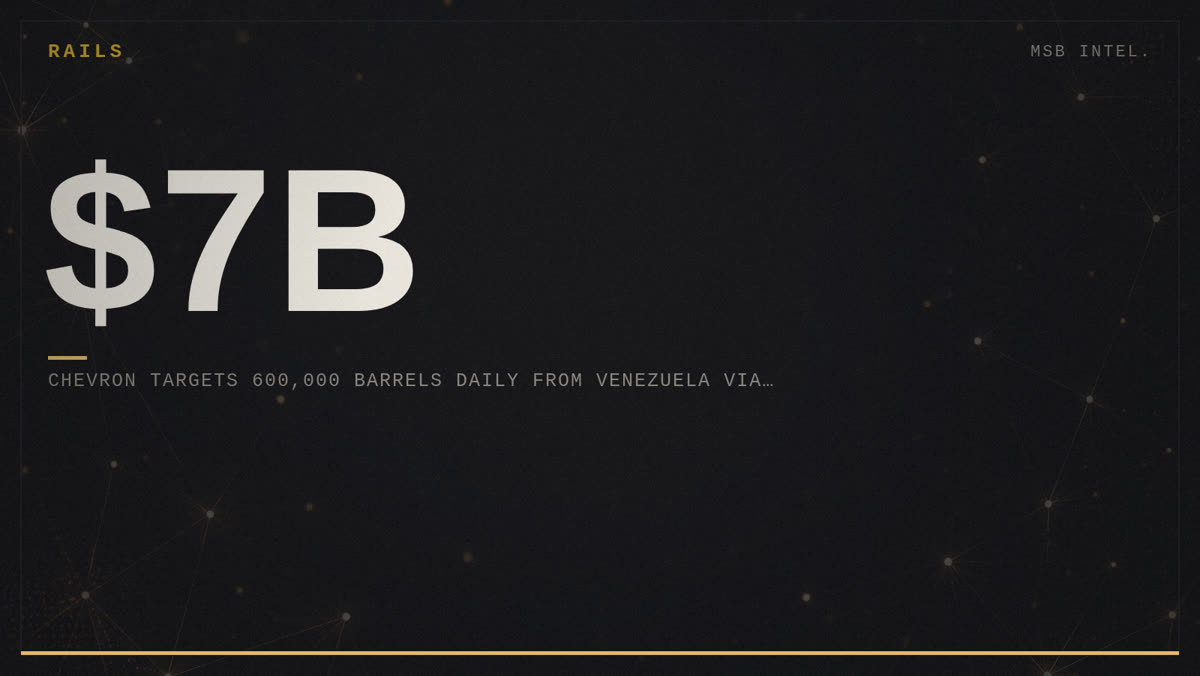
Chevron will invest $7 billion over five years to expand oil production in Venezuela's Orinoco Belt, targeting 600,000 barrels per day from the region according to the company announcement.
The expansion builds on Chevron's existing operations in the Orinoco and involves additional acreage assignments rather than a restart of operations. The company has maintained a presence in Venezuela despite U.S. sanctions that have severely constrained American oil majors' activity there. Chevron received a license from the U.S. Treasury Department in November 2023 to resume limited operations in the country, one of the few Western oil companies allowed to work there.
Venezuela holds the world's largest proven crude reserves, concentrated heavily in the Orinoco Belt. Production from the region has collapsed over the past decade due to underinvestment, infrastructure decay, and sanctions pressure. The country's overall crude output fell from roughly 3 million barrels per day in 2011 to under 400,000 bpd in recent years. A successful scaling of operations at that volume would represent additional recovery for Venezuelan output, though production remains far below historical levels.
Chevron's investment comes as the Biden administration has quietly expanded oil licensing in Venezuela while maintaining the broader sanctions regime. The company's presence is limited to operations that were grandfathered under earlier sanctions rules. Rival majors have largely exited the country. TotalEnergies withdrew from a major project in 2017 and has not returned. Exxon Mobil does not operate in Venezuela.

The five-year timeline places the production target in 2031, assuming no sanctions changes or geopolitical disruptions. Chevron has not disclosed the specific acreage or production wells attached to the new investment, and Venezuelan President Nicolas Maduro's government has recently made nationalist statements about oil policy, though no moves have blocked foreign operator licenses.
Chevron's Orinoco Belt production at 600,000 bpd would represent roughly one-fifth of the company's global oil output. The company's global liquids production averaged about 2.7 million bpd in the first half of 2026. Venezuela would rank among Chevron's largest single-geography operations by volume.
The key metric to monitor is whether Chevron achieves ramp to 600,000 bpd by the end of 2031 as currently planned. If sanctions tighten or Venezuelan institutional instability disrupts operations, the company may need to extend timelines or reduce targets.