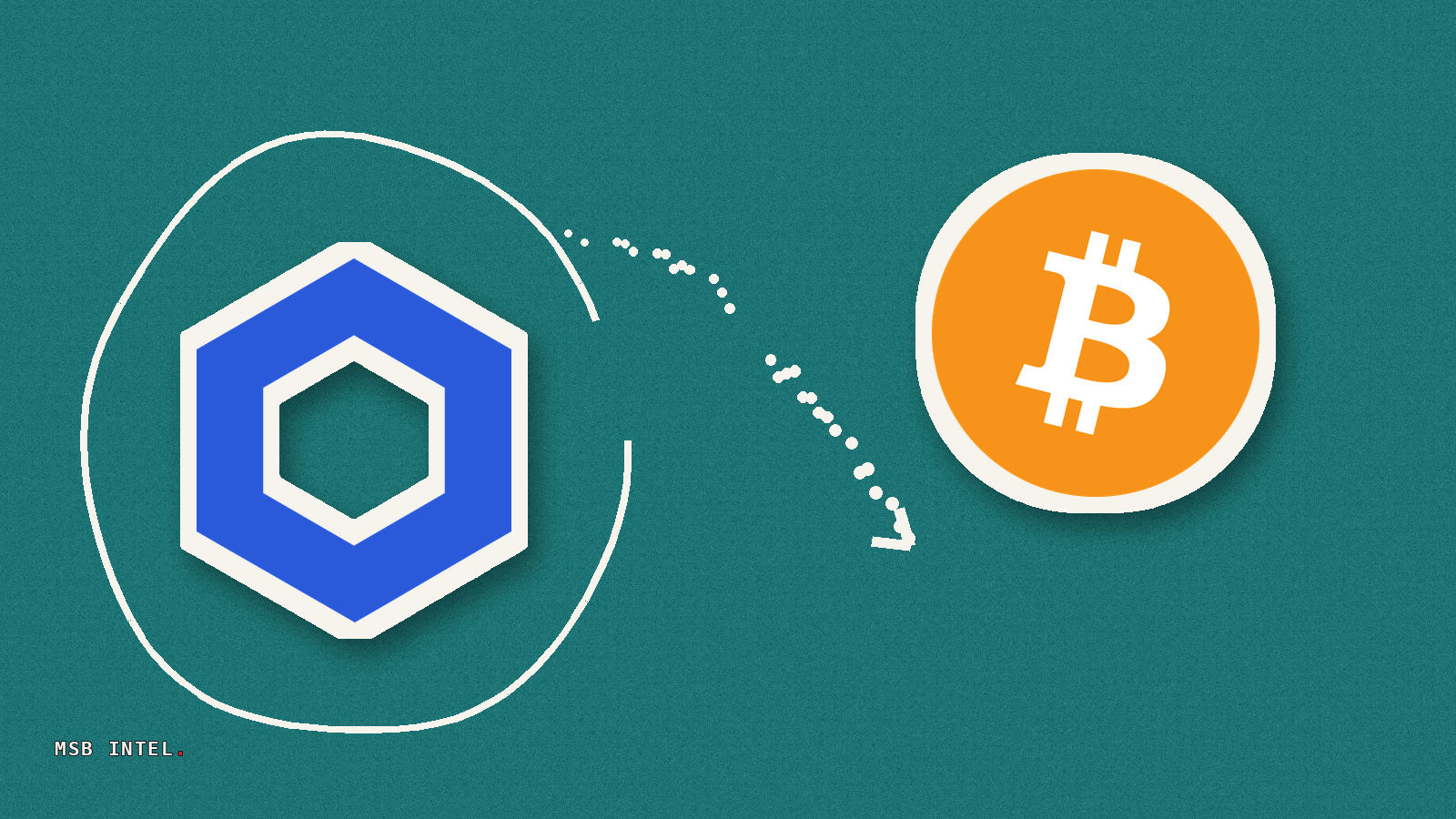
Chainlink's Cross-Chain Interoperability Protocol now routes approximately 70% of all wrapped Bitcoin after BitGo selected it to handle $7.4 billion in WBTC, the infrastructure provider announced this week.
The shift consolidates Chainlink's grip on cross-chain asset transfers. BitGo's decision to migrate its WBTC from competing protocols follows a broader exodus of liquidity from LayerZero, the interoperability standard that had dominated the wrapped Bitcoin market until recent months.
Chainlink co-founder Sergey Nazarov attributed the adoption to the network's security, reliability and connectivity features. Wrapped Bitcoin, a tokenized representation of Bitcoin held in custody by BitGo and other custodians, has grown into a critical bridge asset across multiple blockchains. The $7.4 billion figure captures the total market capitalization of WBTC at the time of the announcement.
BitGo's selection of Chainlink's CCIP for its wrapped Bitcoin infrastructure marks a significant technical endorsement. Custodians and infrastructure providers make routing decisions based on validator security, transaction finality guarantees and the breadth of blockchain networks a protocol supports. Nazarov has indicated that similar adoption patterns may accelerate across other tokenized assets beyond Bitcoin.
LayerZero's loss of WBTC volume comes after a series of technical issues and governance disputes that eroded confidence in its cross-chain messaging architecture. Multiple infrastructure providers have begun diversifying their cross-chain dependencies away from LayerZero in the past quarter, according to on-chain transfer data.
Chainlink's 70% market share in wrapped Bitcoin routing now exceeds the combined share of all competing protocols. If BitGo's migration holds without reversal, Chainlink's dominance in the wrapped asset infrastructure layer will be difficult for competitors to challenge within the next twelve months.