Cross-chain migrations to Chainlink's CCIP interoperability standard have reached $15B in announced moves, with BitGo's decision to shift $7.7B in Wrapped Bitcoin from LayerZero this week completing the tally.
The wave of issuers switching infrastructure traces directly to April's $292M exploit of Kelp DAO's LayerZero-powered bridge. That incident exposed security gaps that pushed custody and issuance platforms toward CCIP's architectural model: at least 16 independent node operators per route and built-in rate limits that function as circuit breakers.
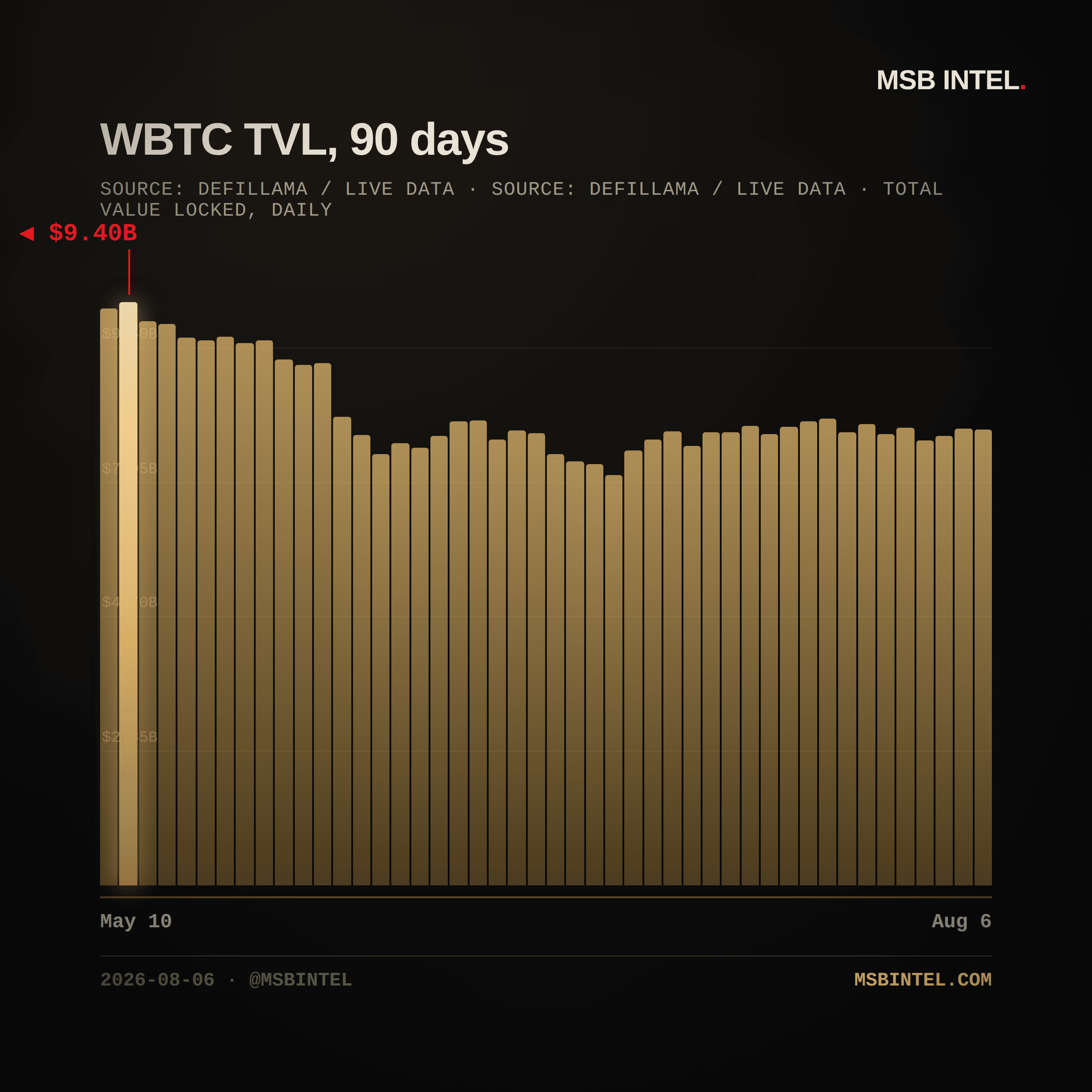
BitGo announced the WBTC migration on August 4, moving the asset's cross-chain backbone away from LayerZero after four years on that infrastructure. The shift is the largest single migration in the recent trend. BitGo operates as the largest independent digital asset custodian and serves as the issuer of WBTC, which maintains a market value of approximately $7.7B across multiple blockchains.

The Kelp DAO exploit struck in April when a compromised LayerZero endpoint allowed attackers to drain $292M in Wrapped Ether from the protocol's bridge. The exploit left wrapped tokens stranded across 20 chains and forced LayerZero users to confront the operational reality that a single point of failure on any bridge route could freeze billions in value. CCIP's redundancy requirement, by contrast, means no single node operator or route can execute a migration unilaterally.
LayerZero operates as a messaging standard rather than a bridge itself, leaving security enforcement to individual projects using its protocol. Chainlink CCIP by contrast operates as a managed service where the foundation itself runs or contracts the node operators and enforces rate limits. That structural difference has driven asset issuers toward CCIP since April.
The $15B figure represents announced or tracked migrations rather than settled transfers. Industry analysts have tallied the commitments as they were announced by each issuer. BitGo's $7.7B WBTC move accounted for roughly half the migration wave by volume, with smaller but significant shifts from other issuers filling the remainder of the $15B tally.
Migrations to CCIP have accelerated each month since April. LayerZero has retained significant volume in other use cases, particularly in cross-chain messaging for smart contracts rather than asset custody, but its role as the primary infrastructure for wrapped asset issuance has contracted sharply. If BitGo completes its WBTC migration from LayerZero by September 1, as announced, the final shift of that asset class away from the older bridge infrastructure will be complete.