
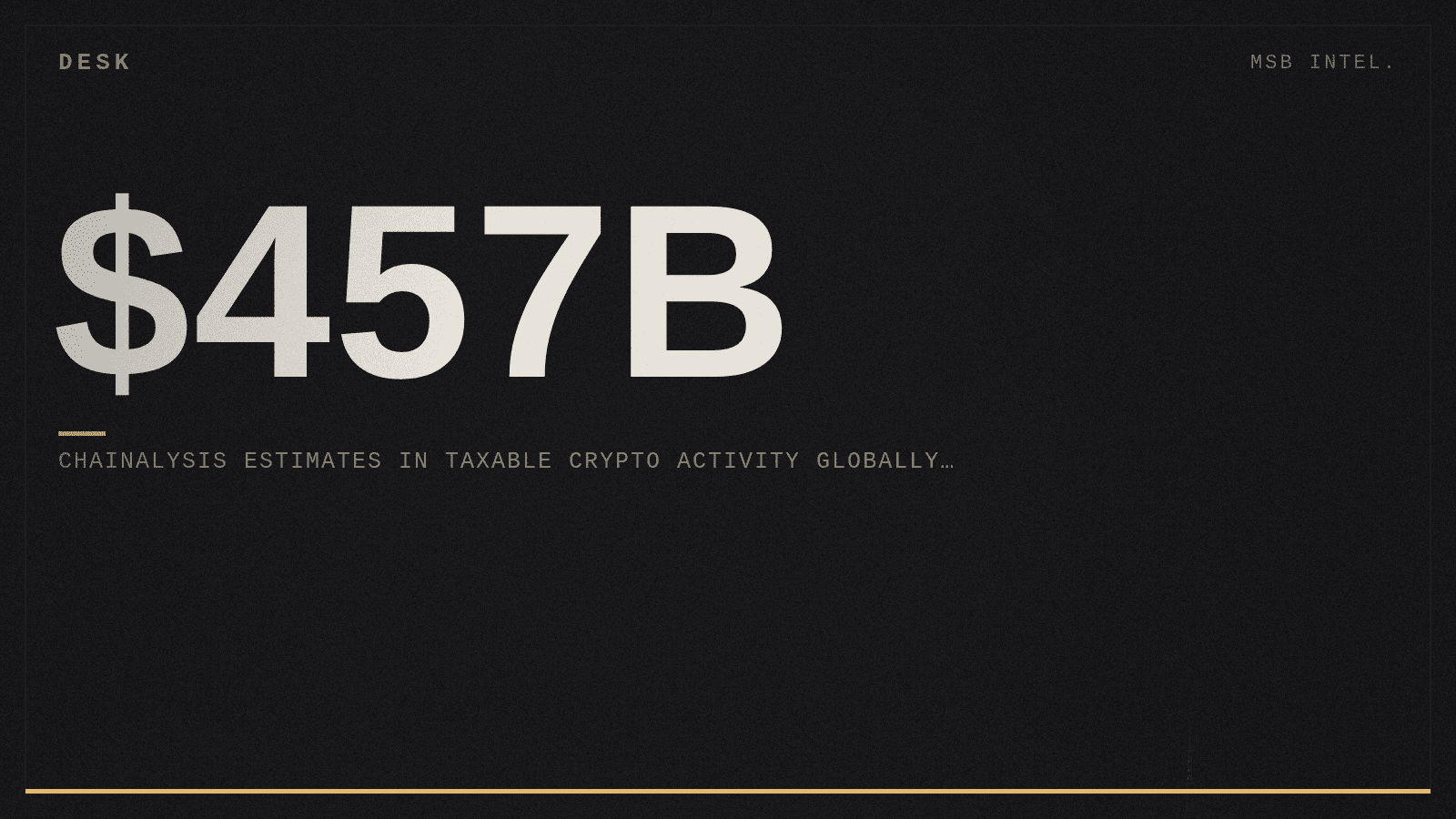
Chainalysis estimated more than $457 billion in potentially taxable onchain crypto activity occurred in 2025, with the United States accounting for $112.6 billion of that total, according to a report released this week.
The Crypto-Asset Reporting Framework, or CARF, covers only about 14 percent of the global onchain taxable activity Chainalysis tracked. That means 86 percent of those flows fell outside the practical scope of the international standard.
CARF, adopted by the Organization for Economic Cooperation and Development and implemented by participating jurisdictions, requires financial institutions and digital asset intermediaries to report on customer transactions meeting certain thresholds. The framework took effect in participating countries beginning in 2025. Its design focuses on cross-border flows and custodial intermediaries, not peer-to-peer onchain transfers or transactions that never touch traditional financial rails.

The $112.6 billion U.S. figure represents roughly 24.6 percent of Chainalysis' global taxable estimate. The firm's methodology captures transactions it categorizes as reportable based on value transferred, transaction type, and counterparty status, though onchain data alone cannot always distinguish between taxable and non-taxable activity or identify beneficial owners.
Taxable activity estimates have become a pressure point in crypto tax enforcement. The Internal Revenue Service and tax authorities in other jurisdictions have cited reporting gaps as a compliance risk. Chainalysis' annual estimates influence policy discussions around whether existing frameworks require expansion or replacement to capture a larger share of identifiable flows.
Even as CARF enters force, the majority of measurable onchain transaction volume will continue to occur outside frameworks designed to report it to tax authorities. Whether jurisdictions will pursue narrower definitions of reportable activity, mandatory exchange integration, or alternative compliance mechanisms remains unsettled as implementation proceeds.