Bybit announced perpetual options on US equities on September 1, with trading launching September 17 at 20:00 UTC. The exchange will offer around-the-clock trading on SpaceX and Nvidia contracts at launch, followed by Tesla, QQQ, SOXL and Micron.
The announcement positions the product as the first perpetual options venue on US equities available 24/7. OKX launched equity perpetual swaps in March 2026, but perpetual options represent a different instrument: they combine the mechanics of perpetual futures with the asymmetric payoff profile of options, allowing traders to define their maximum loss upfront through premium rather than margin requirements alone.
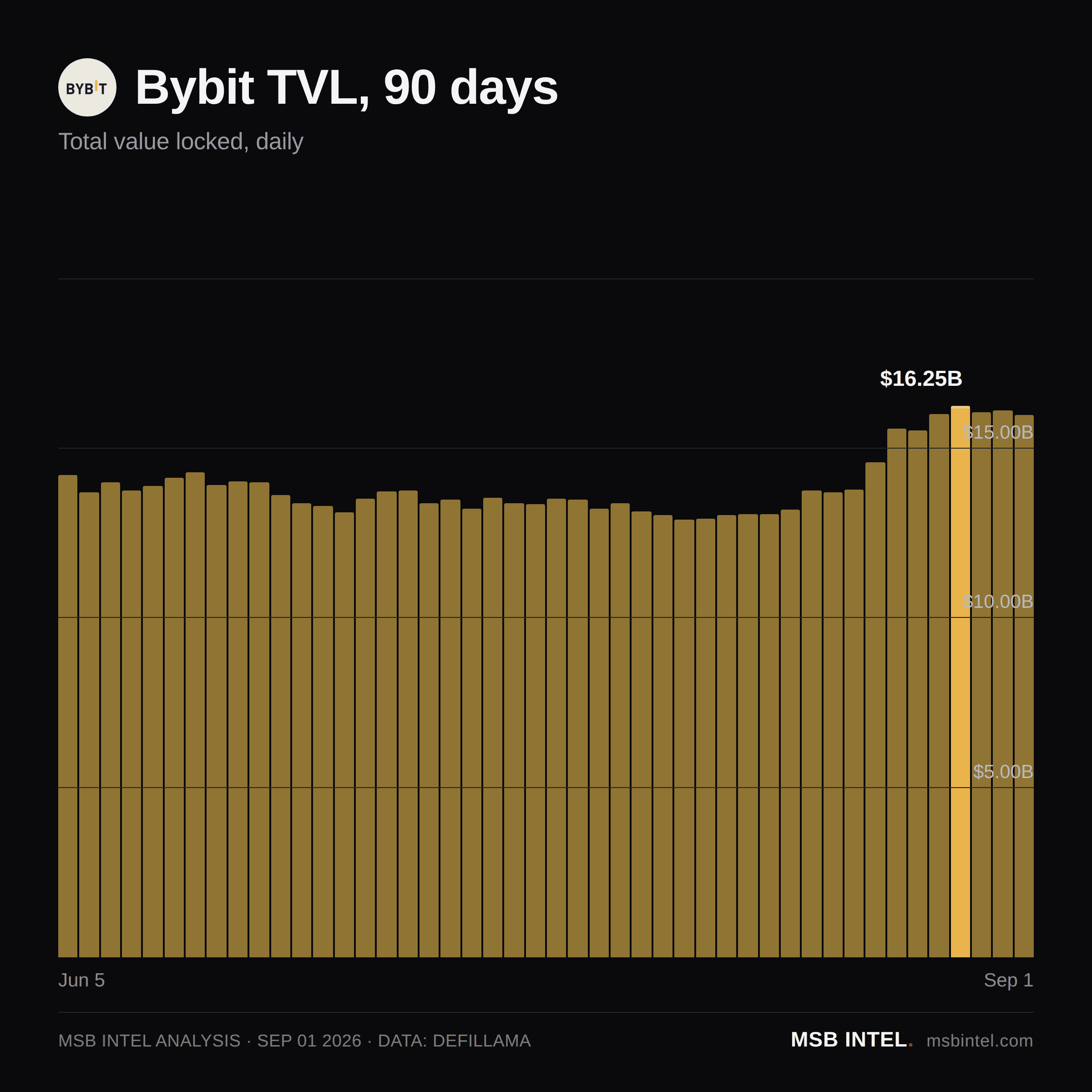
Bybit is one of the three largest crypto derivatives exchanges by open interest, alongside Binance and OKX. The exchange has been expanding into products that blend traditional finance with crypto mechanics. Perpetual options on major US stocks address a gap: retail and institutional traders in crypto have long had access to exposure to tech equities through crypto perpetuals, but no dedicated options market with defined maximum loss.

The structure allows buyers to pay premium and cap their downside, while sellers collect that premium. On a 24/7 schedule, US equity perpetual options eliminate the closure windows that plague traditional options markets, where US stock contracts settle after 4 p.m. Eastern Time. This makes the product particularly relevant for Asia-based traders and US traders operating outside regular market hours.
Bybit said it will support multiple tenors and strike prices, though specific details on contract specifications and fee structure were not published in the announcement. The exchange did not disclose volume targets or expected daily contract sizes.
The perpetual options market remains small relative to spot and perpetual futures volumes in crypto. No exchange has yet published comparable trading volumes for equity perpetual options, making it difficult to assess whether the product will attract significant institutional or retail flow. Bybit's decision to launch with SpaceX and Nvidia rather than broader indices like the S&P 500 reflects focus on high-volatility names favored by crypto traders.
Bybit's move follows broader competition to capture equity-linked trading volume within crypto infrastructure. The number of exchanges offering crypto-native equity derivatives has grown from three in 2024 to at least five by September 2026. If Bybit sustains daily volumes above $100 million across these first five underlying assets within 90 days of launch, other major exchanges are likely to announce competing products within six months.