

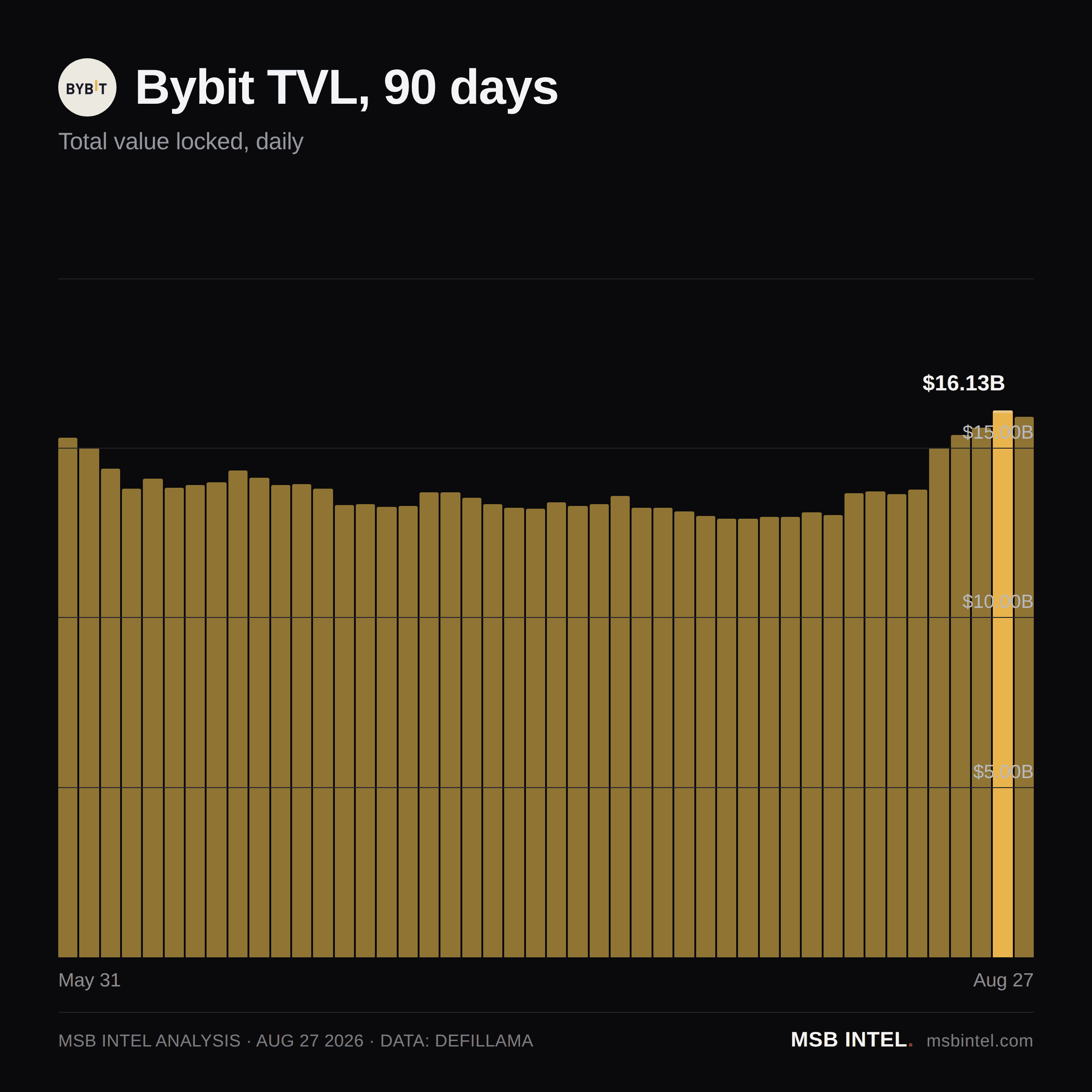
Bybit integrated nOPAL, a tokenized Brazilian credit card receivables product, into its RWA Earn yield platform on August 25, giving institutional and retail users exposure to Visa and Mastercard-backed credit obligations originated in Brazil.
nOPAL trades on Pendle and Avalanche and holds approximately $70 million in total value locked as of late August 2026. The product bundles credit card receivables sourced by BlackOpal, a Brazilian fintech, and wraps them in an ERC-20 token managed by Plume, a real-world asset infrastructure company. Bybit's RWA Earn product lets users deposit stablecoins to earn yield on tokenized debt instruments without directly holding the underlying assets.
Brazil's credit card market carries roughly $109 billion in outstanding balances, according to market research data. The sector has grown as consumer credit expanded across Latin America, though credit card penetration and usage remain lower than in developed markets. Receivables financing, in which lenders sell future payment streams to investors, is a common way for card issuers and fintechs to raise capital and distribute risk.

Plume launched nOPAL on Pendle, a fixed-yield protocol, on May 29, 2026, then deployed it to Avalanche on July 22. The token allows investors to buy exposure to a stream of credit card payments without purchasing individual loans. Plume positions the product as a bridge between traditional Brazilian credit markets and decentralized finance, where yield opportunities on stablecoins have tightened as competition among lending platforms has intensified.
Bybit, which operates a derivatives exchange and custody offering, began building out its RWA Earn platform in 2025 as institutional capital flowed into tokenized debt and bond products. The exchange has added multiple real-world asset tokens to the platform, including U.S. Treasuries and corporate bonds. Adding an emerging-market credit product expands the geographic and credit-type diversity of its offerings.
Plume and BlackOpal did not disclose the origination volume, expected maturity, or coupon rate of the specific credit card receivables backing nOPAL. The product operates with standard regulatory structures in Brazil, where credit transfer and securitization are governed by existing finance law; no blockchain-specific licensing was required. The nOPAL token itself is not a security under U.S. law in its current design, though investors are typically required to be accredited or institutional.
Bybit's addition of nOPAL to RWA Earn comes as major centralized exchanges begin integrating tokenized emerging-market credit into their platforms. The total RWA market on-chain stands around $10 billion across all products as of August 2026, with tokenized U.S. government debt and corporate bonds dominating. A credit card receivables product from a single emerging market is a micro-niche within that total, but Bybit and Plume are moving into asset classes beyond government and investment-grade corporate debt.
The document to watch is any material change to nOPAL's origination volume or yield payouts disclosed by Plume or BlackOpal in the next quarterly update, which would clarify whether institutional demand for emerging-market credit receivables is sustaining.