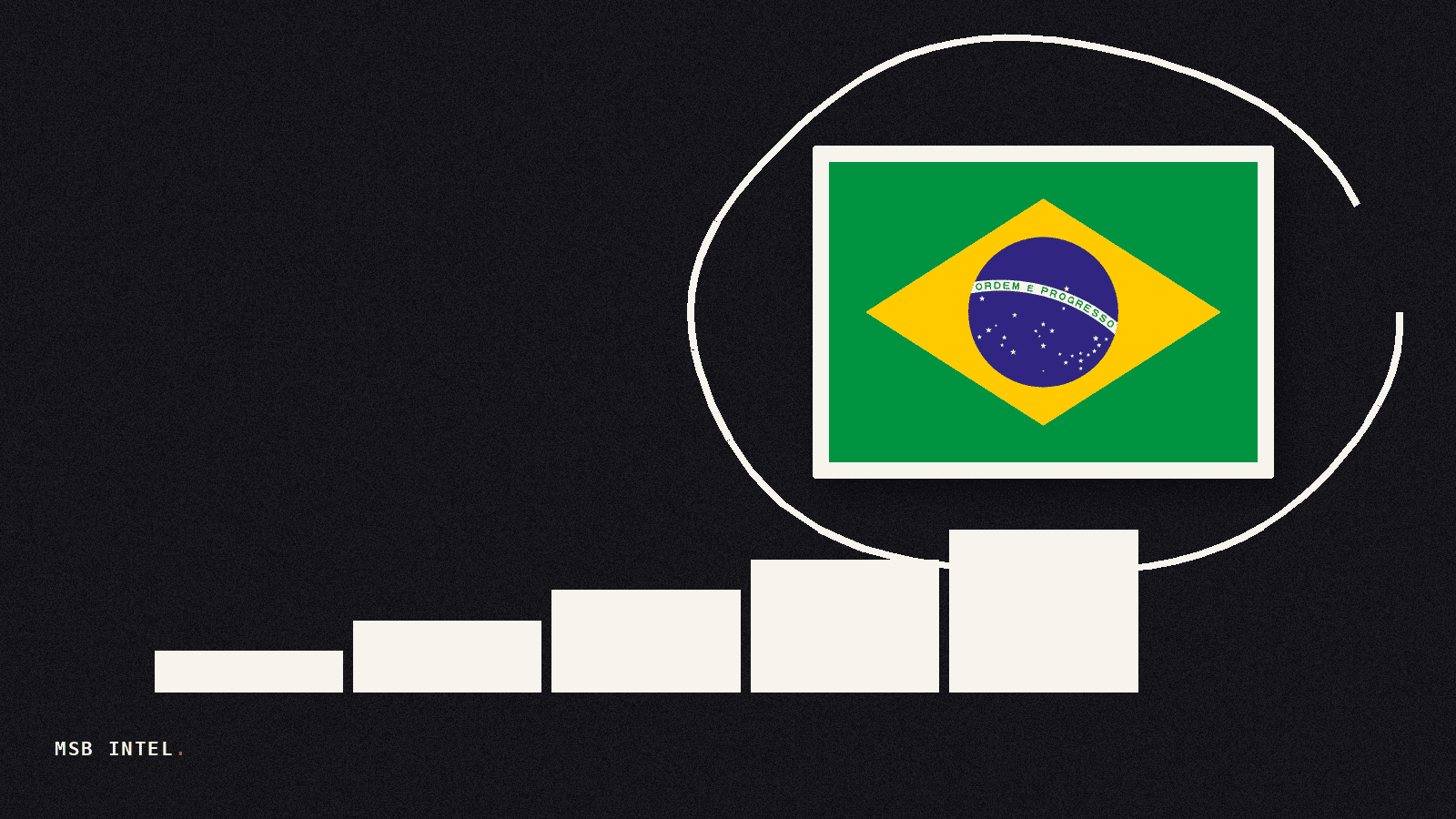
Brazil's cryptocurrency market, valued at $318.8 billion, must secure formal licenses by October 30 under a new regulatory framework, according to a report by blockchain security firm CertiK mapping the country's regulatory push.
The deadline marks the first mandatory licensing requirement for crypto platforms operating in Brazil. The framework, known locally as PSAV, establishes a formal supervision structure that crypto exchanges and custodians must comply with to continue serving the market. CertiK's analysis identifies October 30 as the cutoff date by which platforms must have filed for or obtained licenses to avoid suspension or shutdown.
Brazil's crypto market ranks among the largest in Latin America. The $318.8 billion market size follows years of retail adoption amid economic volatility and currency depreciation. Exchanges operating in the region include both major global platforms and Brazil-specific operators.
The licensing requirement is part of a broader regulatory evolution across Latin America. Countries in the region have moved from hands-off approaches to formal licensing schemes as crypto adoption accelerated. Brazil's framework requires platforms to meet capital, custody, and anti-money-laundering standards before receiving approval.

CertiK's report details the compliance pathway platforms must follow. Applicants must demonstrate they meet financial resilience requirements, have segregated customer assets, and maintain operational controls over fund storage. The firm maps the October 30 date as non-negotiable under current regulations, though platforms can request extensions on a case-by-case basis.
The deadline creates operational pressure on both established and startup platforms. Companies that fail to license by the cutoff risk losing access to Brazilian users and facing enforcement action from the Central Bank and financial regulator. Several platforms have already begun the licensing process, though the number of approved licensees remains small relative to the total number of market participants.
The framework compresses a typically longer regulatory transition into five months, a compressed timeline compared to similar licensing regimes in other countries. Europe's Markets in Crypto Assets Regulation allowed a 12-month transition for existing platforms; the United States has not yet established a unified federal licensing system. Brazil's rollout moved faster than comparable international precedents.