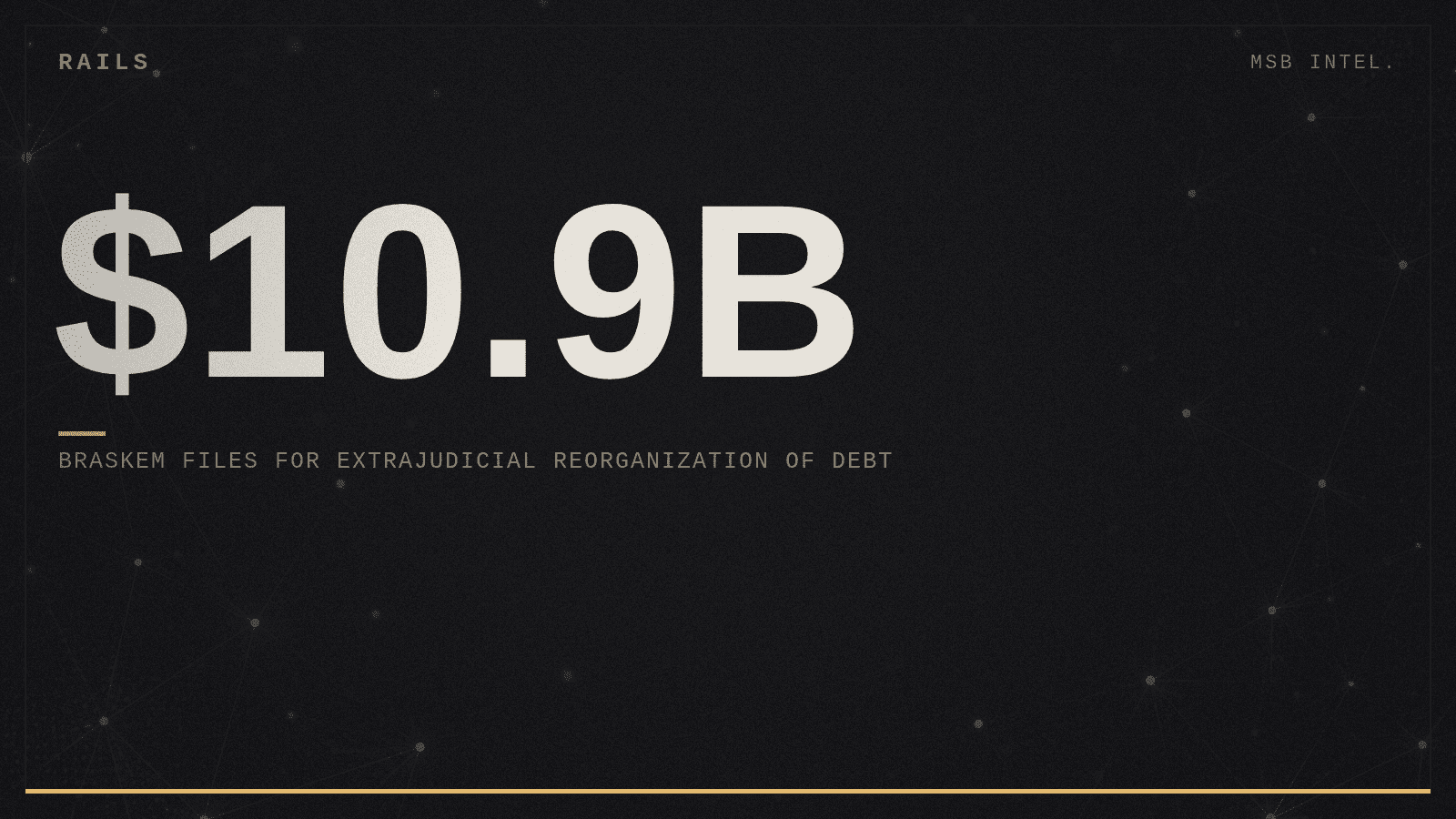
Braskem, the largest petrochemicals producer in the Americas, filed for extrajudicial reorganization of $10.9 billion in unsecured financial debt, the company said in a regulatory filing dated August 24. The process requires court homologation under Brazilian law and differs from a finalized out-of-court agreement.
Extrajudicial reorganization under Brazil's insolvency code allows a debtor to propose a restructuring plan to creditors without entering formal bankruptcy proceedings. The mechanism requires approval by creditors representing 60 percent of the total debt, followed by court validation. Unlike traditional workouts negotiated privately between a company and its lenders, this path involves judicial review but avoids the full machinery of bankruptcy court.
Braskem's board approved the filing following months of negotiations with creditors over debt relief. The company operates 41 production facilities across six countries and supplies plastics, chemicals and fertilizers to automotive, food and construction sectors. In 2025, Braskem reported net revenue of $15.2 billion. The debt load has weighed on the company's credit rating, which Moody's downgraded to B3 in June 2025, citing concerns over liquidity and refinancing risk.
The filing does not interrupt supplier payments or customer obligations. Braskem said operational continuity is preserved during the restructuring process. The company did not disclose the specific composition of the $10.9 billion debt or the terms of any proposed write-down, though the filing indicates it involves primarily financial debt rather than trade payables.
Braskem's parent company, Novonor (formerly Odebrecht), faced its own financial crisis following a corruption scandal that erupted in 2014. Braskem has been operating as a public company separate from Novonor since its 2008 initial offering and maintains its own balance sheet and creditor base. This restructuring is Braskem's first major debt reorganization since going public.
Court homologation could take several months. Creditor approval and judicial sign-off remain the operational thresholds ahead. The restructuring plan will need to specify a recovery rate for creditors and a timeline for payment, terms that will determine whether large institutional holders and smaller bondholders vote to support it.