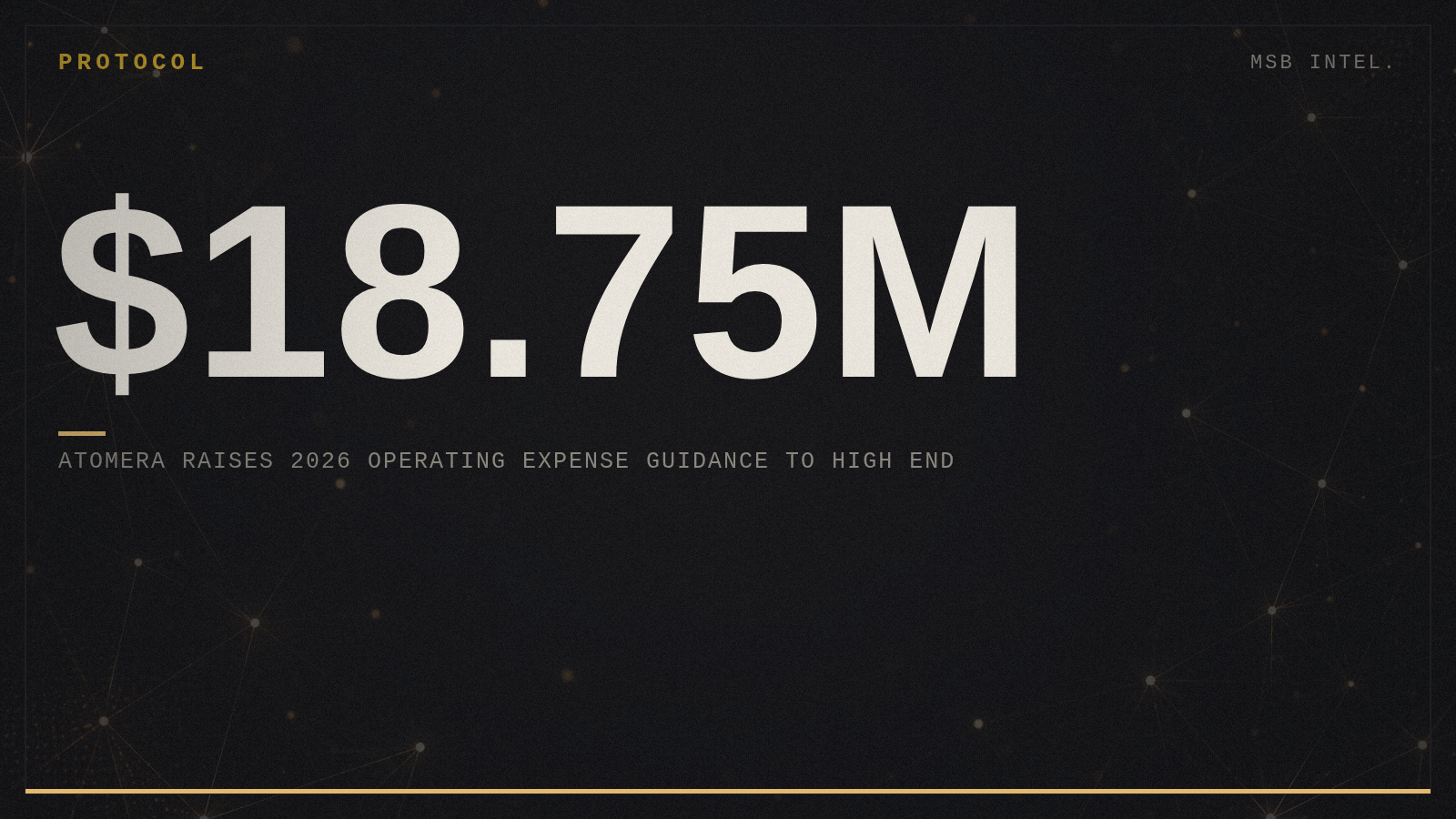
Atomera revised its 2026 non-GAAP operating expense guidance to a range of $18.25M to $18.75M, moving from a prior point estimate of $18.5M, the company said in its Q2 earnings announcement released August 4.
The upward revision accounts for higher costs across outsourced engineering, tool leases, metrology, and fabrication expenses. The wider range replaces a single-point forecast, giving the company flexibility to account for fluctuations in cost structure as it scales operations.
Atomera is advancing its GaN-on-silicon RF pipeline with demonstrated performance gains. The company announced in June a breakthrough showing parasitic charge reduction of 10 times or greater in its silicon carbide technology, a metric central to RF device efficiency. The advancement positions the company in a competitive segment where RF power semiconductors serve wireless infrastructure and automotive electrification markets.
The operating expense guidance sits within the broader context of Atomera's transition from research to commercialization. The company has been licensing its silicon engineering technology to major foundries and fabless partners, a model that generates milestone and royalty revenue while keeping internal manufacturing costs contained. The new opex range reflects commitments to both customer support and internal capability development without full manufacturing footprint.

Cost pressures on semiconductor companies have intensified across the industry as advanced packaging, metrology, and custom fabrication become table stakes for differentiation. Atomera's expense structure, at the $18M annual level, remains modest by standards of pure-play semiconductor firms, which often run annual opex in the $200M to $500M range.
Atomera's 2026 expense guidance pins costs near the higher end of its communicated range. The range itself is now 2.7 percent wide, the same proportional spread the company had communicated earlier, though at a higher absolute level.
The document to watch is whether Atomera narrows this range before year-end or if actual spending patterns in Q3 and Q4 exceed the new ceiling.