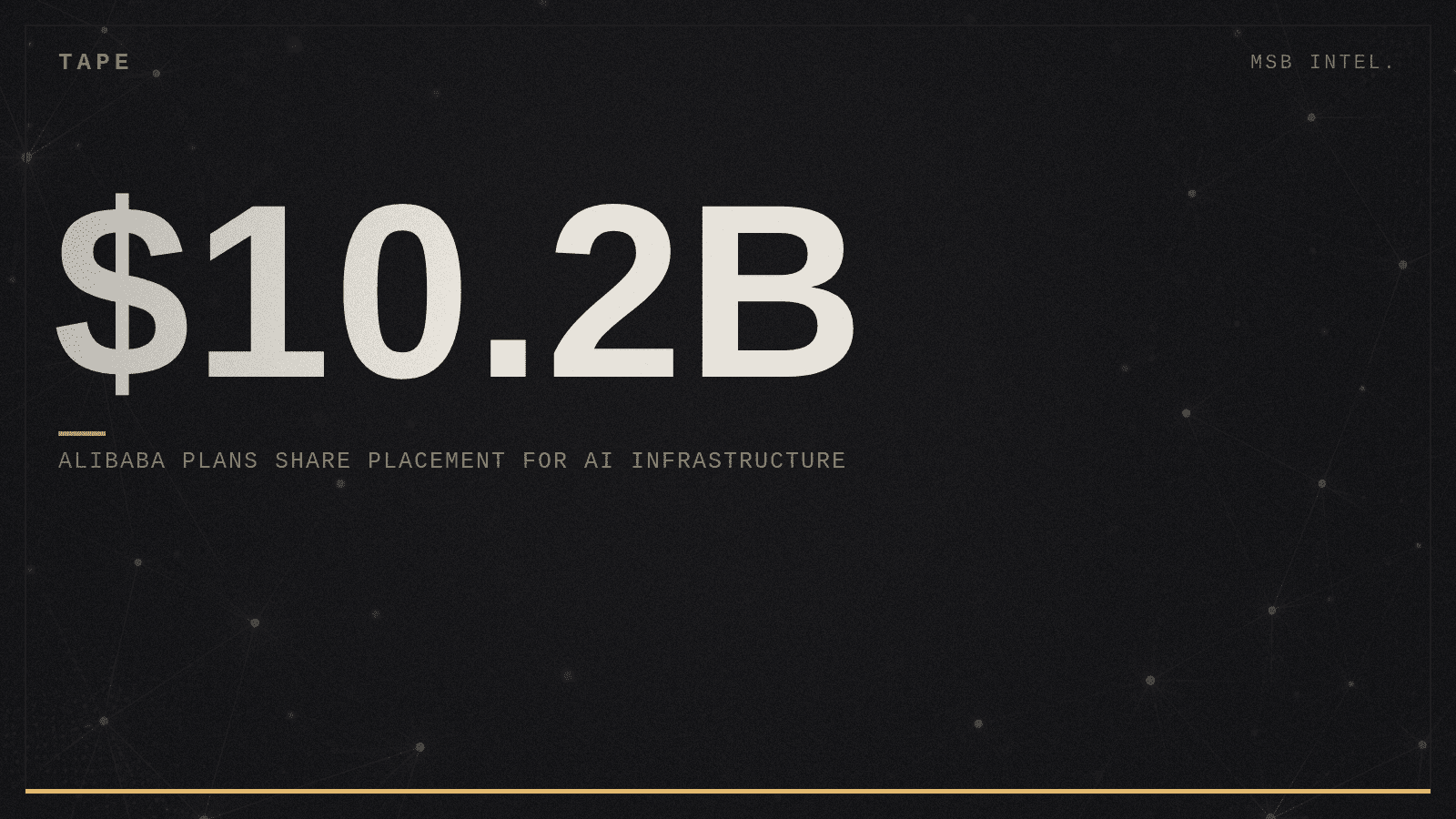
Alibaba announced a $10.2 billion share placement to fund expansion of its artificial intelligence infrastructure, according to an official announcement dated August 23, 2026. The Chinese e-commerce and cloud computing company will issue new shares to raise the capital for AI capex.
The placement occurs as major technology firms across Asia commit substantial sums to GPU procurement and data center infrastructure. Alibaba joins peers including Tencent, Baidu and SoftBank in spending heavily on foundational AI systems. ByteDance, which owns TikTok, has disclosed multibillion-dollar annual spending on AI clusters, while China's Huawei has invested heavily in semiconductor and inference infrastructure.
Alibaba has positioned AI infrastructure investment as central to its competitive strategy in cloud services and large language models. The company operates Alibaba Cloud, which serves enterprises across Southeast Asia and mainland China.
The share placement mechanism allows Alibaba to raise cash without immediately diluting per-share earnings as it would through a standard public offering. Existing shareholders receive subscription rights, typically at a discount to current market price. Hong Kong-listed shares of Alibaba trade on the primary venue.
The company has not disclosed the timeline for deploying the $10.2 billion or the specific technical scope of the infrastructure, whether the funds target training clusters, inference endpoints, or both. Large-scale placements of this type typically fund 18 to 36 months of capex, though deployment can accelerate or extend depending on supply chain constraints for advanced processors.
Alibaba's AI infrastructure spending operates in a regulatory environment where Chinese authorities have imposed licensing requirements for large language model deployment and chip procurement quotas. The company must allocate capital across cloud services, domestic e-commerce, and international expansion while meeting these rules.
A $10.2 billion single infusion is substantial but not anomalous for a company with Alibaba's revenue base and market position. The measure of execution will be whether infrastructure completed from this round reaches productization, serving paying customers in cloud services or embedded in consumer-facing products, within two years of deployment.