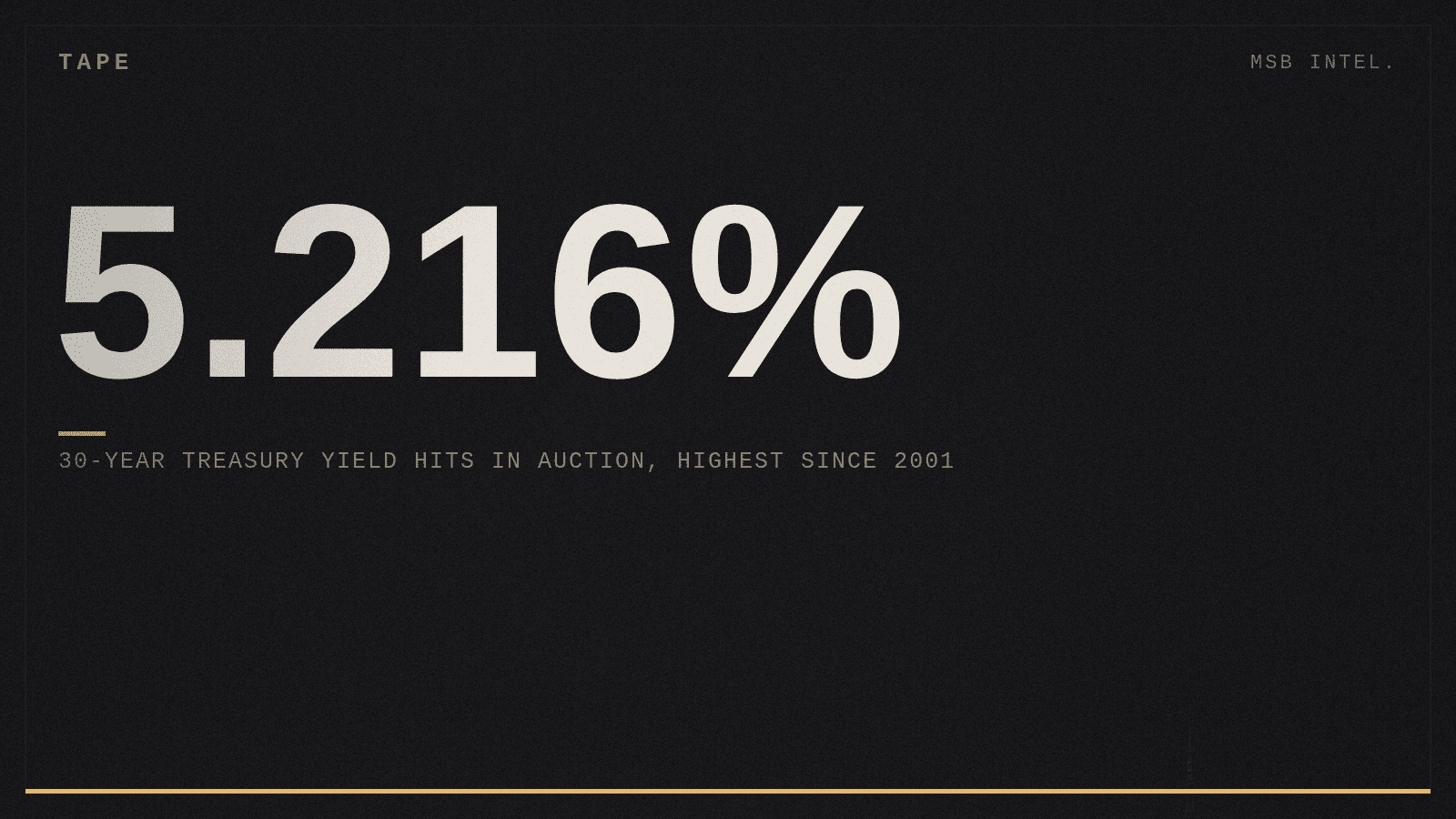
The U.S. Treasury sold $25 billion in 30-year bonds at a yield of 5.216% on August 13, the highest rate for the maturity since 2001, according to auction data.
The result marks the first time in a quarter-century that long-term borrowing costs have reached this level. The 5.216% yield is the highest for the maturity since 2001. Long-duration Treasury auctions serve as a barometer for the market's assessment of inflation expectations, growth outlook, and the Federal Reserve's policy path over decades.
Bid-to-cover ratio data showed demand constraints at the sale. The Seeking Alpha report on the auction noted a bid-to-cover of 2.39, indicating three bids for every two units offered. That ratio sits below typical levels for 30-year auctions, which historically average above 2.5 and sometimes exceed 3.0. Weak demand at long-dated maturities often emerges when investors demand higher compensation for duration risk or when near-term rates are expected to remain elevated.

The timing of the auction comes amid persistent inflation and uncertainty about the Fed's willingness or ability to cut rates materially in coming quarters. Long-term yields have climbed as markets price in a scenario where the Fed holds short-term rates higher for longer. The 30-year Treasury anchors mortgage rates and long-term corporate borrowing costs, so movement at this maturity affects household and business financial conditions across the economy.
Annual yield ranges for 30-year Treasuries traded between 2.29% and 2.66% earlier in 2026, according to trading data. The jump to 5.216% represents a 255-basis-point move higher than the year's prior floor, a shift that narrows borrowing windows for mortgage origination and long-duration corporate finance. The auction drew $25 billion in new issuance, part of a steady Treasury calendar as the government finances ongoing deficits.
The next test of long-duration demand comes with scheduled Treasury auctions later this month. If subsequent sales of 30-year bonds continue to attract weak bids or require higher yields to clear, bid-to-cover ratios will stabilize above 2.4 or slide further.